Your adult child might still be living at home, struggling to move forward despite the failure-to-launch support you’ve tried. In this scenario, you suspect that support hasn’t reached the trauma underneath. Addressing those experiences may give your son or daughter a stronger foundation for independence. From residential care in Arizona to a therapeutic farm in Vermont, trauma-informed failure-to-launch programs offer different settings for working through emotional barriers while building everyday skills.
Leading Options Across Five States
These five options describe support for trauma and difficulties with independence across different states and care formats. Compare their stated approaches against your child’s needs.
1. The Sanctuary at Sedona (Arizona)
In Arizona, The Sanctuary at Sedona personalizes care around trauma, behavioral challenges, and mental health needs. Its holistic approach aims to address underlying causes of difficulties with independence. CBT and ACT aim to support planning, follow-through, accountability, and confidence. Its holistic mental health program does not require a substance use disorder diagnosis. The Sanctuary at Sedona now also treats people experiencing ketamine addiction. Each plan weighs emotional needs and daily functioning together.
Key Features
- Location: The program provides its holistic mental healthcare in Arizona.
- Trauma focus: Individual treatment plans account for trauma and other mental health needs.
- Standout detail: The program doesn’t require a substance use disorder diagnosis for admission.
2. Worthy Wellness Center (California)
In California, Worthy Wellness Center in Carlsbad supports young adults through a trauma-informed failure-to-launch program. Treatment addresses emotional and psychological barriers as well as practical challenges. Individual and group sessions draw on CBT, dialectical behavior therapy (DBT), and EMDR where trauma is present. DBT teaches emotion-management skills. The Worthy Wellness Center can combine this clinical work with practical skill development. Treatment planning considers the barriers each young adult faces in moving toward independent life.
Key Features
- Location: The program operates in Carlsbad, California, serving young adults seeking support.
- Trauma focus: A trauma-informed framework addresses emotional and psychological barriers to independence.
- Standout detail: Individual and group sessions incorporate EMDR where trauma is present.
3. OPI Houston (Texas)
Young adults at OPI Houston in Needville receive support for anxiety, depression, trauma, or failure to launch. Trauma-informed care includes EMDR and accelerated resolution therapy (ART), which uses imagery and eye movements to work with distressing memories. The Texas program typically involves three to four months on its Needville ranch, followed by six to eight months in transitional apartments in Stafford. The duration can vary according to individual needs.
Key Features
- Location: Treatment spans a Needville ranch and transitional apartments in Stafford, Texas.
- Trauma focus: Its trauma-informed treatment options include both EMDR and ART for clients.
- Standout detail: The program serves young adults ages 17.5 to 28 years.
4. Spring Lake Ranch (Vermont)
Residents at Spring Lake Ranch in Cuttingsville join a farm-based residential therapeutic community in Vermont. Clinical models include CBT, DBT, ACT, and eye movement desensitization and reprocessing. Clinicians also use mindfulness-based stress reduction and psychodynamic therapy, which explores underlying emotional patterns. Stays average seven to nine months and may extend longer. Its farm setting combines a place to live with clinical treatment.
Key Features
- Location: The therapeutic community occupies more than 700 acres in Cuttingsville, Vermont.
- Trauma focus: Clinical approaches include DBT and eye movement desensitization and reprocessing.
- Standout detail: Residents stay an average of seven to nine months in treatment.
5. Tampa Bay Recovery Center (Florida)
In Florida, Tampa Bay Recovery Center offers outpatient support for young adults struggling with independence. Its failure-to-launch information recognizes that recent or past trauma can make leaving home frightening. Experiences may include assault, abuse, neglect, or other distressing events. The center addresses post-traumatic stress disorder (PTSD), a condition that can follow trauma. Available formats include IOP, PHP, and virtual outpatient care, providing alternatives to a residential stay.
Key Features
- Location: Care is available in Tampa Bay, Florida, with virtual outpatient options.
- Trauma focus: Its approach recognizes PTSD and trauma-related fears about becoming independent.
- Standout detail: Treatment formats include IOP, PHP, and virtual outpatient care options.
Comparing Failure-to-Launch Programs
Compare treatment format, trauma support, and duration against your child’s needs.
| Program | State | Program Type | Key Trauma Therapy | Typical Length of Stay |
| The Sanctuary at Sedona | Arizona | Holistic mental health program | CBT and ACT | Not listed |
| Worthy Wellness Center | California | Failure-to-launch program | EMDR where trauma is present | Not listed |
| OPI Houston | Texas | Residential ranch plus transitional living | EMDR and ART | 3–4 months ranch, 6–8 months transition |
| Spring Lake Ranch | Vermont | Residential therapeutic community | Eye movement desensitization and reprocessing | 7–9 months average |
| Tampa Bay Recovery Center | Florida | IOP, PHP and virtual outpatient | PTSD-focused support |
What Separates Trauma-Informed Support From Standard Care
It is important to look beyond life skills and accountability when comparing care for your child. Use the following criteria to guide your questions:
- Trauma and coping therapies: Eye movement desensitization and reprocessing (EMDR) aims to help process distressing memories. Cognitive behavioral therapy (CBT) aims to change unhelpful thinking. Acceptance and commitment therapy (ACT) encourages values-based action despite difficult feelings.
- Individualized care plans: Ask how your child’s history, mental health needs, and goals shape treatment rather than a fixed curriculum.
- Program structure: Residential care means living on-site. An intensive outpatient program (IOP) or partial hospitalization program (PHP) provides structured treatment while your child lives elsewhere.
- Length-of-stay flexibility: Ask how the treatment duration reflects your child’s needs and whether a transition phase provides supported practice in independence.
Ask admissions staff to clarify unspecified details, eligibility requirements and expected timelines before your family makes treatment arrangements. Request specific examples relevant to your child’s needs.
Frequently Asked Questions
Your family’s questions may center on treatment approach, timing and eligibility.
What makes a failure-to-launch program trauma-informed?
Look for care that treats your child’s emotional history and daily functioning as connected. Ask about trauma therapies, personalized treatment plans and responses to fear or avoidance. Specific answers matter more than the label alone when comparing support for your family.
How long do trauma-informed failure-to-launch programs typically last?
Your child’s timeline will depend on the program and recommended care. Residential stays can extend over several months, sometimes followed by transitional living. Outpatient formats use a different structure. Ask how the team assesses readiness to move forward.
Do these programs require a specific diagnosis to enroll?
Admission requirements vary, so confirm them directly. At least one option accepts people into holistic mental healthcare without a substance use disorder diagnosis. Ask which needs the program can accommodate and what assessment your child needs before enrollment.
Choosing a Program That Treats the Whole Picture
As you weigh options, ask how each program connects trauma care with the practical work of independence. Your child’s emotional needs deserve as much attention as planning, responsibilities, and follow-through. Prioritize a setting that explains how it addresses both and offers a treatment plan suited to your son or daughter. A clear conversation about their needs is a useful place to begin.
p.s. Related posts:
Storytime celebrating moms and mental health with Lisa Varchol Perron and Monica Acker
Top-Rated Mental Health Services for Your Teen Across the US
7 Long-Term Benefits of Family Dinner for Kids’ Mental Health
Talking to Your Child About Mental Health: 20 Questions Every Parent Should Ask
To examine any book more closely at Amazon, please click on image of book.
As an Amazon Associate, I earn from qualifying purchases.
Follow PragmaticMom’s board Multicultural Books for Kids on Pinterest.
Follow PragmaticMom’s board Children’s Book Activities on Pinterest.
My books:

 Bookshop.org / Amazon / Signed or Inscribed by Me
Barbed Wire Between Us by Mia Wenjen, illustrated by Violeta Encarnación
- ⭐ Starred review from Kirkus
- ⭐ Starred review from Publishers Weekly
- ⭐ Starred review from School Library Journal
- 2027 Charlotte Huck Award Honor Book
- NCTE 2027 Children’s Poetry Award: Notable Children’s Poetry Books
- School Library Journal: 9 Outstanding Poetry Collections for Young Readers/ SLJ 2026 Stars So Far
- Kirkus: Best Picture Books 2026
- Kirkus: The Most Anticipated Children’s Books of Spring 2026
- Kirkus: Best Picture-Book Conversation Starters of 2026
- 2026 Undies Case Cover Award: Variations on a Theme
Free and downloadable guide:
Barbed Wire Between Us Teacher’s Guide

Bookshop.org / Amazon / Signed or Inscribed by Me
- 2026 Undies Case Cover Award: The Portrait Award

Bookshop.org / Amazon / Signed or Inscribed by Me
- California Eureka Non-Fiction Gold Award
- Junior Library Guild Gold Selection
- Notable Social Studies Trade Books for Young People Winner (from National Council for the Social Studies and Children’s Book Council)
The Traveling Taco:
- California Eureka Non-Fiction Silver Award
- Notable Social Studies Trade Books for Young People Winner (from National Council for the Social Studies and Children’s Book Council)
- Reading Rockets’ Summer Reading Guide 2025
 Bookshop.org / Amazon / Signed or Inscribed by Me

Bookshop.org / Amazon / Signed or Inscribed by Me
We Sing from the Heart: How the Slants® Took Their Fight for Free Speech to the Supreme Court
- ALSC Notable Children’s Book
- 2025 Carter G. Woodson Book Award Middle Level Honoree
- Orbis Pictus Recommended Book for Outstanding Nonfiction for Children
- 2024 Julia Ward Howe Prize for Children’s Literature Winner
- California Eureka Non-Fiction Award Honor Book
- Notable Social Studies Trade Books for Young People Winner (from National Council for the Social Studies and Children’s Book Council)
- Bank Street Best Children’s Books of the Year 2025
- Recommended Reading for the Social Justice Literature Award 2025 (International Literacy Association)
- Pennsylvania Mountain Laurel Book Award Nominee 2026-27
- Junior Library Guild Gold Selection
 Amazon / Signed or Inscribed by Me
 Bookshop.org / Amazon / Barefoot Books / Signed or Inscribed by Me
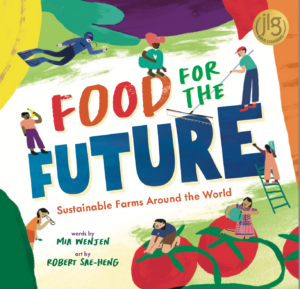
Food for the Future: Sustainable Farms Around the World
- ⭐ Starred review from School Library Journal!
- Junior Library Guild Gold selection
- Massachusetts Book Award Long List
- dPICTUS 100 Outstanding Picture Books of 2023
- Chicago Library’s Best of the Best
- 2023 INDIES Book of the Year Awards Finalist
- Green Earth Book Award Long List
- Nautilus Silver Winner, Nonfiction Children’s Picture Book
- Sunshine State Young Readers Award Orange Blossom List for Nonfiction
- Imagination Soup’s 35 Best Nonfiction Books of 2023 for Kids
Bookshop.org / Amazon / Signed or Inscribed by Me
Bank Street College’s The Best Children’s Books of the Year
 Amazon / Signed or Inscribed by Me
Amazon / Signed or Inscribed by Me


Amazon / Signed or Inscribed by Me