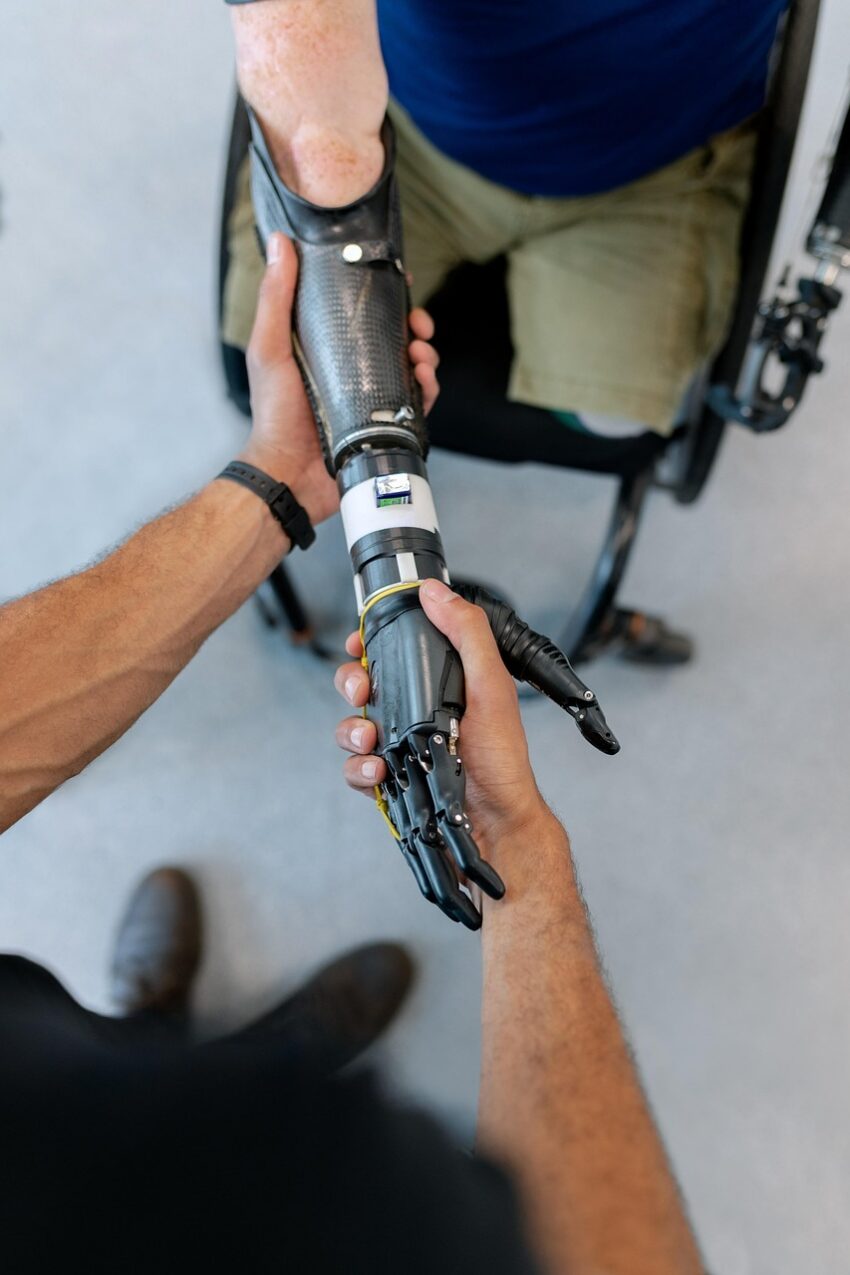
When you look at your child’s school day, you want to see them thriving academically, emotionally, and socially. For children with physical, sensory, or communication differences, assistive technology is far more than just adaptive hardware in a backpack. It bridges joyful connection, classroom confidence, and everyday wellness. True classroom inclusion pairs these devices with the dedicated school teams who help match, personalize, and support those tools daily.
Inside the School District Support Gap
A January 2026 U.S. Government Accountability Office inquiry (GAO-26-107506) examined how public schools provide assistive technology support. K-12 Dive’s coverage of the GAO report notes that, when federal investigators evaluated eight selected school districts across four states, only four maintained dedicated assistive technology teams. Staff across all eight visited districts identified limited staff knowledge as a primary hurdle to delivering timely support.
It is helpful to keep in mind that this GAO review reflects a small, purposefully selected qualitative sample rather than a sweeping national statistical estimate. Additionally, the federal inquiry examined assistive technology in K-12 learning environments broadly rather than focusing specifically on pediatric occupational therapy. Nevertheless, these frontline findings capture the exact hurdles many families encounter firsthand.
For example, if your child needs a specialized mechanical switch to operate their classroom computer, you might sit on a waiting list for half the school year simply because the district lacks a designated assistive technology coordinator to evaluate physical movement and set up the hardware.
This support gap illustrates why specialized school teams and thoughtful tool matching matter so much to families. When districts invest in knowledgeable coordinators, adaptive tools become true catalysts for your child’s daily classroom independence and social connection.
Distinguishing Universal Classroom Tools From Individualized Supports
When exploring classroom accommodations, parents often encounter confusing terminology that blurs the line between universal design and specialized support. The U.S. Department of Education clarified this critical divide in its guidance on assistive technology myths, dispelling common misconceptions under the Individuals with Disabilities Education Act (IDEA).
Understanding this important boundary helps you advocate effectively and secure the true benefits of assistive technology for students with disabilities.
At its core, accessibility technology refers to broadly designed digital features available to any learner in the general classroom, such as system-wide text enlargement, speech-to-text dictation, or built-in closed captioning. While incredibly helpful, universal tools cannot replace individualized accommodations.
By contrast, individualized assistive technology includes specific, legally mandated devices and supportive services, customized to your child’s distinct motor, sensory, or communication needs and directly documented in their Individualized Education Program (IEP). Under IDEA regulations, an IEP team must formally consider assistive technology at every annual review, ensuring public agencies provide these tools and necessary training at zero cost to your family.
What Are the Best Adaptive Tools for Occupational Therapy?
In pediatric therapy, the best adaptive tools prioritize switches, access tools, adapted toys, fine-motor manipulatives, augmentative and alternative communication (AAC) systems, and sensory integration equipment. Providers like Enabling Devices create specialized gear that will help your child with motor or sensory differences actively explore their classroom and participate alongside their peers.
Engaging play is foundational to early developmental growth and physical wellness. “Adapted toys are invaluable for these kids. Some of them need switch-adapted toys,” writes pediatric occupational therapist Jennifer Wingrat, OTR-L, ScD, of Kennedy Krieger Institute. Supporting this statement, peer-reviewed clinical research found that providing switch-adapted toys was associated with an increase in the number of independently accessible toys for children with complex medical conditions, which can give them more ways to play and connect.
For instance, a pediatric occupational therapist might pair a bright, low-pressure mechanical switch with a battery-operated bubble blower to teach your child about cause and effect and coordination by turning therapy exercises into an engaging play activity.
Ultimately, specialized equipment only succeeds when calibrated to a student’s exact physical capabilities. Longview School Principal Sarah Starr writes, “We can have a ton of devices, but until we work with the student and figure out what they need, what will work for them, we can’t make the most of the devices. Enabling Devices has an excellent selection of different types of switches. Once the right switch is matched appropriately to the person who needs it, it’s magic.”
Real-World Lessons From Longview School
Separate from K-12 Dive’s coverage of the GAO report, Maryland’s Longview School story offers parents a practical example of how educators can integrate assistive technology into student routines. Rather than isolating equipment in clinical therapy rooms, Longview educators embedded specialized switches and access equipment from providers such as Enabling Devices directly into student-run businesses.
Longview Transition Specialist Adriana Friedman highlighted the school’s proactive commitment by writing, “At Longview, we are truly committed to seeing ability, not disability, in every student.” One example of this approach is how students operate ventures such as greeting card printing and delivery services.
Also, by adding switch integration, Longview enabled its learners to use switch-activated appliances in a coffee and snack cart, allowing non-speaking students to greet customers with preprogrammed AAC phrases while their peers handled cash exchanges.
The Longview case study illustrates how educators can weave switches, access tools, and AAC into meaningful school routines when staff works together around each student’s needs. Recent qualitative research published in the American Journal of Speech-Language Pathology underscores how collaborative teams with AAC expertise can help accelerate AAC adoption by normalizing its use in classroom routines.
For you as a parent, the main takeaway is clear. When multidisciplinary school teams observe your child’s unique physical movements and abilities, integrating assistive tech like switches into their authentic tasks helps build genuine vocational confidence and active participation alongside their peers.
Connecting Therapists, Teachers and Parents
Even the most advanced assistive devices risk gathering dust in a supply closet if the people supporting your child lack the proper training. Device abandonment will happen when classroom aides, general educators, and families are left to navigate complex tools on their own.
School districts that cultivate strong assistive technology teams overcome this hurdle with hands-on staff coaching, standardized consideration workflows, and equipment lending libraries where your child can test gear before the team chooses long-term support. When school teams establish structured loan protocols, therapists can also gather objective performance data before committing district funds to purchasing permanent devices.
To bridge the gap between classroom instruction and home routines, collaborative family engagement with technology transforms unused equipment into tools your child can use more confidently across settings. By partnering with your child’s educational team, you can advocate for vital supports that prevent frustrating communication and learning disruptions across different settings.
During your next IEP meeting, request specific coaching hours from those who work with your child, including classroom paraprofessionals. For instance, a school assistive technology specialist might spend 45 minutes coaching the classroom aide and your child on how to properly calibrate an eye-gaze communication tablet, ensuring they don’t face a communication blackout when transitioning between school and home.
What Parents Can Learn From Longview’s Example
The newest device alone will not turn classroom potential into everyday independence unless the school team knows how to match it to your child and support it over time. As K-12 Dive’s coverage of selected GAO findings and Longview’s school example suggest, meaningful support starts when school teams evaluate your child’s strengths, train classroom staff, and create routines that help them participate. Take a focus checklist along to your next IEP conference.
Ask about device trial periods through lending libraries, confirm structured training hours for teachers and aides, and verify that any recommended switches precisely match your child’s motor capabilities. By attending your annual meeting armed with specific questions about equipment testing options and assistive technology training hours for aides, you could transform a routine paperwork session into an active partnership centered on your child’s independence and lifelong wellness.
Image from Pixabay
p.s. Related posts:
26 Special Needs Books for Kids ages 4-16
Special Needs Resources for Parents
Teaching Kids Compassion for Special Needs Classmates
Top 7: Habits of Highly Effective Special Needs Parents
To examine any book more closely at Amazon, please click on image of book.
As an Amazon Associate, I earn from qualifying purchases.
Follow PragmaticMom’s board Multicultural Books for Kids on Pinterest.
Follow PragmaticMom’s board Children’s Book Activities on Pinterest.
My books:

 Bookshop.org / Amazon / Signed or Inscribed by Me
Barbed Wire Between Us by Mia Wenjen, illustrated by Violeta Encarnación
- ⭐ Starred review from Kirkus
- ⭐ Starred review from Publishers Weekly
- ⭐ Starred review from School Library Journal
- 2027 Charlotte Huck Award Honor Book
- NCTE 2027 Children’s Poetry Award: Notable Children’s Poetry Books
- School Library Journal: 9 Outstanding Poetry Collections for Young Readers/ SLJ 2026 Stars So Far
- Kirkus: Best Picture Books 2026
- Kirkus: The Most Anticipated Children’s Books of Spring 2026
- Kirkus: Best Picture-Book Conversation Starters of 2026
- 2026 Undies Case Cover Award: Variations on a Theme
Free and downloadable guide:
Barbed Wire Between Us Teacher’s Guide

Bookshop.org / Amazon / Signed or Inscribed by Me
- 2026 Undies Case Cover Award: The Portrait Award

Bookshop.org / Amazon / Signed or Inscribed by Me
- California Eureka Non-Fiction Gold Award
- Junior Library Guild Gold Selection
- Notable Social Studies Trade Books for Young People Winner (from National Council for the Social Studies and Children’s Book Council)
The Traveling Taco:
- California Eureka Non-Fiction Silver Award
- Notable Social Studies Trade Books for Young People Winner (from National Council for the Social Studies and Children’s Book Council)
- Reading Rockets’ Summer Reading Guide 2025
 Bookshop.org / Amazon / Signed or Inscribed by Me

Bookshop.org / Amazon / Signed or Inscribed by Me
We Sing from the Heart: How the Slants® Took Their Fight for Free Speech to the Supreme Court
- ALSC Notable Children’s Book
- 2025 Carter G. Woodson Book Award Middle Level Honoree
- Orbis Pictus Recommended Book for Outstanding Nonfiction for Children
- 2024 Julia Ward Howe Prize for Children’s Literature Winner
- California Eureka Non-Fiction Award Honor Book
- Notable Social Studies Trade Books for Young People Winner (from National Council for the Social Studies and Children’s Book Council)
- Bank Street Best Children’s Books of the Year 2025
- Recommended Reading for the Social Justice Literature Award 2025 (International Literacy Association)
- Pennsylvania Mountain Laurel Book Award Nominee 2026-27
- Junior Library Guild Gold Selection
 Amazon / Signed or Inscribed by Me
 Bookshop.org / Amazon / Barefoot Books / Signed or Inscribed by Me
Food for the Future: Sustainable Farms Around the World
- ⭐ Starred review from School Library Journal!
- Junior Library Guild Gold selection
- Massachusetts Book Award Long List
- dPICTUS 100 Outstanding Picture Books of 2023
- Chicago Library’s Best of the Best
- 2023 INDIES Book of the Year Awards Finalist
- Green Earth Book Award Long List
- Nautilus Silver Winner, Nonfiction Children’s Picture Book
- Sunshine State Young Readers Award Orange Blossom List for Nonfiction
- Imagination Soup’s 35 Best Nonfiction Books of 2023 for Kids
Bookshop.org / Amazon / Signed or Inscribed by Me
Bank Street College’s The Best Children’s Books of the Year
 Amazon / Signed or Inscribed by Me

Amazon / Signed or Inscribed by Me


Amazon / Signed or Inscribed by Me