Watching a parent struggle with daily tasks or feeling isolated at home can be heartbreaking, and the thought of suggesting a move to a senior living community often feels overwhelming. Yet this conversation, approached with love and patience, can open the door to a vibrant new chapter filled with companionship, enrichment, and the peace of mind that comes from knowing your parent is safe, supported, and thriving.
1. Start the Conversation Before a Crisis Happens
This conversation is rarely easy, but approaching it thoughtfully can make all the difference. The goal is not to convince your parent that they are losing independence but to explore together how a senior living com§munity might enhance their quality of life. When you frame the discussion around safety, happiness, and future well-being rather than current limitations, you create space for honest dialogue.
Timing matters. Experts recommend starting these discussions before a health crisis forces an urgent decision. When you have the conversation early, everyone has time to research options, visit communities, and make a choice that feels right rather than rushed. Respect is essential throughout this process. Listen to your parents’ concerns, acknowledge their feelings, and remember that this is ultimately their decision. Success means keeping the dialogue open, not reaching an immediate agreement.
2. Assess Health and Personal Care Requirements
Before you can identify the right community, you need a clear picture of what your parent actually needs. Start by objectively observing how your parent manages daily activities. Are they struggling with bathing, dressing, meal preparation or medication management?
These Activities of Daily Living (ADLs) serve as important indicators. You are not looking for perfection but rather noting patterns of increasing difficulty or recent health scares that suggest they need more support.
Different communities offer varying levels of assistance with ADLs and medical needs. Some provide minimal support for largely independent residents, while others offer skilled nursing care and medication oversight. Understanding where your parent falls on this spectrum will narrow your search considerably.
3. Consider Social and Emotional Well-being
Physical safety is important, but your parents’ happiness depends equally on social connection and mental stimulation. Isolation is a serious health risk for older adults. Research shows a strong connection between the quality and quantity of social relationships and health outcomes, underscoring the importance of community engagement for overall well-being.
Consider whether your parent has opportunities for meaningful interaction in their current living situation. Are they seeing friends regularly, pursuing hobbies, or participating in activities they enjoy? A vibrant senior living community can offer the companionship and engagement that might be missing at home.
4. Review Financial Considerations Together
Money conversations can be uncomfortable, but clarity about budget and resources is essential. Senior living communities have different fee structures, including entrance fees, monthly fees, and à la carte services. Some communities require substantial up-front payments, while others work on a rental model.
Have an open discussion about your parents’ financial situation, including savings, retirement income, and long-term care insurance. Understanding what they can afford helps you focus on realistic options and avoid the stress of falling in love with a community that is financially out of reach.
5. Understand the Different Types of Senior Living Options
The senior living landscape offers a range of housing options designed to meet different needs and preferences. Understanding what is available helps you identify the best fit for your parent.
Independent living communities cater to active older adults who need minimal assistance but want the convenience of maintenance-free living and social opportunities. Personal care communities assist with ADLs, such as bathing and dressing, for those who need more daily support.
Continuing Care Retirement Communities (CCRCs) offer a unique model that combines multiple levels of care on one campus, allowing residents to access independent living, personal care, skilled nursing, and therapy services as their needs change over time.
This means if your parents’ health needs evolve, they can remain in the same community rather than relocating to a new facility. Every retirement community is different, and with so many options available, it can be hard to keep amenities, services, and fees straight.
6. Tour Communities and Ask the Right Questions
Once you understand the types of communities available, you can begin evaluating specific places. Schedule in-person tours and pay attention to details. Is the community clean and well-maintained? Do current residents seem happy and engaged with one another? What is the overall atmosphere? Trust your instincts about whether the environment feels welcoming and vibrant or institutional and sterile.
Come prepared with questions for the administration. Ask about staff-to-resident ratios, emergency procedures, and how the community handles changing health needs. What dining options are available? Do they feature a meal plan with so many meals per month as part of your monthly fee, or is dining a la carte?
What transportation is available, when, and what are the costs? Do independent living accommodations include a full kitchen so residents can cook their own meals if they prefer?
7. Prioritize an Active and Engaging Lifestyle
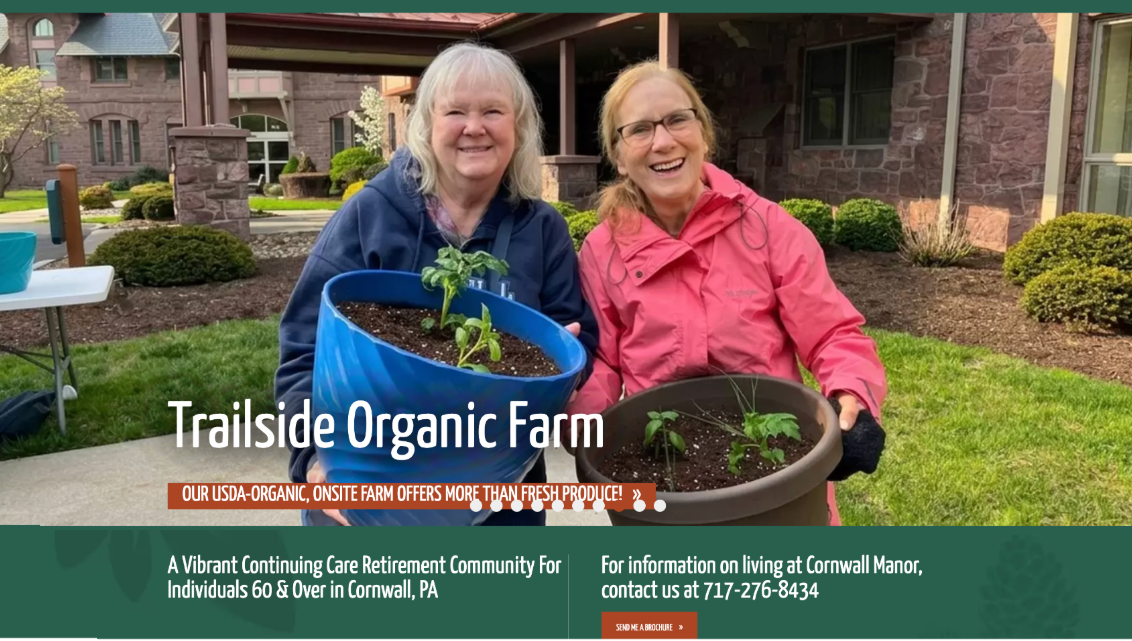
Image Source: Cornwall Manor
The best communities offer more than housing. They provide a lifestyle rich with opportunities for fitness, learning, creativity, and connection. Look beyond standard amenities to find features that match your parents’ unique interests and values.
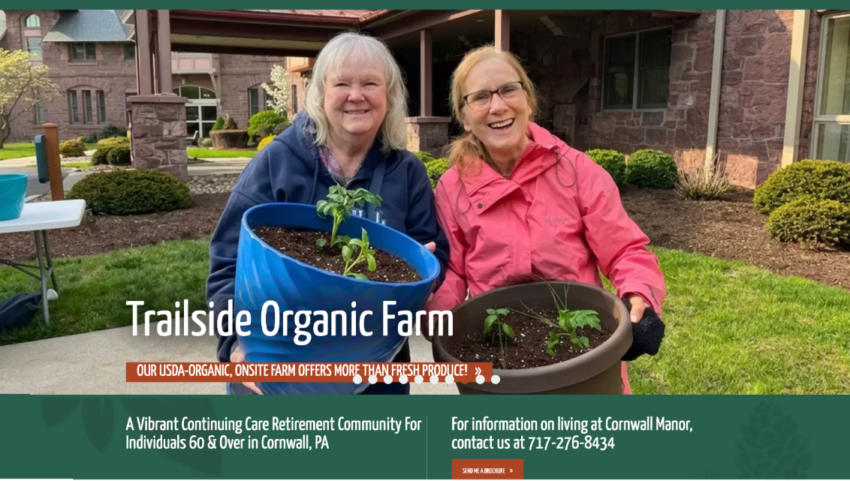
For a parent who treasures time outdoors and staying active in nature, a community like Cornwall Manor offers a distinct advantage with its nature-centered setting and direct access to scenic trails. Cornwall Manor is a nonprofit continuing care retirement community in Lebanon County, Pennsylvania, serving adults 60 and older with independent living homes and apartments across two campuses.
The community provides a la carte dining with no required meal plan, giving residents flexibility and choice. Cornwall Manor also partners with the Rodale Institute to operate Trailside Organic Farm, creating unique opportunities for residents to connect with nature and sustainable living. This kind of distinctive amenity can transform retirement from simply a safe place to live into an enriching daily experience.
Frequently Asked Questions About Senior Living
Here are answers to common questions that often arise during the search for the right senior living community.
What’s the difference between a CCRC and other communities?
A Continuing Care Retirement Community offers multiple levels of care on one campus, including independent living, personal care, skilled nursing, therapy services, and often an on-site visiting physicians’ office. If your health needs change, you can remain in the same community and access these services right on campus rather than relocating to a different facility. Other community models typically offer just one level of care, requiring residents to move elsewhere if their needs increase.
How can we tell if a community is high-quality?
Quality indicators include proper state licensing, transparent pricing, well-trained staff, cleanliness, active resident engagement, and positive reviews. The federal government provides resources to help you choose the right facility and evaluate options. Visit multiple times, talk to current residents and their families, and ask to see inspection reports. Communities that welcome questions and transparency are typically the ones worth considering.
What happens if a parent’s health needs change over time?
This depends on the type of community. In a CCRC like Cornwall Manor, residents can access personal care, skilled nursing, and therapy services on campus if their health needs evolve, allowing them to age in place within the same community. Cornwall Manor’s model means your parent can remain in a familiar environment with friends and routines intact, even as they require more support. In communities that offer only one level of care, residents may need to relocate to another facility when their needs change.
Finding the Right Fit for Your Family’s Future
Choosing a senior living community is a journey, not a single decision. Take your time, involve your parent at every step, and remember that the goal is to find a solution that brings peace of mind to your entire family while enriching your parent’s life for years to come.
The right community will not only meet practical needs but will also offer opportunities for joy, connection, and continued growth. When you find that place, you will know it feels like home.
p.s. Related posts:
When Your Parents Need Care: A Parent’s Guide to Finding Quality In-Home Caregivers
How to Help Your Parents With Retirement
Why Families Should Plan Before a Parent Turns 65
6 Reasons to Consider a Career in Senior Care
To examine any book more closely at Amazon, please click on image of book.
As an Amazon Associate, I earn from qualifying purchases.
Follow PragmaticMom’s board Multicultural Books for Kids on Pinterest.
Follow PragmaticMom’s board Children’s Book Activities on Pinterest.
My books:

 Amazon / Signed or Inscribed by Me
Barbed Wire Between Us by Mia Wenjen, illustrated by Violeta Encarnación
- ⭐ Starred review from Kirkus
- ⭐ Starred review from Publishers Weekly
- ⭐ Starred review from School Library Journal
- Kirkus: The Most Anticipated Children’s Books of Spring 2026

Amazon / Signed or Inscribed by Me
- California Eureka Non-Fiction Gold Award
- Junior Library Guild Gold Selection
- Notable Social Studies Trade Books for Young People Winner (from National Council for the Social Studies and Children’s Book Council)
The Traveling Taco:
- California Eureka Non-Fiction Silver Award
- Notable Social Studies Trade Books for Young People Winner (from National Council for the Social Studies and Children’s Book Council)
- Reading Rockets’ Summer Reading Guide 2025
 Amazon / Signed or Inscribed by Me

Amazon / Signed or Inscribed by Me
We Sing from the Heart: How the Slants® Took Their Fight for Free Speech to the Supreme Court
- ALSC Notable Children’s Book
- 2025 Carter G. Woodson Book Award Middle Level Honoree
- Orbis Pictus Recommended Book for Outstanding Nonfiction for Children
- 2024 Julia Ward Howe Prize for Children’s Literature Winner
- California Eureka Non-Fiction Award Honor Book
- Notable Social Studies Trade Books for Young People Winner (from National Council for the Social Studies and Children’s Book Council)
- Bank Street Best Children’s Books of the Year 2025
- Recommended Reading for the Social Justice Literature Award 2025 (International Literacy Association)
- Pennsylvania Mountain Laurel Book Award Nominee 2026-27
- Junior Library Guild Gold Selection
 Amazon / Signed or Inscribed by Me
 Amazon / Barefoot Books / Signed or Inscribed by Me
Food for the Future: Sustainable Farms Around the World
- ⭐ Starred review from School Library Journal!
- Junior Library Guild Gold selection
- Massachusetts Book Award Long List
- dPICTUS 100 Outstanding Picture Books of 2023
- Chicago Library’s Best of the Best
- 2023 INDIES Book of the Year Awards Finalist
- Green Earth Book Award Long List
- Nautilus Silver Winner, Nonfiction Children’s Picture Book
- Sunshine State Young Readers Award Orange Blossom List for Nonfiction
- Imagination Soup’s 35 Best Nonfiction Books of 2023 for Kids

Amazon / Signed or Inscribed by Me
Bank Street College’s The Best Children’s Books of the Year
 Amazon / Signed or Inscribed by Me

Amazon / Signed or Inscribed by Me