Practical guidance for families balancing books, school materials, and home organization with storage decisions that support continuity and reduce everyday friction.
The problem usually shows up on a weekday afternoon: a kitchen table buried under permission slips, library books, old notebooks, seasonal clothes, and the art project that has to be saved until Friday. When a home starts carrying too much of everything, family routines slow down. Kids lose track of reading assignments, parents lose track of important papers, and the whole house starts absorbing administrative drag.
For families focused on children’s literacy and practical home planning, organization is not about looking tidy. It is about keeping the right materials available at the right time, without letting every room become a holding zone. The best systems are not elaborate. They are reliable, repeatable, and realistic for busy households that already have enough moving parts.
A disorganized home costs more than space
When books, school supplies, and family records are scattered across drawers and closets, the cost is not just visual clutter. It creates operational drag. Homework takes longer to start. Reading time gets interrupted because the right book cannot be found. Parents duplicate purchases because they cannot tell what is already on hand. That is not a style issue; it is a decision-making problem with real consequences. In practice, this is where attention shifts toward NSA Storage that can handle real usage without friction.
For households managing children’s schedules, the pressure can be surprisingly practical. Missed reading logs, misplaced consent forms, and damaged materials can create avoidable stress. In a broader sense, families are also balancing continuity: keeping schoolwork moving, protecting treasured books, and making sure seasonal items do not consume the spaces needed for daily life. A good system reduces liability in the everyday sense: lost items, damaged papers, and avoidable last-minute chaos.
This matters even more when children are building habits around reading and responsibility. If a child cannot easily find a chapter book, a bookmark, or a finished assignment, the lesson becomes about searching instead of learning. A home that supports literacy should make books feel accessible, not fragile or inconvenient. The same principle applies to family paperwork and supplies: the environment should make the next right action easier, not harder.
A workable system for books, records, and seasonal overflow
Families do not need a perfect archival plan. They need a system that survives school nights, weekend errands, and a few messy months. Start with the items that are most likely to cause friction, then build outward from there.
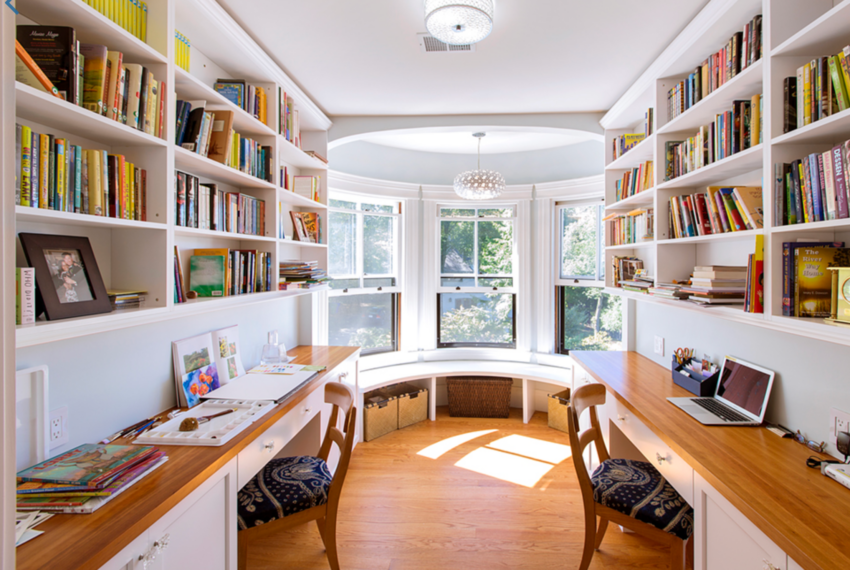
The most useful home systems separate active materials from inactive ones. Active materials are the things children and adults need this week, this month, or this school term. Inactive materials include keepsakes, outgrown supplies, excess craft materials, and back-up items that still matter but do not need to occupy prime space. Once that line is clear, the rest becomes simpler to manage.
- Sort by use, not by emotion. Make three groups: daily-use items, school-year items, and long-term keepsakes or overflow. Put daily-use materials in reachable spots, and move everything else out of the main traffic pattern.
- Create one home base for reading and paperwork. A labeled shelf, bin, or cabinet works better than scattered piles. Keep library books, reading logs, chargers, and school forms together so adults are not searching at the last minute.
- Review storage quarterly. Families change faster than they expect. A box that made sense in September may be useless by winter. Check for damaged materials, duplicate purchases, and items that should move back into circulation or out of the house entirely.
Make the system match family routines:
The best organization plan fits the way a family already lives. If homework happens at the kitchen table, supplies should be close to that space. If bedtime reading is part of the routine, books should be easy for kids to grab and put away without adult intervention. Systems fail when they are designed for an ideal day instead of a normal one.
It also helps to think in terms of access. Items that support daily reading and school readiness should not be buried behind holiday decorations or sports gear. When the most-used objects are available at the front of a closet or on a dedicated shelf, the whole household spends less time managing friction.
Protect materials from wear, loss, and overlap:
Books and paper materials are more vulnerable than they look. They get bent, damp, torn, and forgotten in backpacks. That is why it helps to keep them in places where they are visible, dry, and easy to return. A crowded stack is more likely to damage a favorite title than a simple, labeled system.
Overlap is another hidden problem. Families often own extra pencils, folders, notebooks, and reading copies without realizing it. A quick inventory can prevent unnecessary purchases and reduce the number of partial sets spread across the house. It is easier to maintain one complete school kit than several half-finished ones.
Do not turn every storage decision into a permanent one:
One common mistake is treating every box as if it needs a forever home. Families grow, school requirements change, and reading interests shift. A flexible system allows for seasonal rotation and regular editing. If an item is only useful for part of the year, it does not need to dominate the year-round footprint.
Another mistake is waiting until a room feels unmanageable before making decisions. By then, the household is already paying the cost in time and attention. Smaller, scheduled resets are far easier to maintain than dramatic cleanups after the pile becomes the problem.
The best systems protect attention as much as belongings
In households with children, the real asset is often attention. Every time a parent has to hunt for a book, replace a missing worksheet, or restack an overloaded closet, attention gets siphoned away from reading, planning, and actual family time. Organization is not decorative when it prevents that kind of leakage. It is part of keeping the household functioning.
There is also a continuity issue that many families underestimate. Books support literacy best when they are easy to reach and easy to return. School records support follow-through best when they are not buried under unrelated clutter. And family planning works best when the physical environment does not keep resetting the clock. The point is not perfection. It is reducing friction so the house can handle real life without constant cleanup emergencies.
A practical approach also makes it easier to hand off responsibilities. When parents, grandparents, or older children can understand where things belong, the system stops depending on one person’s memory. That matters in real households, where schedules change, and no one wants to rebuild the whole setup every time the routine shifts.
A house runs better when the right things stay available
The strongest household systems are usually the least dramatic. They do not require a weekend overhaul or a stack of matching containers. They require judgment: what stays close, what gets archived, and what should be stored in a way that protects it from damage and confusion.
For families trying to support children’s literacy, keep school life on track, and make room for the rest of daily living, the goal is straightforward. Reduce clutter where it disrupts execution. Keep active materials within reach. Move the rest into a place that serves the home instead of competing with it. That is how organization starts to pay for itself.
This perspective also recognizes that family life is seasonal. Reading lists change, sports gear comes and goes, and school projects can temporarily take over a room. A good storage plan does not fight those cycles. It absorbs them. That is why the most effective systems are often the simplest ones: they make room for growth, reduce stress, and keep the house usable while children are still in the middle of becoming independent.
A house runs better when the right things stay available
The strongest household systems are usually the least dramatic. They do not require a weekend overhaul or a stack of matching containers. They require judgment: what stays close, what gets archived, and what should be stored in a way that protects it from damage and confusion.
For families trying to support children’s literacy, keep school life on track, and make room for the rest of daily living, the goal is straightforward. Reduce clutter where it disrupts execution. Keep active materials within reach. Move the rest into a place that serves the home instead of competing with it. That is how organization starts to pay for itself.
p.s. Related posts:
Managing Overflow From Art Projects and School Supplies
5 Ways to Embrace Minimalism in Your Home
Renovations for Modern Parents: Enhancing Your Home with Family in Mind
To examine any book more closely at Amazon, please click on image of book.
As an Amazon Associate, I earn from qualifying purchases.
Follow PragmaticMom’s board Multicultural Books for Kids on Pinterest.
Follow PragmaticMom’s board Children’s Book Activities on Pinterest.
My books:

 Amazon / Signed or Inscribed by Me
Barbed Wire Between Us by Mia Wenjen, illustrated by Violeta Encarnación
- ⭐ Starred review from Kirkus
- ⭐ Starred review from Publishers Weekly
- ⭐ Starred review from School Library Journal
- Kirkus: The Most Anticipated Children’s Books of Spring 2026

Amazon / Signed or Inscribed by Me
- California Eureka Non-Fiction Gold Award
- Junior Library Guild Gold Selection
- Notable Social Studies Trade Books for Young People Winner (from National Council for the Social Studies and Children’s Book Council)
The Traveling Taco:
- California Eureka Non-Fiction Silver Award
- Notable Social Studies Trade Books for Young People Winner (from National Council for the Social Studies and Children’s Book Council)
- Reading Rockets’ Summer Reading Guide 2025
 Amazon / Signed or Inscribed by Me

Amazon / Signed or Inscribed by Me
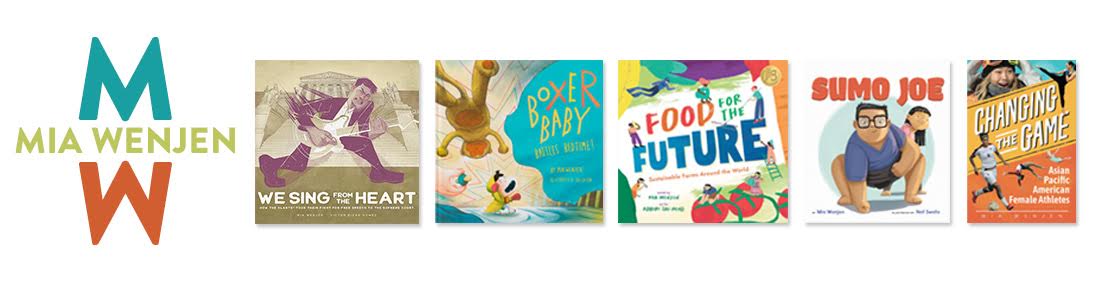
We Sing from the Heart: How the Slants® Took Their Fight for Free Speech to the Supreme Court
- ALSC Notable Children’s Book
- 2025 Carter G. Woodson Book Award Middle Level Honoree
- Orbis Pictus Recommended Book for Outstanding Nonfiction for Children
- 2024 Julia Ward Howe Prize for Children’s Literature Winner
- California Eureka Non-Fiction Award Honor Book
- Notable Social Studies Trade Books for Young People Winner (from National Council for the Social Studies and Children’s Book Council)
- Bank Street Best Children’s Books of the Year 2025
- Recommended Reading for the Social Justice Literature Award 2025 (International Literacy Association)
- Pennsylvania Mountain Laurel Book Award Nominee 2026-27
- Junior Library Guild Gold Selection
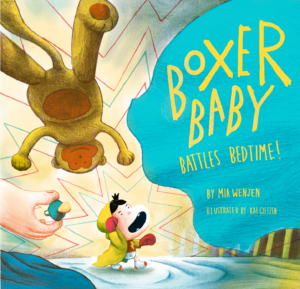 Amazon / Signed or Inscribed by Me
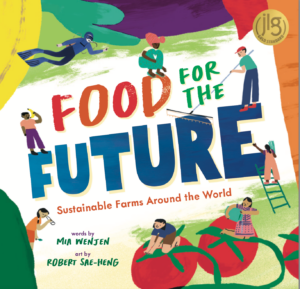 Amazon / Barefoot Books / Signed or Inscribed by Me
Food for the Future: Sustainable Farms Around the World
- ⭐ Starred review from School Library Journal!
- Junior Library Guild Gold selection
- Massachusetts Book Award Long List
- dPICTUS 100 Outstanding Picture Books of 2023
- Chicago Library’s Best of the Best
- 2023 INDIES Book of the Year Awards Finalist
- Green Earth Book Award Long List
- Nautilus Silver Winner, Nonfiction Children’s Picture Book
- Sunshine State Young Readers Award Orange Blossom List for Nonfiction
- Imagination Soup’s 35 Best Nonfiction Books of 2023 for Kids
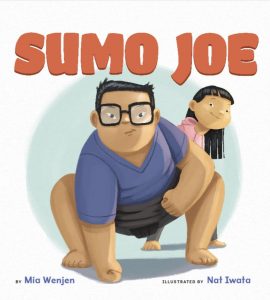
Amazon / Signed or Inscribed by Me
Bank Street College’s The Best Children’s Books of the Year
 Amazon / Signed or Inscribed by Me
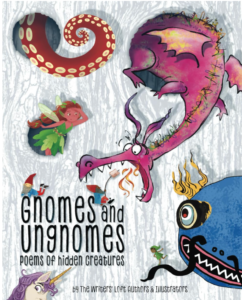
Amazon / Signed or Inscribed by Me