Locate and learn about the concentration camps that held people of Japanese descent during WWII in this geography game that I created. You can use this game for my books:


Barbed Wire Between Us by Mia Wenjen, illustrated by Violeta Encarnación
 Starred review from Kirkus
- Starred review from Publishers Weekly
- Kirkus: The Most Anticipated Children’s Books of Spring 2026
A powerful reverso poem about two girls separated by barbed wire and 80 years of history. Barbed Wire Between Us is a powerful reverso poem that tells two deeply resonant stories across time. It begins with a Japanese American girl sent to an internment camp in Oklahoma during World War II. Read in reverse, it reveals the journey of a Latina girl detained in the very same camp decades later, during the U.S. policy of migrant family separation. Harrowing and emotionally charged, this poetic narrative compels us to confront a haunting question: What have we truly learned in the past 80 years about how we treat the most vulnerable among us? With haunting symmetry and striking parallels, Barbed Wire Between Us is a moving meditation on justice, memory, and the echoes of history that still shape our present. [reverso poem picture book, ages 7 and up]
–> During World War II, the U.S. Army used Fort Sill in Oklahoma as an internment camp for approximately 700 Japanese Americans, primarily men, starting in 1942.

Postcards from Malcolm X: How Yuri Kochiyama Became a Civil Rights Activist by Mia Wenjen and Keith Henry Brown
A moving portrait of Yuri Kochiyama—an ordinary woman who became an extraordinary activist—and her bond with Malcolm X
When Japanese American activist Yuri Kochiyama shook Malcolm X’s hand at a courthouse in 1963, it sparked a transformative friendship built on justice, solidarity, and hope. In Postcards from Malcolm X, Mia Wenjen and illustrator Keith Henry Brown trace Kochiyama’s remarkable journey from a small-town girl in California to a fearless advocate for human rights. Her experiences—her father’s death at the hands of the FBI, her family’s internment during World War II, and her work with Japanese American soldiers—shaped a life of activism that connected her to Harlem’s civil rights struggle and, ultimately, to Malcolm X himself. Through accessible, narrative storytelling and evocative art, this book introduces readers to an unsung hero of the civil rights movement and to the extraordinary friendship between two leaders from different communities, bound by a shared vision of equality. Featuring original postcards from Malcolm X, extensive back matter, and a detailed timeline, this is both a powerful history and an inspiring call to action for young readers. [picture book biography, ages 8 and up]
–> “Yuri Kochiyama was incarcerated for two years during World War II at the Jerome War Relocation Center in Arkansas. After being removed from her California home in 1943, she was held at the Santa Anita Assembly Center before being sent to this concentration camp. She later spent time at the Rohwer camp in Arkansas.” National Park Services
Some of the books featured on this game are also on this book list: 36 Japanese Internment Books for Kids & My Family’s Story.
Japanese “Internment” Concentration Camps in the United States During WWII
Approximately 120,000 people of Japanese descent were put into ten long-term concentration camps. There were also additional Department of Justice detention camps across the United States.
Images from I Am An American: The Nisei Soldier Experience exhibit.


- Manzanar: Located in the Owens Valley at the base of the Sierra Nevada mountains, near Lone Pine.
- Tule Lake: Located in the remote northeastern corner of California near the Oregon border (the largest of the camps).
- Poston: Situated on the Colorado River Indian Reservation in the Sonoran Desert.
- Gila River: Located on the Gila River Indian Reservation south of Phoenix.
- Rohwer: Located in the swampy delta region of southeastern Arkansas.
- Jerome: Also in the Arkansas delta (closed in 1944 to become a German POW camp).
- Topaz: Located in the high desert of central Utah, roughly 15 miles from Delta.
- Minidoka: Located on the stark, dry plains of southern Idaho.
- Heart Mountain: Situated in the high plains of northwest Wyoming between Cody and Powell.
- Granada (Amache): Located on the dry eastern plains of Colorado.
*Camp information from The Library of Congress.
Now try my game …
WWII “Internment Camps” that Imprisoned Japanese Americans and Children’s Books Associated with Each Site:
Here are the books featured in the game:
We were prisoners of our own country, though we were not guilty of any crime, just our ancestry. There was no justice for us…The experience we had has made me determined that no one else should ever, ever experience that again. Minoru Tonai
Minoru Tonai shares this powerful and poignant story of what happened to him and his family during WWII when they were forced into a concentration camp for being of Japanese descent. Because his father owned his own business, he was rounded up by the F.B.I., despite doing nothing wrong. Minoru is forced to leave his dog behind as they are moved twice, ending up at Amache, where they don’t have warm clothes for the frigid temperatures. Finally, reunited with his father, they spread his rock collection outside the barracks to create something beautiful. [nonfiction picture book memoir, ages 4 and up]
–> Amache in Colorado

Jolene and I are in conversation together in this Publishers’ Weekly article: In Conversation: Mia Wenjen and Jolene Gutiérrez.

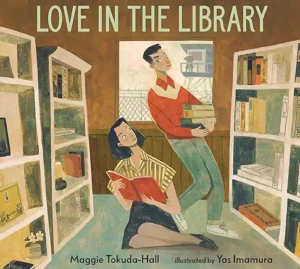
Love in the Library by Maggie Tokuda-Hall, illustrated by Yas Imamura
From Maggie Tokuda-Hall on Nerdy Book Club:
It didn’t matter who you were, just what you were — and being Japanese American then was treated like a crime.
Maggie Tokuda-Hall’s grandparents met at Minidoka Concentration Camp, where they were imprisoned during WWII for being of Japanese descent. Tama, Maggie’s grandmother, ran the library at the camp, and George was a frequent visitor. Their love blossomed despite their inhospitable environment of prison guards, extreme heat and cold, disease, and lack of privacy. Books were the miracle that brought them together. [picture book, ages 6 and up]
–> Minidoka
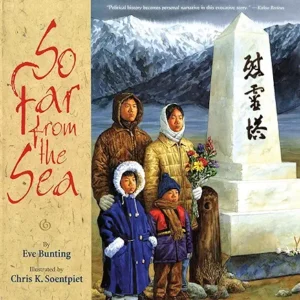
So Far From the Sea by Eve Bunting
Laura Iwasaki and her family visit her grandfather’s grave at the Manzanar War Relocation Center, where he died during internment. Both her parents were relocated, though at different camps. Her father was a little boy when this happened, and this marks the last time they will visit before moving to Boston. Their final visit sums up the attitude of most Japanese-Americans who were forced to relocate: a terrible thing that happened to them. But, as Dad says, “Sometimes, in the end, there is no right or wrong. It is just a thing that happened many years ago. A thing that cannot be changed.” [picture book, ages 8 and up]
–> Manzanar
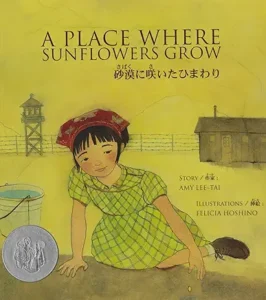
A Place Where Sunflowers Grow by Amy Lee-Tai
A bilingual (Japanese/English) story about the author’s grandmother, who was interned at Topaz and really did grow 8-foot sunflowers in the desert. A stoic story about coping with internment. This is the author’s first book. [picture book, ages 7 and up]
–> Topaz
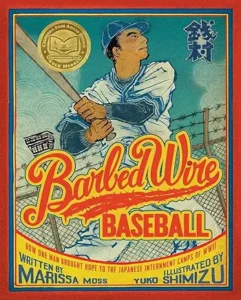
Barbed Wire Baseball by Marissa Moss, illustrated by Yuko Shimizu
I just discovered this on Marissa Moss’s website. As a boy, Kenichi “Zeni” Zenimura dreams of playing professional baseball, but everyone tells him he is too small. Yet he grows up to be a successful player, playing with Babe Ruth and Lou Gehrig! When the Japanese attacked Pearl Harbor in 1941, Zeni and his family were sent to one of ten internment camps where more than 110,000 people of Japanese ancestry were imprisoned without trial. Zeni brings the game of baseball to the camp, along with a sense of hope. This true story, set in a Japanese internment camp during World War II, introduces children to a little-discussed part of American history through Marissa Moss’s rich text and Yuko Shimizu’s beautiful illustrations. The book includes author and illustrator notes, archival photographs, and a bibliography. [nonfiction picture book, ages 6 and up]
–> Gila River relocation center
Finding Moon Rabbit: A War. A Camp. A Girl. A Letter by J. C. Kato and J. C.2
It’s not surprising that this book makes the reader really understand what it was like to be forced into a concentration camp for being of Japanese descent. Koko, her older sister, and their mother are forced to live in Heart Mountain in Wyoming, hoping to hear from their father, who is in Santa Fe. Mother and daughter authors J.C. Kato and J.C.2 don’t shy away from the reality of life in an internment camp, from the family pressures of the No No / Yes Yes questionnaire, the guns pointing at them by the guards, the lack of privacy, the harsh living conditions, and even how the soldiers stole sugar from their food supplies. The authors did extensive research, from visiting the campsites to primary source oral histories, but most importantly, they were able to get their Japanese American family elders to open up about their personal experiences (not an easy thing to do!). The result is a page-turner that belongs in every library. This is the narrative that I will give to my own children so that they can learn their own history as 1/4 Japanese Americans. [middle grade, ages 8 and up]
–> Heart Mountain

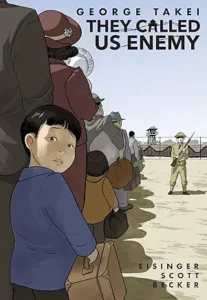
They Called Us Enemy by George Takei et al.
In 1942, at the order of President Franklin D. Roosevelt, every person of Japanese descent on the West Coast was rounded up and shipped to one of ten “relocation centers,” hundreds or thousands of miles from home, where they would be held for years under armed guard.
They Called Us Enemy is Takei’s firsthand account of those years behind barbed wire, the joys and terrors of growing up under legalized racism, his mother’s hard choices, his father’s faith in democracy, and the way those experiences planted the seeds for his astonishing future.
This is the book that I gave to all three of my children. It’s the true story of actor and activist George Takei’s childhood, spent in American concentration camps during World War II. His story is interlaced with background and stories of others involved, and it gives a very clear picture of what life was like in an internment camp. George’s antics as a young boy provide some comic relief. [middle grade nonfiction graphic novel, ages 8 and up]
–> George Takai and his family were temporarily held in horse stalls at the Santa Anita Assembly Center, then moved to the Rohwer Relocation Center in Arkansas, and later to the Tule Lake War Relocation Center in California.
This Man Filmed Life Inside an Internment Camp:
Japanese-American Internment During WWII | History:
I Was Sent to a US Concentration Camp | I Was There:
Why the US photographed its own WWII concentration camps:
Japanese Internment Camp Survivors Speak Out:
Japanese American Assembly Centers (Temporary Holding Cells before being moved to Concentration Camps)
- Arcadia, California (Santa Anita Racetrack, stables) (Santa Anita assembly center)
- Fresno, California (Fresno Fairgrounds, racetrack, stables)
- Marysville / Arboga, California (migrant workers’ camp)
- Mayer, Arizona (Civilian Conservation Corps camp)
- Merced, California (county fairgrounds)
- Owens Valley, California
- Parker Dam, Arizona
- Pinedale, California (Pinedale Assembly Center, warehouses)
- Pomona, California (Los Angeles County Fairgrounds, racetrack, stables) (Pomona assembly center)
- Portland, Oregon (Pacific International Livestock Exposition, including 3,800 housed in the main pavilion building)
- Puyallup, Washington (fairgrounds racetrack stables, informally known as “Camp Harmony“)
- Sacramento, California Camp Kohler (Site of Present-Day Walerga Park) (migrant workers’ camp)
- Salinas, California (fairgrounds, racetrack, stables)
- San Bruno, California (Tanforan racetrack, stables)
- Stockton, California (San Joaquin County Fairgrounds, racetrack, stables)
- Tulare, California (fairgrounds, racetrack, stables)
- Turlock, California (Stan
Japanese American Concentration Camp Sites:
- Gila River War Relocation Center, Arizona
- Granada War Relocation Center, Colorado (AKA “Amache”)
- Heart Mountain War Relocation Center, Wyoming
- Jerome War Relocation Center, Arkansas
- Manzanar War Relocation Center, California
- Minidoka War Relocation Center, Idaho
- Poston War Relocation Center, Arizona
- Rohwer War Relocation Center, Arkansas
- Topaz War Relocation Center, Utah
- Tule Lake War Relocation Center, California
p.s. Related posts:
Pearl Harbor Day: 20 Books for Kids and My Mother’s Story
158 Japanese American Books for Kids & Teens
Resources for Asian Pacific American Heritage Month
5 Japanese American Picture Books Celebrating Joy Through Creativity
FREE Immersive History Game about WWII Japanese AmericansSumo Craft Round Up
Take a stand today for #CultureAgainstNukes
Cover Reveal: Barbed Wire Between Us by Mia Wenjen, illustrated by Violeta Encarnación
To examine any book more closely at Amazon, please click on image of book.
As an Amazon Associate, I earn from qualifying purchases.
Follow PragmaticMom’s board Multicultural Books for Kids on Pinterest.
Follow PragmaticMom’s board Children’s Book Activities on Pinterest.
My books:

Bookshop.org / Amazon / Signed or Inscribed by Me
Barbed Wire Between Us by Mia Wenjen, illustrated by Violeta Encarnación
- ⭐ Starred review from Kirkus
- ⭐ Starred review from Publishers Weekly
- ⭐ Starred review from School Library Journal
- Kirkus: The Most Anticipated Children’s Books of Spring 2026
Free and downloadable guide:
Barbed Wire Between Us Teacher’s Guide
Bookshop.org / Amazon / Signed or Inscribed by Me
Bookshop.org / Amazon / Signed or Inscribed by Me
- California Eureka Non-Fiction Gold Award
- Junior Library Guild Gold Selection
- Notable Social Studies Trade Books for Young People Winner (from National Council for the Social Studies and Children’s Book Council)
The Traveling Taco:
- California Eureka Non-Fiction Silver Award
- Notable Social Studies Trade Books for Young People Winner (from National Council for the Social Studies and Children’s Book Council)
- Reading Rockets’ Summer Reading Guide 2025
 Bookshop.org / Amazon / Signed or Inscribed by Me
Bookshop.org / Amazon / Signed or Inscribed by Me
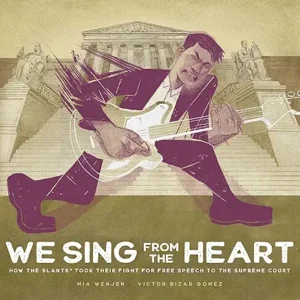
We Sing from the Heart: How the Slants® Took Their Fight for Free Speech to the Supreme Court
- ALSC Notable Children’s Book
- 2025 Carter G. Woodson Book Award Middle Level Honoree
- Orbis Pictus Recommended Book for Outstanding Nonfiction for Children
- 2024 Julia Ward Howe Prize for Children’s Literature Winner
- California Eureka Non-Fiction Award Honor Book
- Notable Social Studies Trade Books for Young People Winner (from National Council for the Social Studies and Children’s Book Council)
- Bank Street Best Children’s Books of the Year 2025
- Recommended Reading for the Social Justice Literature Award 2025 (International Literacy Association)
- Pennsylvania Mountain Laurel Book Award Nominee 2026-27
- Junior Library Guild Gold Selection
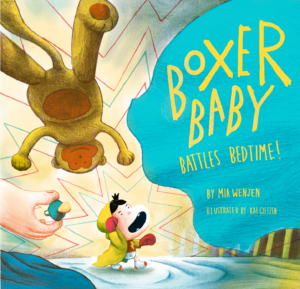 Amazon / Signed or Inscribed by Me
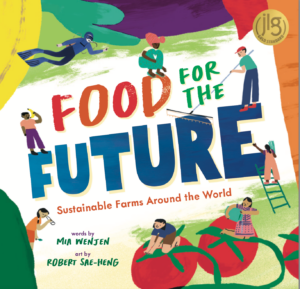 Bookshop.org / Amazon / Barefoot Books / Signed or Inscribed by Me
Food for the Future: Sustainable Farms Around the World
- ⭐ Starred review from School Library Journal!
- Junior Library Guild Gold selection
- Massachusetts Book Award Long List
- dPICTUS 100 Outstanding Picture Books of 2023
- Chicago Library’s Best of the Best
- 2023 INDIES Book of the Year Awards Finalist
- Green Earth Book Award Long List
- Nautilus Silver Winner, Nonfiction Children’s Picture Book
- Sunshine State Young Readers Award Orange Blossom List for Nonfiction
- Imagination Soup’s 35 Best Nonfiction Books of 2023 for Kids
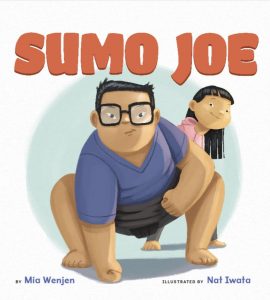
Bookshop.org / Amazon / Signed or Inscribed by Me
Bank Street College’s The Best Children’s Books of the Year
 Amazon / Signed or Inscribed by Me
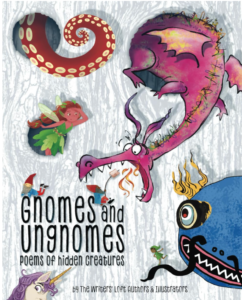
Amazon / Signed or Inscribed by Me

Amazon / Signed or Inscribed by Me