
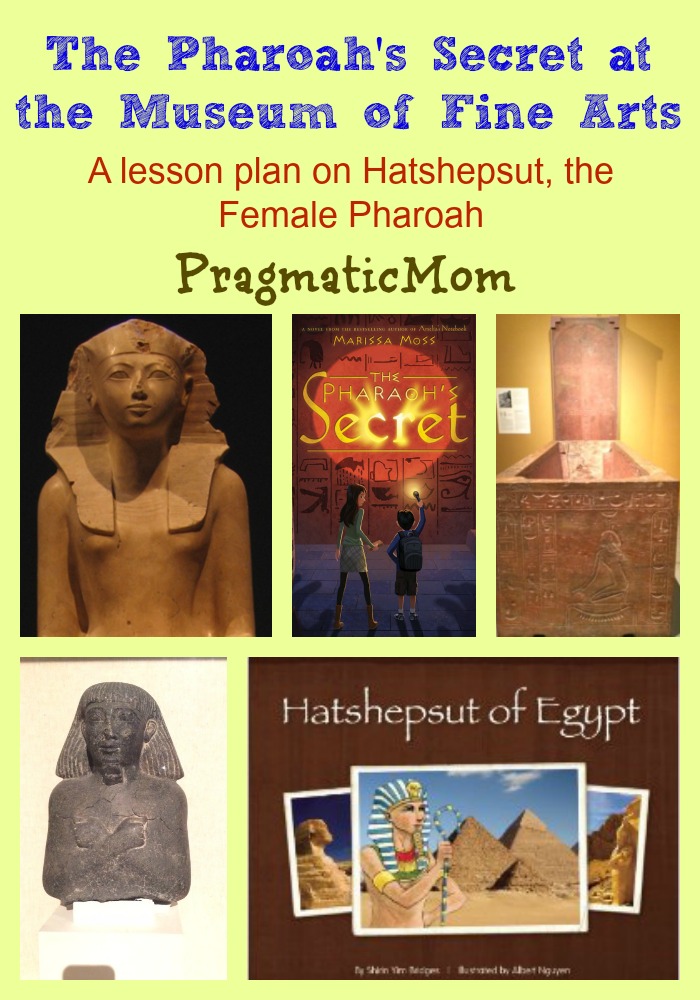
When I read an action-adventure fantasy that has time travel, it’s easy to believe that it’s just a made-up story. Sure, Hatshepsut is a real person but she’s from so long ago that she seems like a mythical person. Until I ran into her at Boston’s Museum of Fine Arts…
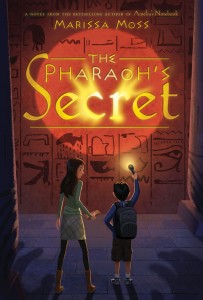
And so I have a lesson plan around The Phaoah’s Secret in three parts:
- Part I: Learn about Hatshepsut
- Part II: Read The Pharoah’s Secret by Marissa Moss for ages 8 and up
- Part III: Learn about Senenmut
Part I: Learn about Hatshepsut

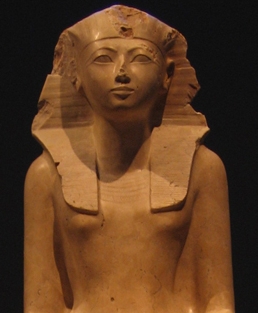
Hatshepsut was given a reign of about twenty-two years by ancient authors, assuming power as early as 1512 BC, or, as late as 1479 BC.
Statue of Hatshepsut on display at the Metropolitan Museum of Art
Hatshepsut was one of the most prolific builders in ancient Egypt, commissioning hundreds of construction projects throughout both Upper Egypt and Lower Egypt. Arguably, her buildings were grander and more numerous than those of any of her Middle Kingdom predecessors’. Later pharaohs attempted to claim some of her projects as theirs. She employed the great architect Ineni, who also had worked for her father, her husband, and for the royal steward Senemut.
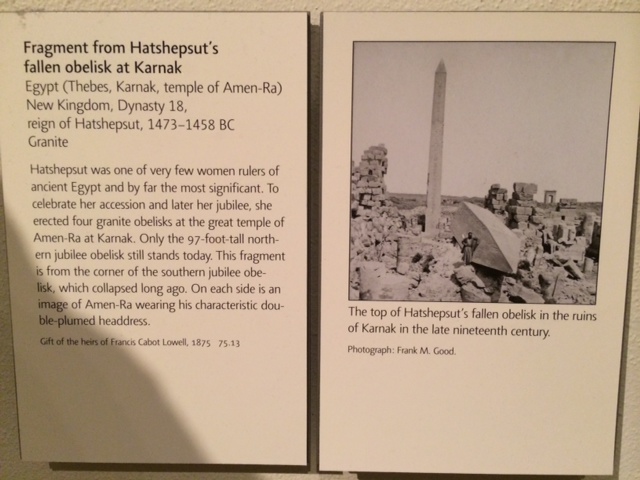
Following the tradition of most pharaohs, Hatshepsut had monuments constructed at the Temple of Karnak. Another project, Karnak’s Red Chapel, or Chapelle Rouge, was intended as a barque shrine and originally, may have stood between her two obelisks. It was lined with carved stones that depicted significant events in Hatshepsut’s life.
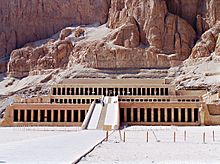
Colonnaded design of Hatshepsut temple
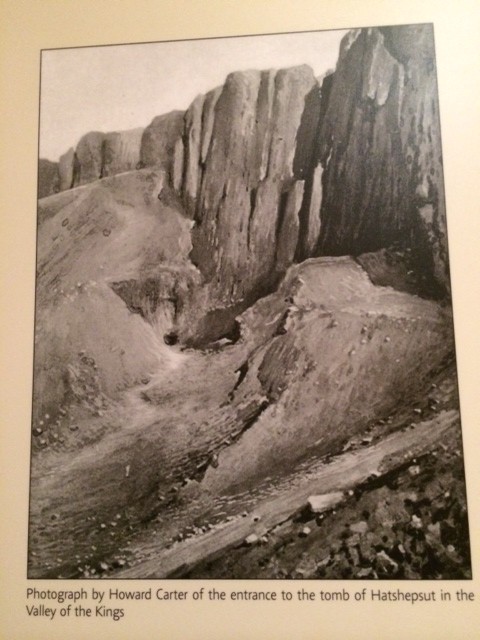
Following the tradition of many pharaohs, the masterpiece of Hatshepsut’s building projects was a mortuary temple. She built hers in a complex at Deir el-Bahri. It was designed and implemented by Senemut at a site on the West Bank of the Nile River near the entrance to what now is called the Valley of the Kings because of all the pharaohs who later chose to associate their complexes with the grandeur of hers.
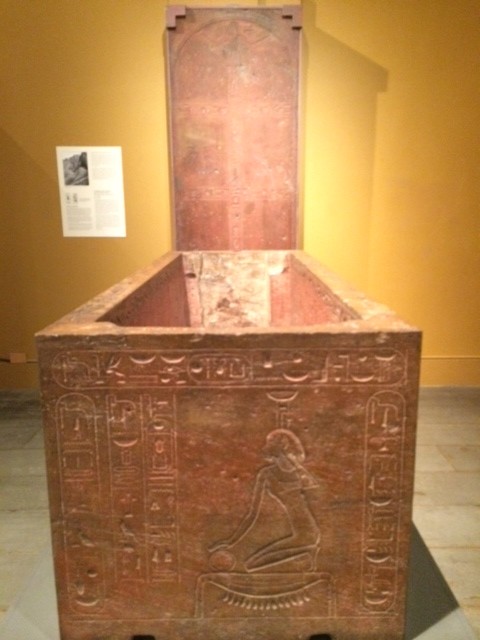
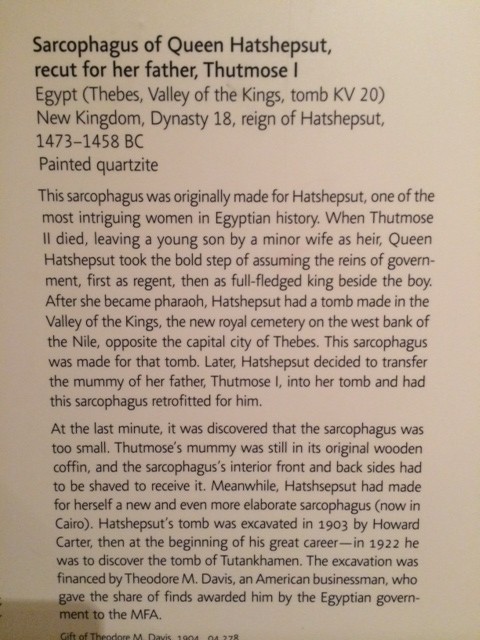
Sarcophagus of Queen Hatshepsut recut for her father, Thutmose I.
At the Deir el-Bahari temple, Hatshepsut’s numerous statues were torn down and in many cases, smashed or disfigured before being buried in a pit. At Karnak, there even was an attempt to wall up her obelisks. While it is clear that much of this rewriting of Hatshepsut’s history occurred only during the close of Thutmose III’s reign, it is not clear why it happened, other than the typical pattern of self-promotion that existed among the pharaohs and their administrators, or perhaps saving money by not building new monuments for the burial of Thutmose III and instead, using the grand structures built by Hatshepsut.
Amenhotep II, the son of Thutmose III, who became a co-regent toward the end of his father’s reign, is suspected by some as being the defacer during the end of the reign of a very old pharaoh. He would have had a motive because his position in the royal lineage was not so strong as to assure his elevation to pharaoh.
Part II: Read The Pharaoh’s Secret
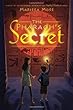
The Pharoah’s Secret by Marissa Moss
Hatshepsut was the fifth pharaoh of the Eighteenth dynasty of Egypt. Hatshepsut came to the throne of Egypt in 1478 BC. Officially, she ruled jointly with Thutmose III who had ascended to the throne as a child one year earlier. She is generally regarded by Egyptologists as one of the most successful pharaohs, reigning longer than any other woman of an indigenous Egyptian dynasty. from Wikipedia
Talibah and her younger brother Adom are linked to an ancient Egyptian mystery: who and why wanted to wipe out Hatshepsut’s legacy? They visit their ancestral homeland in Egypt with their Egyptologist father and find out that their deceased mother had a vital role to play for a long-dead pharaoh. Now Talibah is called upon to complete her mother’s unfinished task tied to the great female pharaoh Hatshepsut and her high priest Senenmut. But what exactly transpired in the 1450s B.C.? Talibah and her brother must find out in order to solve the mystery that enshrouds them. [chapter book, ages 8 and up]
Part III: Learn about Senenmut
I found this information below from Wikipedia about Senenmut that readers who have completed The Pharaoh’s Secret might want to mull over:
Senenmut was of low commoner birth, born to literate provincial parents, Ramose and Hatnofer (or “Hatnefret”) from Iuny (modern Armant). Senenmut is known to have had 3 brothers—Amenemhet, Minhotep, and Pairy—and 2 sisters—Ahhotep and Nofrethor, respectively.
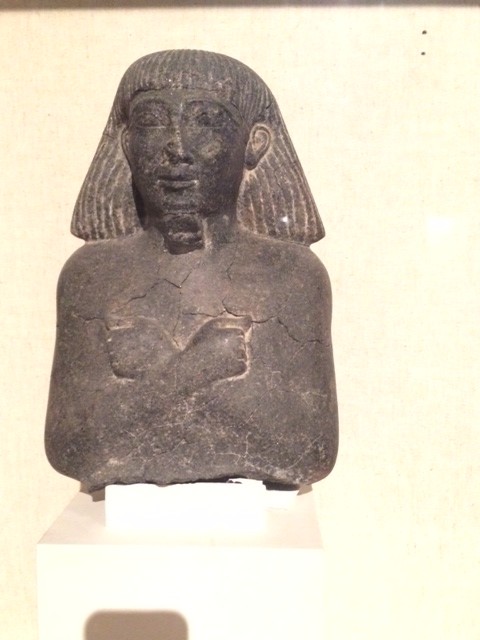
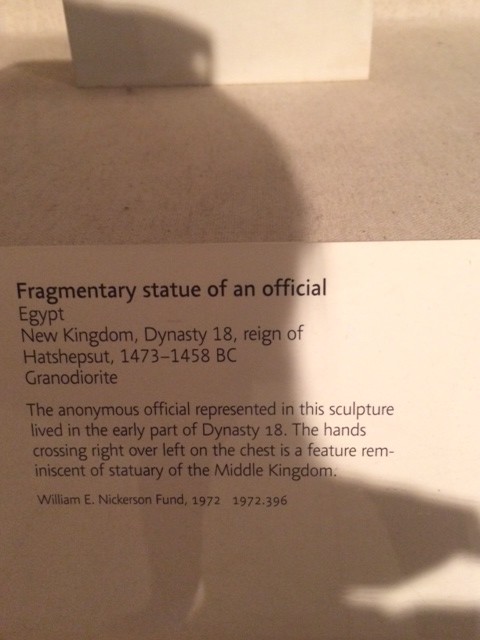
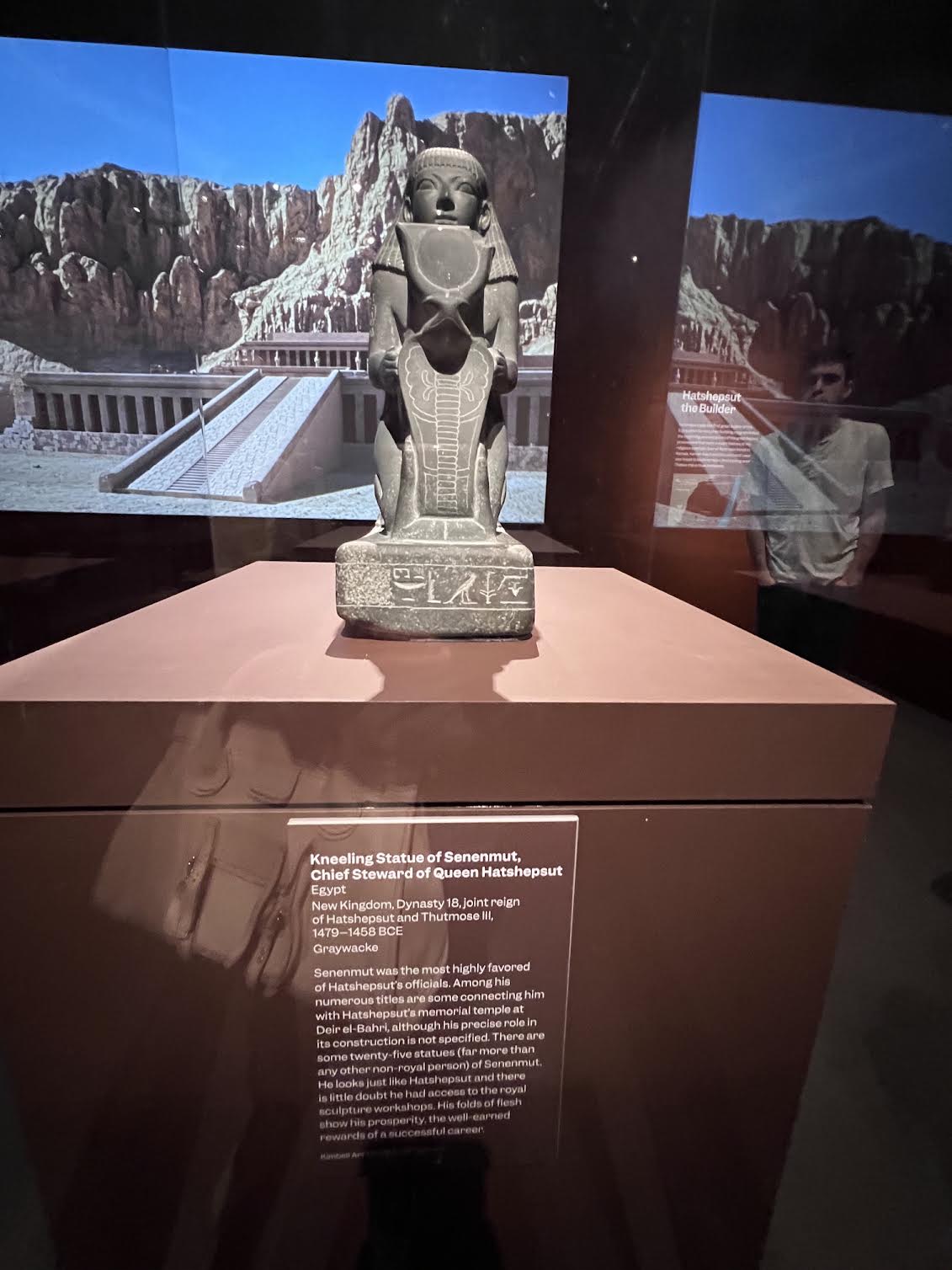
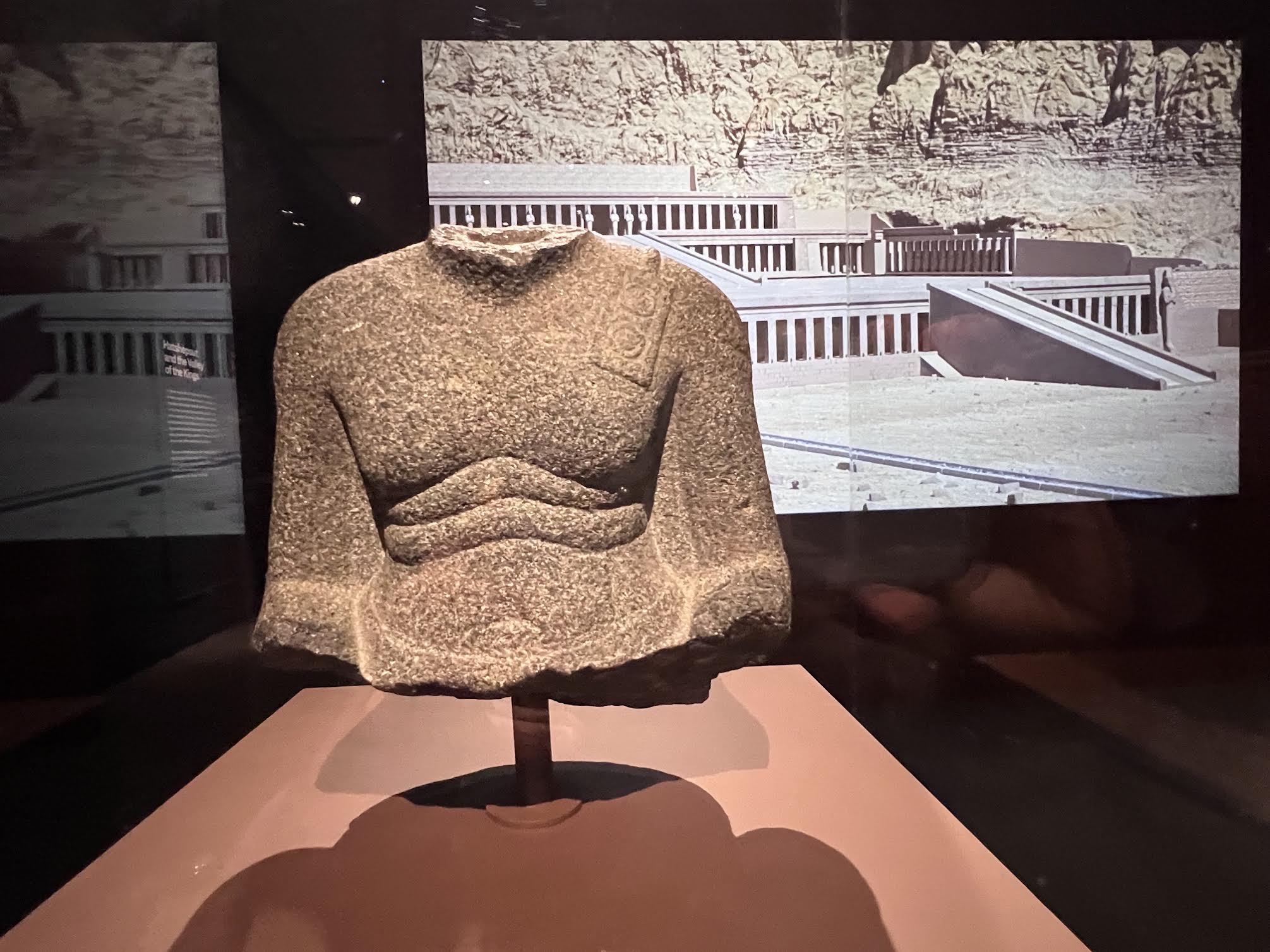
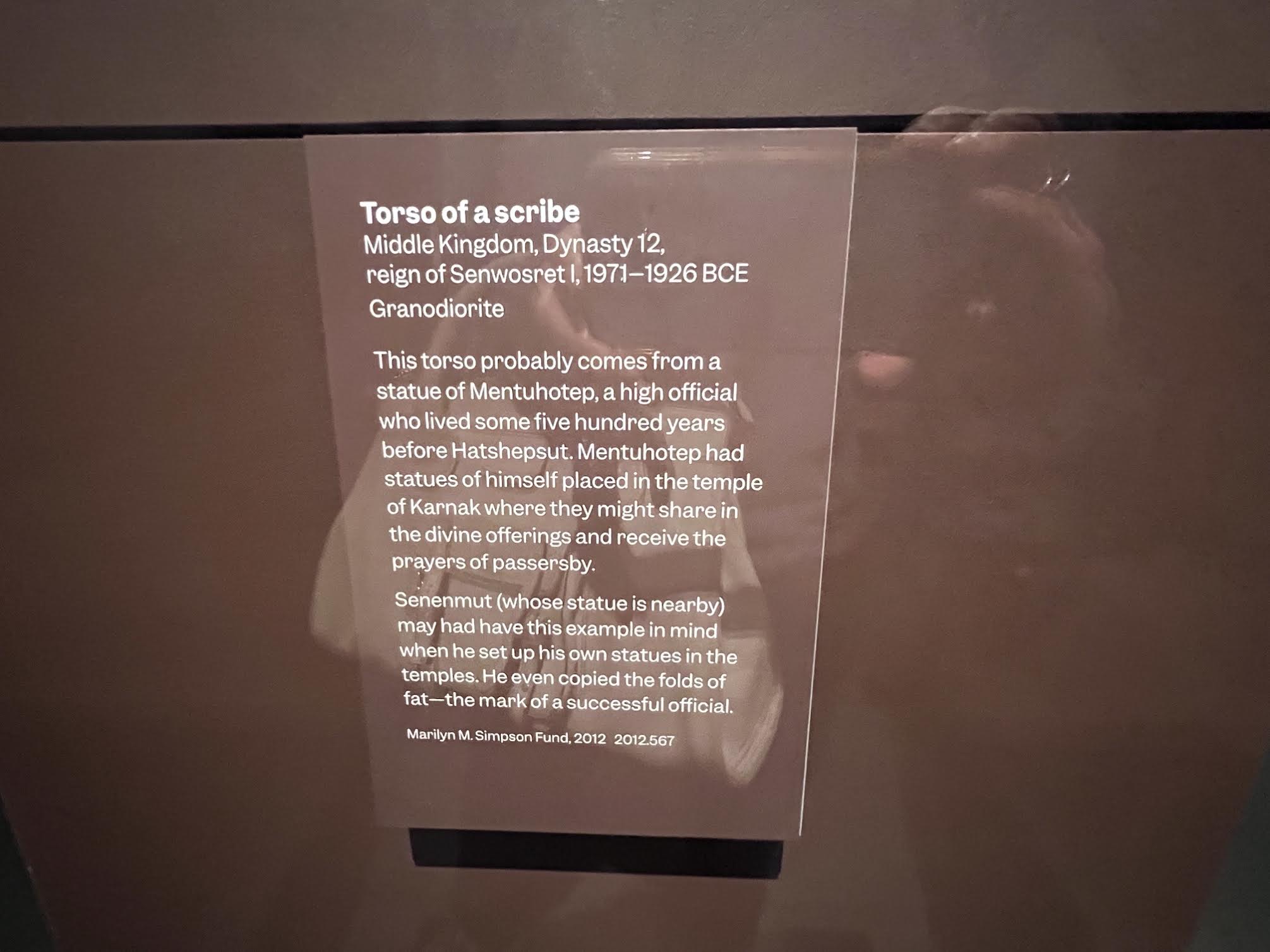
Could this be Senenmut?
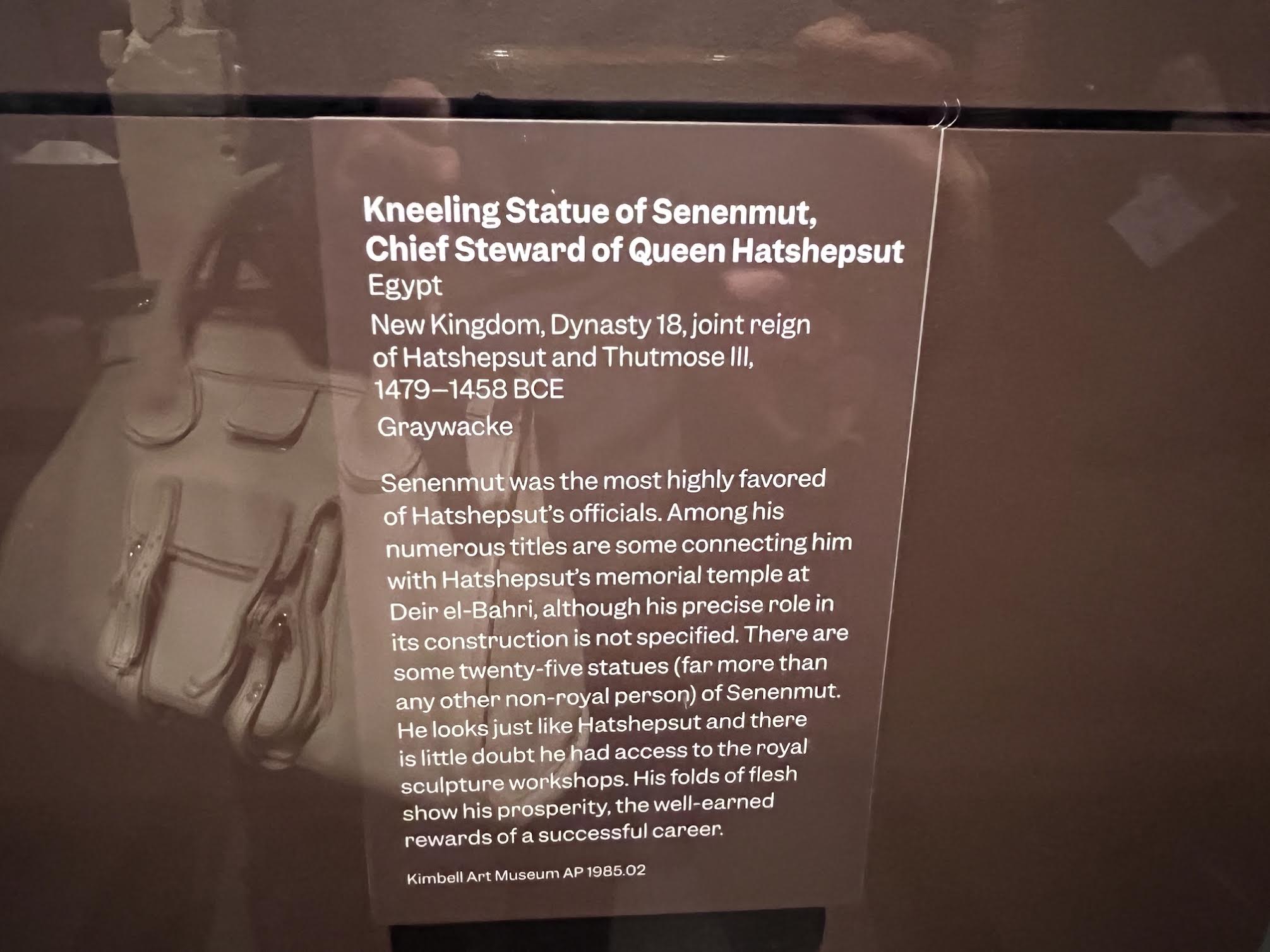
Senenmut first enters the historical record on a national level as the “Steward of the God’s Wife” (Hatshepsut) and “Steward of the King’s Daughter” (Neferure). Some Egyptologists place Senenmut’s entry into royal service during the reign of Thutmose I, but it is far more likely that it occurred during either the reign of Thutmose II or while Hatshepsut was still regent and not the pharaoh. After Hatshepsut was crowned pharaoh, Senenmut was given more prestigious titles and became the high steward of the king.
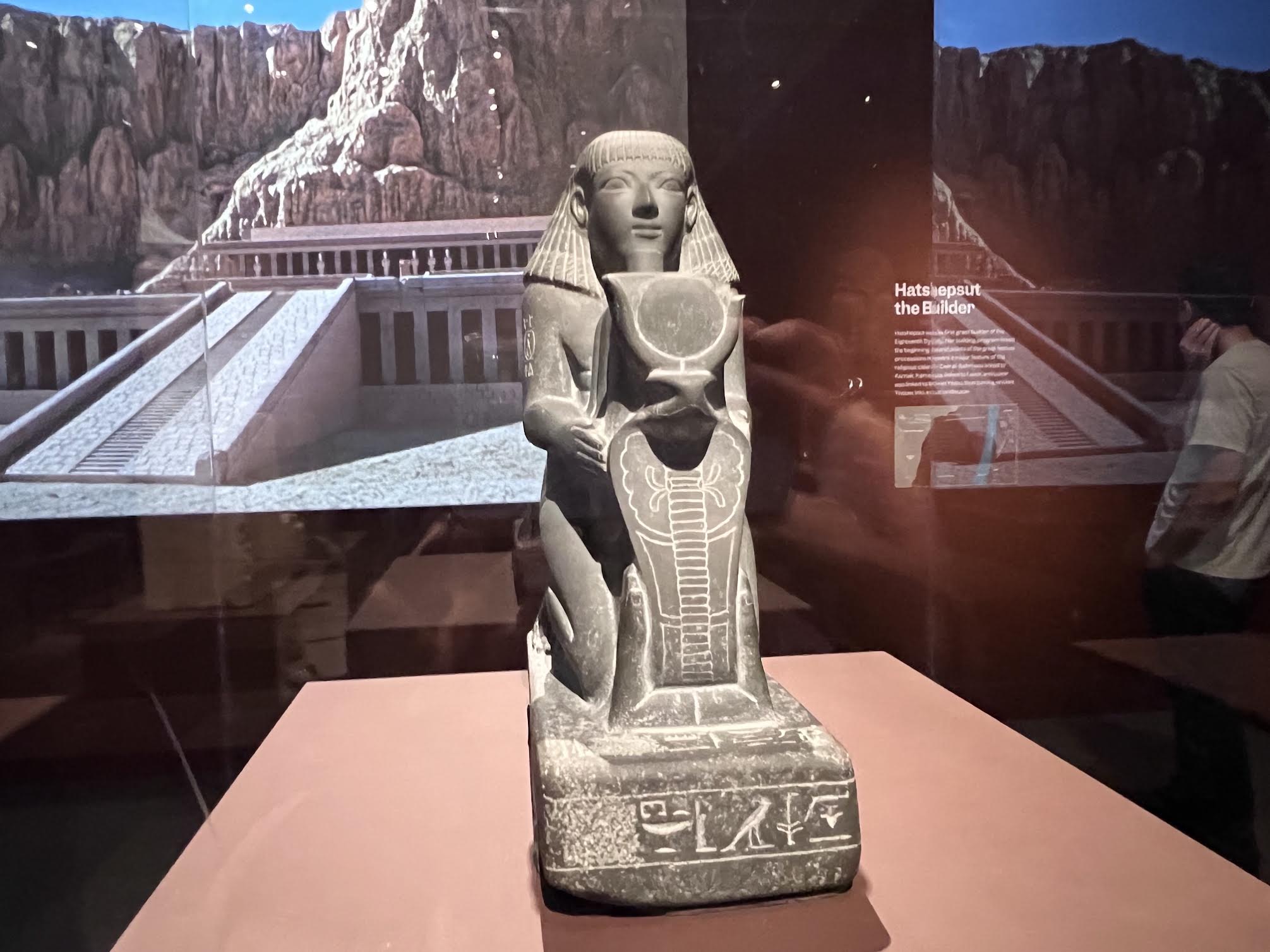
Senenmut supervised the quarrying, transport, and erection of twin obelisks, at the time the tallest in the world, at the entrance to the temple of Karnak. One still stands today; the other broke in two and toppled centuries ago. Karnak’s Red Chapel, or Chapelle Rouge, was intended as a barque shrine and may have originally stood between the two obelisks.
Some Egyptologists have theorized that Senenmut was Hatshepsut’s lover. Facts that are typically cited to support the theory are that Hatshepsut allowed Senenmut to place his name and an image of himself behind one of the main doors in Djeser-Djeseru.
Senenmut claims to be the chief architect of Hatshepsut’s works at Deir el-Bahri. Senenmut’s masterpiece building project was the Mortuary Temple complex of Hatshepsut at Deir el-Bahri.
Although it is not known where he is buried, Senenmut had a chapel and a tomb constructed for him, respectively at (TT71) in the Tombs of the Nobles, and the tomb at (TT353), which contains a famous star ceiling, near the temple at Deir el-Bahri, near Hatshepsut’s mortuary temple. They were both heavily vandalized during the reign of Thutmose III, perhaps during the latter’s campaign to eradicate all traces of Hatshepsut’s memory.
Here’s another great picture book about Hatshepsut:
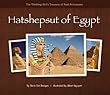
Hatshepsut of Egypt (The Thinking Girl’s Treasury of Real Princesses) by Shirin Yim Bridges
I really like this series depicted real princesses who defied custom and forged a path of their own. I also like how the illustrations combine both art and artifacts to capture the princesses’ lives. [picture book, ages 6 and up]
Here’s a great book about pyramids!
Pyramid by David Macaulay
David Macaulay takes us back in time to show us step by step how the Great Pyramid was constructed as well as who was involved. With detailed illustrations, this book captures the magnificence and enormity of building a pyramid fit for a pharaoh. Interestingly, the architect depicted, Mahnud Hotep, is also the pharaoh’s best friend. [advanced nonfiction picture book, ages 9 and up]
Here’s a great book about Tutankhamen
The Secrets of Tutankhamun: Egypt’s Boy King and His Incredible Tomb by Patricia Cleveland-Peck, illustrated by Isabel Greenberg
Great review by Ms. Yingling Reads:
“This large-format picture book is more reminiscent of Motel of the Mysteries in its vocabulary, content, and writing style. It is part biography of Tutankhamun, with excellent information about the background of the Egyptian royal family at the time and explanations of how succession and intermarriages played into the political climate. There is a chapter about the process of mummification that would be very helpful to have at hand while reading the first chapter of Rubalcaba’s The Wadget Eye that includes information about funeral processions and tombs as well. The last part of the book gives detailed information about Carter’s dig that is almost as complete as Schlitz’s The Hero Schliemann. I especially liked that the various incidences of people affected by the “curse” of the tomb are discussed, but the author acknowledges that there were many more people involved with the dig who suffered no ill effects.” [nonfiction chapter book, ages 8 and up]

How about you? I’m fascinated with The Queen Who Was King. Are there any great books about Hatshepsut that you recommend? Please share! Thank you!
To examine any book more closely at Amazon, please click on image of book.
p.s. Arab American Book Lists for Kids
16 Wonderful Ramadan Books for Kids of All Ages


18 Wonderful Picture Books about the Arab World
This is my collection of the best picture books I’ve read so far about the Arab world.


27 Books for Kids About the Arab World


Top 10: Middle Eastern American Children’s Books

Middle East Outreach Council Award


How To: Teach Your Children About Islam (and tolerance in the process!)
In the wake of the conflicts in the Middle East, I thought it especially important for kids to learn about Islam and the people of the Middle East which might also teach them tolerance in the process. There is so much negative stereotyping during a war that can color a child’s perspective.


Deborah Ellis’s Parvana series shows a realistic view of what life is like in Afghanistan for girls today. It’s heartbreaking but also so important.
The Pharoah’s Secret at Boston’s Museum of Fine Arts
Chapter book The Pharoah’s Secret by Marissa Moss discovered in Boston’s Museum of Fine Arts. Did I find Senenmut, Hatshepsut’s love there?!
To examine any book more closely at Amazon, please click on image of book.
As an Amazon Associate, I earn from qualifying purchases.
Follow PragmaticMom’s board Multicultural Books for Kids on Pinterest.
Follow PragmaticMom’s board Children’s Book Activities on Pinterest.
My books:

 Bookshop.org / Amazon / Signed or Inscribed by Me
Barbed Wire Between Us by Mia Wenjen, illustrated by Violeta Encarnación
- ⭐ Starred review from Kirkus
- ⭐ Starred review from Publishers Weekly
- ⭐ Starred review from School Library Journal
- Kirkus: The Most Anticipated Children’s Books of Spring 2026
Free and downloadable guide:
Barbed Wire Between Us Teacher’s Guide

Bookshop.org / Amazon / Signed or Inscribed by Me

Bookshop.org / Amazon / Signed or Inscribed by Me
- California Eureka Non-Fiction Gold Award
- Junior Library Guild Gold Selection
- Notable Social Studies Trade Books for Young People Winner (from National Council for the Social Studies and Children’s Book Council)
The Traveling Taco:
- California Eureka Non-Fiction Silver Award
- Notable Social Studies Trade Books for Young People Winner (from National Council for the Social Studies and Children’s Book Council)
- Reading Rockets’ Summer Reading Guide 2025
 Bookshop.org / Amazon / Signed or Inscribed by Me

Bookshop.org / Amazon / Signed or Inscribed by Me
We Sing from the Heart: How the Slants® Took Their Fight for Free Speech to the Supreme Court
- ALSC Notable Children’s Book
- 2025 Carter G. Woodson Book Award Middle Level Honoree
- Orbis Pictus Recommended Book for Outstanding Nonfiction for Children
- 2024 Julia Ward Howe Prize for Children’s Literature Winner
- California Eureka Non-Fiction Award Honor Book
- Notable Social Studies Trade Books for Young People Winner (from National Council for the Social Studies and Children’s Book Council)
- Bank Street Best Children’s Books of the Year 2025
- Recommended Reading for the Social Justice Literature Award 2025 (International Literacy Association)
- Pennsylvania Mountain Laurel Book Award Nominee 2026-27
- Junior Library Guild Gold Selection
 Amazon / Signed or Inscribed by Me
 Bookshop.org / Amazon / Barefoot Books / Signed or Inscribed by Me
Food for the Future: Sustainable Farms Around the World
- ⭐ Starred review from School Library Journal!
- Junior Library Guild Gold selection
- Massachusetts Book Award Long List
- dPICTUS 100 Outstanding Picture Books of 2023
- Chicago Library’s Best of the Best
- 2023 INDIES Book of the Year Awards Finalist
- Green Earth Book Award Long List
- Nautilus Silver Winner, Nonfiction Children’s Picture Book
- Sunshine State Young Readers Award Orange Blossom List for Nonfiction
- Imagination Soup’s 35 Best Nonfiction Books of 2023 for Kids
Bookshop.org / Amazon / Signed or Inscribed by Me
Bank Street College’s The Best Children’s Books of the Year
 Amazon / Signed or Inscribed by Me
Amazon / Signed or Inscribed by Me

Amazon / Signed or Inscribed by Me

Fascinating and scandalous! I will look out for that book and recommend The Pharaoh’s Secret to my daughter.
Hi Ann,
If she reads it and likes it, you MUST take her to the Museum of Fine Art in Boston this summer! It’s really fun to see it in person! (Or if she likes the Red Pyramid series by Rick Riordan; that would work too!)
This sounds like a really good book! Hatshepsut is an interesting historical figure. 🙂
Hi Erik,
Everyone I know who has read this book has liked it. You might too and if you ever get to Boston, the artifacts will be waiting for you at the Museum of Fine Arts! Maybe you will come to Boston for college one day!
Like the sounds of this book for kids. Great post, Mia.
I have never heard of Hatshepsut, thanks for a very informative blogpost 🙂
Hopping over from the kid lit blog hop.
Hi Catherine,
She’s a fascinating historical figure … one of just a handful of female pharoahs but most historians would say the most successful. She landed the throne when her husband died and their son was too young to rule and the intrigue with the commoner soldier-turned-architect is true and also just fun stuff like a soap opera. Senenmut is believed to have fathered the daughter she has and he seems to be murdered by the visier who is jealous of his power. When Hatshepsut’s grandson takes over rule of Egypt, he defaces her monuments to secure his power since his ties are a little weaker.
Mia, What a terrific post! Intrigue, mystery and history. My son will love the Pharoah’s Secret.
Hi Robin,
Thanks so much!! I thought that I would be on the only one interested in this side of history-meets-chapter book-meets-museum, but I LOVE Hatshepsut’s story. It’s better than Real Housewives of Atlanta!! 🙂 I hope your son likes the book and will want to see the artifacts!