Quality learning resources aren’t just nice to have anymore; they’re absolutely essential. This chilly reality hits home especially during those winter months when students are stuck indoors, glued to screens for hours. Beyond flashy technology, what really matters is ensuring every kid has the tools to succeed, regardless of where they come from. When done right, accessible materials breathe new life into traditional teaching methods and create classrooms where everyone belongs.
You’ve probably noticed it yourself the way in which students today engage with content in wildly different ways than even five years ago. From interactive tools that respond to touch to platforms where classmates collaborate across town, or across continents, this shift isn’t just trendy; it reflects a genuine need for diverse learning options that work for different brains.
What are the Barriers to Accessibility?
Creating a culture of accessibility starts with honestly facing the obstacles learners encounter daily. Many students hit roadblocks due to financial constraints, learning differences that traditional systems weren’t built for, or simply living too far from educational hubs. For these kids, accessing high school level resources at Studocu can be a lifeline, offering alternative materials when traditional ones fall short.
Multimedia resources pack a surprising punch in this area. Videos explaining complex concepts, podcasts that bring expert voices into the classroom, interactive simulations that let students manipulate variables and see results in real-time; these aren’t just bells and whistles. When thoughtfully presented alongside traditional texts, they help information stick. Have you ever tried to learn a new skill by just reading about it? Then, watched someone demonstrate it? The difference can be night and day.
What’s the Role of Community in Resource Sharing?
Something remarkable has emerged in recent years: community-driven platforms where educators pool their collective wisdom. According to a Department of Education EdTech Survey from 2021, 84% of teachers save substantial time through digital collaboration and resource sharing. That’s hours returned to their lives, often during those frantic end-of-term periods when every minute counts.
The magic happens when teachers and students contribute materials reflecting their unique experiences. A physics concept explained by three different teachers might finally click with a struggling student when they hear the third explanation. This exchange of teaching tools creates something greater than the sum of its parts: a sense of belonging among educational communities that transcends individual classrooms.
Teachers, though, remain the crucial guides through this resource landscape. With approximately 92% of educators already using some form of educational technology, strategic integration has become essential. But let’s be real: having a tablet in every classroom won’t solve anything if teachers don’t know how to use them effectively. The approach needs more nuance, especially when addressing the digital divide that still splits many communities.
Training instructors to weave accessible materials into their daily lessons amplifies impact exponentially. A confident teacher equipped with the right tools can transform a dry lesson into an experience that bridges both technological and educational gaps.
How Do You Build Inclusivity From the Ground Up?
Schools themselves need to evolve their thinking. A fascinating 2021 study across health science disciplines showed significant evidence that cultural competency education< positively impacts students’ knowledge, skills, and attitudes. This isn’t just about checking diversity boxes; it’s about creating environments where different perspectives are genuinely valued. In autumn, classrooms filled with students from varied backgrounds, this approach enhances academic experiences while preparing everyone for our increasingly connected global society.
Smart educators watch engagement metrics like hawks. Which formats do students gravitate toward? Where do they spend extra time? When do they share content with peers? These behavioural clues reveal which resources resonate, informing future development and ensuring learners receive relevant support.
Does Listening Make All the Difference?
The short answer is that it does. You simply can’t overstate how important feedback becomes in this process. When students share their honest experiences with learning materials, what confused them, what clarified concepts, and what they revisited later, it creates a continuous improvement loop. Materials evolve alongside learner needs, rather than remaining static.
Accessibility must extend beyond coursework to encompass support services, too. The Office for Students (OfS) demonstrated this commitment by allocating £15 million toward student mental health initiatives in 2023/2024. This included £3.6 million for Student Space, a comprehensive mental health hub. The particular focus on students transitioning between educational levels—those anxiety-inducing months when everything changes—shows a deepening understanding of how emotional wellbeing underpins academic success.
Growing Through Professional Development
Investing in professional development for educators lays essential groundwork. Workshops during those quiet summer months and ongoing training sessions focused on inclusive practices cultivate awareness that carries through the academic year. A teacher who feels supported, rather than overwhelmed by constant new requirements, will implement more effective classroom strategies.
Education never stands still, and neither should our commitment to accessible learning. With thoughtful approaches that recognise real-world constraints like limited budgets and varying technological access, institutions can remove barriers and create genuine opportunities for all students. The transformation benefits not just individual learners but also enriches the entire educational ecosystem.
Making accessibility a core priority rather than an afterthought helps schools and universities ensure all students have the necessary resources regardless of circumstances. On rainy days when motivation lags or during high-stress exam periods, this commitment creates learning environments that actually work for diverse learners.
Ultimately, the future of education doesn’t just depend on embracing flashy new tools; it hinges on our capacity to make those tools work for everyone sitting in the classroom.
p.s. Related posts:
5 Activities To Complement Educational Books
Education in a Post-COVID World
Stuck Indoors? Five Fun Ideas for Special Education Teachers
How Do We Achieve Gender Equality in Education?
To examine any book more closely at Amazon, please click on image of book.
As an Amazon Associate, I earn from qualifying purchases.
Follow PragmaticMom’s board Multicultural Books for Kids on Pinterest.
Follow PragmaticMom’s board Children’s Book Activities on Pinterest.
My books:

 Amazon / Signed or Inscribed by Me
The Traveling Taco:
- Reading Rockets’ Summer Reading Guide 2025

Amazon / Signed or Inscribed by Me

Amazon / Signed or Inscribed by Me
We Sing from the Heart: How the Slants® Took Their Fight for Free Speech to the Supreme Court
- ALSC Notable Children’s Book
- Orbis Pictus Recommended Book for Outstanding Nonfiction for Children
- California Eureka Non-Fiction Award Honor Book
- Notable Social Studies Trade Books for Young People Winner (from National Council for the Social Studies and Children’s Book Council)
- Bank Street Best Children’s Books of the Year 2025
- Junior Library Guild Gold Selection
 Amazon / Signed or Inscribed by Me
 Amazon / Barefoot Books / Signed or Inscribed by Me
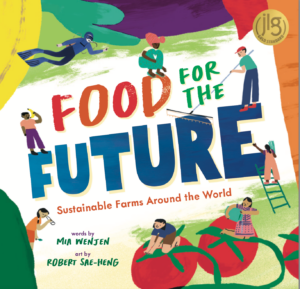
Food for the Future: Sustainable Farms Around the World
- ⭐ Starred review from School Library Journal!
- Junior Library Guild Gold selection
- Massachusetts Book Award Long List
- dPICTUS 100 Outstanding Picture Books of 2023
- Chicago Library’s Best of the Best
- 2023 INDIES Book of the Year Awards Finalist
- Green Earth Book Award Long List
- Nautilus Silver Winner, Nonfiction Children’s Picture Book
- Sunshine State Young Readers Award Orange Blossom List for Nonfiction
- Imagination Soup’s 35 Best Nonfiction Books of 2023 for Kids
Amazon / Signed or Inscribed by Me
Bank Street College’s The Best Children’s Books of the Year
 Amazon / Signed or Inscribed by Me
Amazon / Signed or Inscribed by Me