
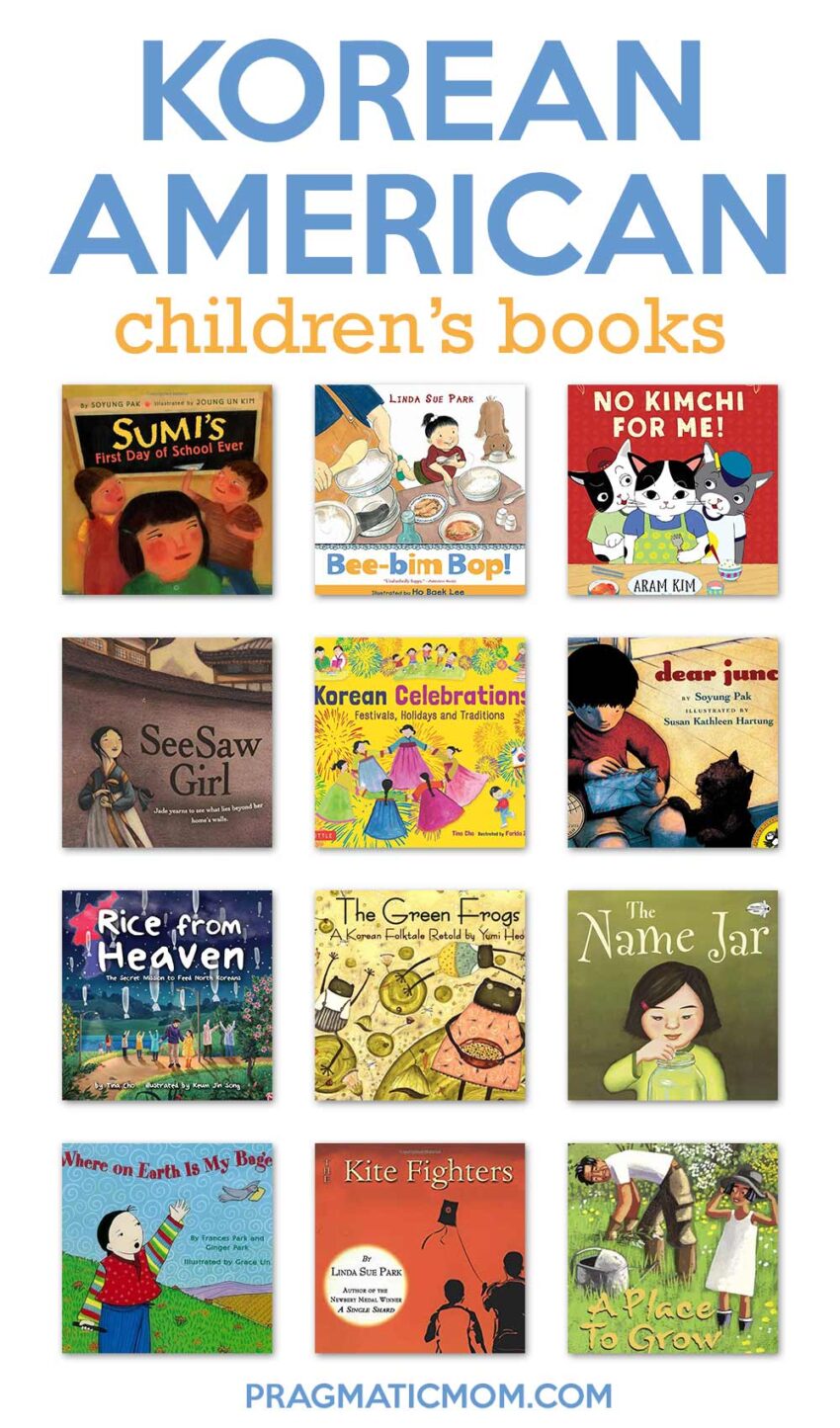
Inside: Korean-America authors have unique stories to share. Enjoy these 10 Korean American children’s books to read with your children.
My husband is Korean and I joke that the Koreans are nicknamed “The Irish of Asia.”
Like the Irish, they have a strong culture despite a long history of invasion and occupation. Like the Irish, they have a penchant for drinking and fighting. And like the Irish, there is a vein of melancholy that runs through their DNA. Or at least, this is my take on it.
When my 4th grader did a unit on immigration, they covered many nationalities (she did Japan), but not Korea. I think it’s because the Korean immigration story is a fairly new one that began in earnest after the Korean War [think M.A.S.H.!].
And the Korean immigrants, more so than other Asian nationalities, have made it to the United States in pursuit of higher education, and thus, when they stayed, they were able to land squarely in the middle class.
Korean-American authors have unique stories to tell. Their collective memories of the old country are still fresh, as are their immigrant experience. And if you use food to tell the story of a culture as I do, Korean cuisine is the Next Big Thing.
Or at least in New York City. My husband and I found it amusing when we visited NYC a few years ago that the big trend was upscale, fancy Korean restaurants. We lived near Korea Town in Los Angeles for many years so we equate good Korean food with small but clean “dives”.
In any case, ride the trend and enjoy these 64 Great #OwnVoices Korean American Books for Kids and Teens with your children.
p.s. 15 Great Korean Folktales for Kids
72 Great #OwnVoices Korean American Books for Kids and Teens
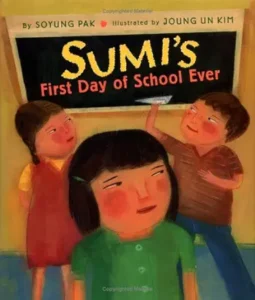
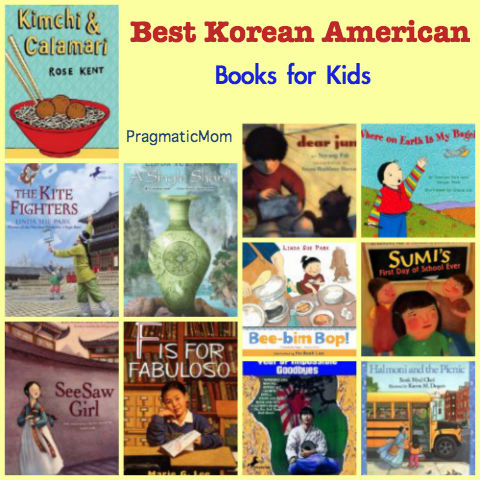
10. Sumi’s First Day of School Ever by Soyung Pak, illustrated by Joung Un Kim
Sumi doesn’t speak English, and today is her very first day of school ever. Will it go well? [picture book, for ages 2 and up]

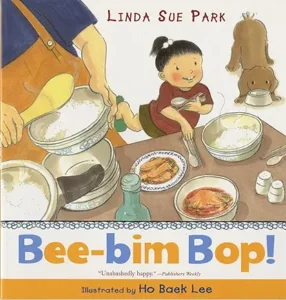
9. Bee-bim Bop! by Linda Sue Park, illustrated by Ho Baek Lee
A light-hearted rhyming picture book on a favorite Korean national dish. It’s popular in restaurants but it evolved as a way to use up all the leftovers. In this book, a family spends all day preparing this little girl’s favorite meal. With a recipe at the end! [picture book, for ages 2 and up]
More Books by Linda Sue Park
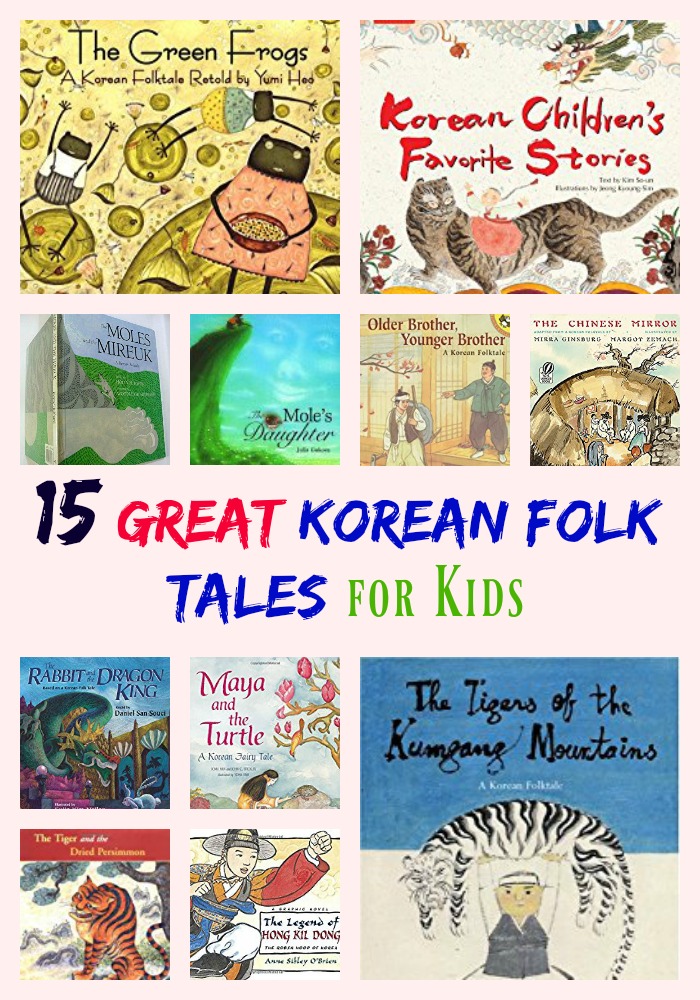
Wing and Claw: Beast of Stone by Linda Sue Park
Raffa Santana is a healer, not a fighter. As a gifted apothecary, he has amazing instincts for unleashing the potential of magical-seeming plants. But his skills have failed to free the animals that the heartless Chancellor captured and turned against the people of Obsidia—directly threatening Raffa’s friends and family.
Now Raffa and his ragtag group of allies are preparing to confront the Chancellor’s armies in battle. Great beasts, small animals, and humans alike will be joining the fight, and Raffa’s heart yearns to prevent injuries—and worse—on both sides of the battle.
After all, the Chancellor’s creatures will be fighting against their will. Can Raffa’s instincts for apothecary arts bring a tolerable resolution to an impossibly unfair fight? [middle grade, ages 8 and up]
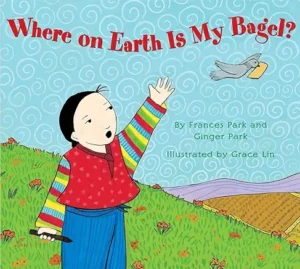
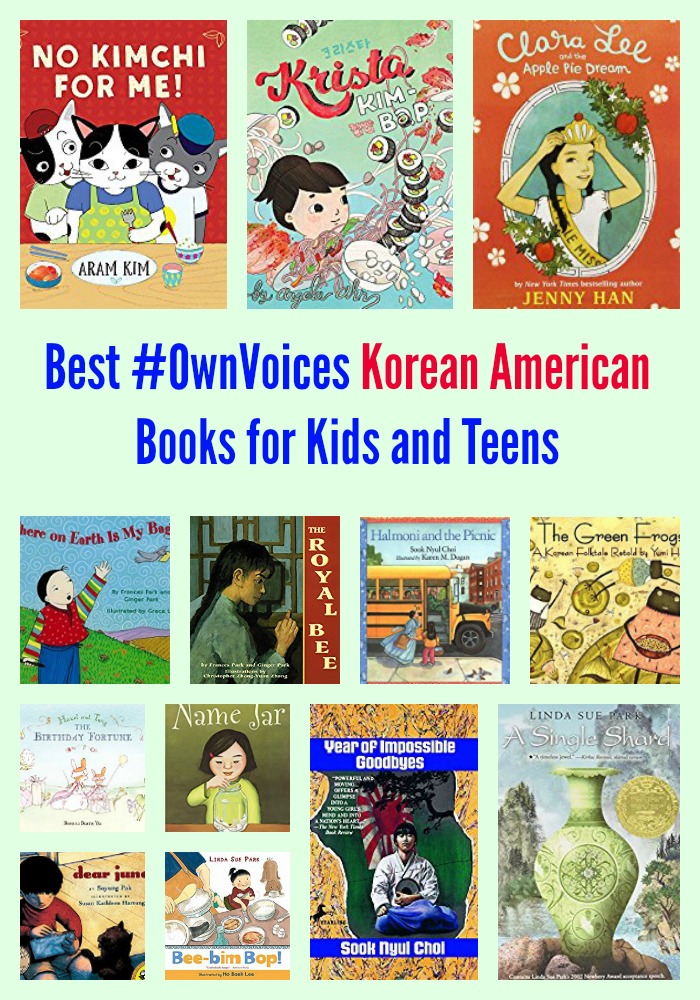
8. Where on Earth is My Bagel? by Frances and Ginger Park, illustrated by Grace Lin
A whimsical story about a little Korean boy who dreams of a New York bagel and, with the help of his friends, can make one. [picture book, for ages 3 and up]

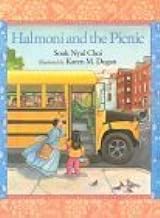
7. Halmoni and the Picnic by Sook Nyul Choi
An advanced picture book about a girl and her Korean grandmother and how they both learn to bridge the cultural gap with food. [picture book, for ages 5 and up]
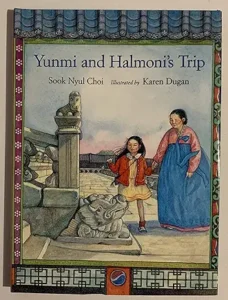
 6. Yunmi and Halmoni’s Trip by Sook Nyul Choi
Halmoni takes her granddaughter on a trip back to Korea to meet the family, but Yunmi worries that her grandmother might not want to come back. [picture book, for ages 5 and up]

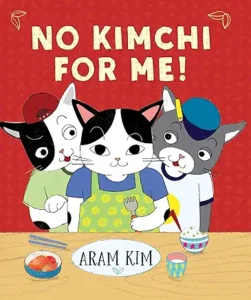
5. No Kimchi for Me series by Aram Kim
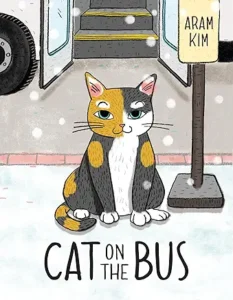
Kimchi is too spicy for Yoomi so her brothers call her a baby and refuse to play with her. She wants to be able to eat kimchi like the big kids. With the help of her grandmother, she figures out a way. This Korean-themed picture book is cleverly told through cats to widen the audience. [picture book, ages 4 and up]
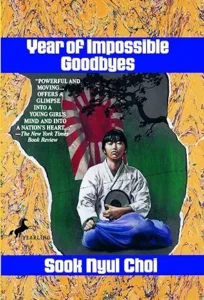
4. The Year of Impossible Goodbyes by Sook Nyul Choi
A haunting but ultimately uplifting story of author Sook Nyul Choi’s experience living in war-torn North Korea. [middle grade, for ages 8 and up]

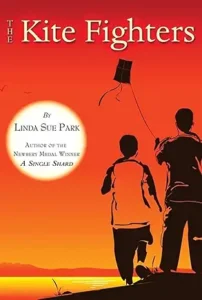
3. The Kite Fighters by Linda Sue Park
Set in 15th century Korea, Korea’s Golden Age, two brothers — one skilled in kite making and the other skilled in kite flying — combine their skills to compete in a kite flying contest on behalf of the king. [middle grade, for ages 8 and up]

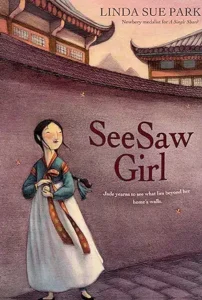
2. Seesaw Girl by Linda Sue Park
A glimpse into the lives of the nobility during the Golden Age of Korea and the restrictions placed on women. [middle grade, for ages 8 and up]

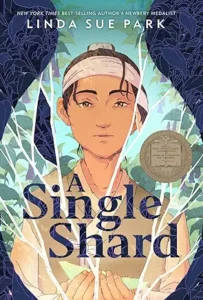
1. A Single Shard by Linda Sue Park
Newbery award-winning book about a famous potter during the Golden Age of Korea. [chapter book, for ages 8 and up]

More Great #OwnVoices Korean American Books
My Sister’s Doljabi by Ginger Park and Frances Park, illustrated by Violet Kim
In Korea, a baby’s first birthday is a big celebration because, before modern medicine, many babies did not make it to their first birthday. One tradition is to place a tray of symbolic objects for the baby to choose that signify their future. Hoon wants her baby sister to choose thread, which means long life, but she has her own ideas. [picture book, ages 4 and up]

Binna’s Dalgona by Sojung Kim-McCarthy
Binna has moved from Korea to a new country and is learning English. She tries to tell her classmates about the dalgona she made at home, but she can’t find the words. With her family’s love and support, she does not get discouraged but tries again the next day and invites her friends over to make dalgona with her. I wish the book included more information on what a dalgona is. I thought it was a kind of coffee. [picture book, ages 3 and up]

Two-List Thanksgiving by Christine Whan, illustrated by Sienna Youngun Kim
When it’s time to shop for Thanksgiving, a little girl and her mom make two shopping lists: one for the regular supermarket and one for the Korean market. Their holiday will feature both traditional American Thanksgiving dishes and Korean ones, such as galbi, japchae, and pajeon. It’s a delicious feast that brings the traditions of two families together! [picture book, ages 4 and up]

Giving Thanks with Halmoni: Celebrating Chuseok, the Korean Harvest Festival by Kathleen Choi and Sook Nyul Choi, illustrated by Il Sung Na
I’m so happy that the Halmoni stories are back, and this one does not disappoint! In this lovely picture book, readers learn about the Korean Harvest Festival, Chuseok, reminiscent of Thanksgiving! Authors Kathleen and Sook Nyul Choi make this a multigenerational celebration with an inclusive cast of characters. This gentle story invites the reader to participate in this wonderful holiday celebration that includes games, gifts, the phases of the moon, and, of course, a feast of special foods. [picture book, ages 4 and up]

Suka’s Farm by Ginger Park and Frances Park, illustrated by Tiffany Chen
Japan occupied Korea for thirty-five years, beginning in 1910. Koreans were forced to learn Japanese and replace their names with Japanese ones. It was also a time of hardship for the Korean people, including a boy named Kwan and his family of wood carvers. With little food to eat, Kwan decides to visit a neighboring farmer, a Japanese man named Mr. Suka. An unlikely friendship forms when Kwan asks for a job and is hired. Kwan is a hard worker, which makes Mr. Suka soften his attitude towards him. After helping him find his lost precious goats, Mr. Kwan shows that he sees Kwan by learning his Korean name. [picture book, ages 4 and up]

Let’s Celebrate Korean New Year by Michelle W. Park, illustrated by Hyewon Yum
Emmy award-winning TV Host Michelle W. Park invites readers to celebrate the Korean New Year, known as Seolla! Madeleine and her younger sister, Eloise, wake up early to get ready. They wear their Hanboks and help make mandoo, Korean dumplings. Eloise needs help with many of the preparations, but when it comes time to write a poem, she’s a big help! [picture book, ages 3 and up]

Birthday Soup by Grace Seo Chang, illustrated by Jaime Kim
It’s Maia’s birthday, and she is excited to help prepare a special seaweed soup, miyeok guk, for her celebration and share this Korean tradition with her friends along with more of her favorite foods. [picture book, ages 4 and up]

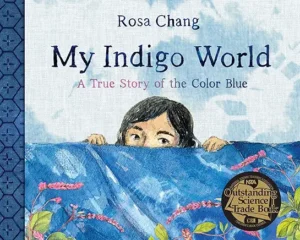
My Indigo World: A True Story of the Color Blue by Rosa Chang
The indigo plant is the source of the deep blue used in clothing and textiles around the world from Japan to West Africa to Guatemala and beyond. Rosa, a Korean girl, plants indigo seeds and turns the plant into blue dye. Textile art featuring indigo-dyed fabric gives the book a richly textured experience. Rosa Chang does not shy away from how Indigo, because it was a valuable plant, also resulted in exploitation and suffering. This richly layered story combines the life cycle of the indigo plant with its impact as a commercial crop for textiles as well as an art form. The color blue has an evocative backstory. [picture book, ages 4 and up]
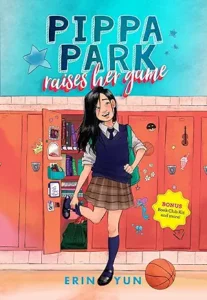
Pippa Park Raises Her Game by Erin Yun
Erin Yun was inspired by Charles Dicken’s Great Expectations in her middle grade debut about a Korean American girl, Pippa Park, whose basketball skills land her a full scholarship to a posh private school. Navigating her new teammates proves tricky, as she finds eating lunch with the “Royals,” the most popular kids at school while trying to hide her old life. Things come to a head when her new team is slated to play her old basketball team in the championship game. [middle grade, ages 9 and up]
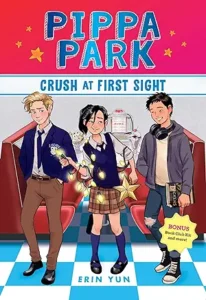
Also by Erin Yun:
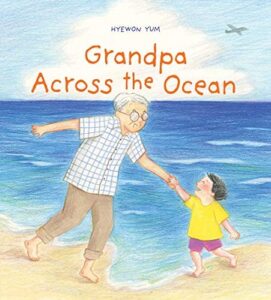
Grandpa Across the Ocean by Hyewon Yum
At first, visiting Grandpa in Korea feels strange for the grandson. He doesn’t speak Korean and the food seems foreign. But, after he breaks Grandpa’s orchid pots with his ball, he realizes how kind and loving his grandfather is. They go on adventures together, exploring the city. He learns to speak a little Korean and to appreciate kimchi. As the summer ends, he will miss his grandfather on the other side of the ocean. But there is always next summer! [picture book, ages 4 and up]
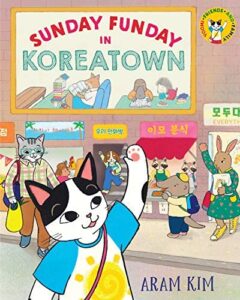
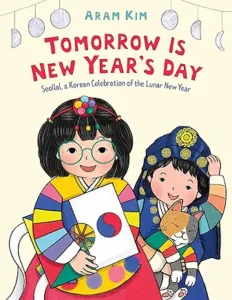
Sunday Funday in Koreatown by Aram Kim
Yoomi has big plans for Sunday but nothing is going her way. She wants to make kimbap but they are out of rice, and her favorite shirt isn’t dry. How is she going to have her usual Sunday Funday in Koreatown? Once they get there, her bad luck streak continues. Yoomi has to compromise and try new things. A different book than the one she wants, and a different snack. But all is right again when they visit Grandma. She knows how to fix everything! Sunday is Funday again! [picture book, ages 3 and up]
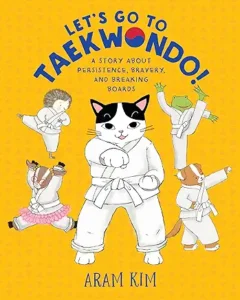
More books by Aram Kim:
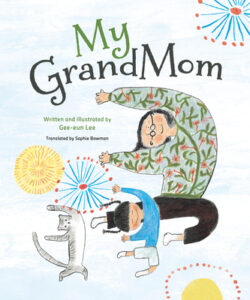
My GrandMom by Gee-eun Lee, translated by Sophie Bowman
Review from Randomly Reading:
“I love how the focus of My GrandMom is only focused on the relationship between grandmother and granddaughter. In fact, Gee-eum’s parents never even make an appearance. Instead, we see the two Gee-eum and GrandMom doing all kinds of things that ultimately lead to a strong bond between the two of them.” [picture book, ages 3 and up]
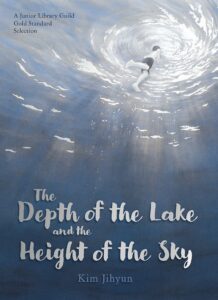
The Depth of the Lake and the Height of the Sky by Kim Jihyun
A boy and his parents leave their apartment in the city to visit his grandparents in the countryside where he is immersed in nature. He doesn’t do anything out of the ordinary but Kim Jihyun captures his sense of wonder as he explores the depth of the lake and the height of the sky. [wordless picture book, ages 4 and up]
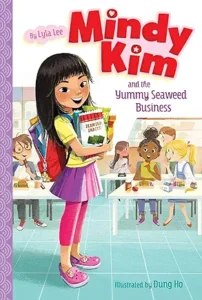
Mindy Kim and the Yummy Seaweed Business by Lyla Lee, illustrated by Dung Ho
Mindy and her dad moved after her mom passed away, and now she’s starting at school as the new kid. When her classmates make fun of her Korean lunch, she makes a new friend, Sally, who likes her ethnic food, especially the crispy Korean squares of seaweed. First, Mindy trades snacks but then ends up selling them, which is not allowed. Mindy ends up fighting with Sally over who takes the blame at the principal’s office. Can she find a way to save her friendship?
What I especially liked about this book is that Asian food being “weird” and “stinky” is a kind of cliche so it’s nice to see white kids standing up for Mindy and also appreciating her food. Korean food IS delicious. Those seaweed squares are sold at Trader Joe’s, proving that they are not so “weird”. I view them as Korean potato chips, only healthier. Mindy is a spunky heroine that kids of all ethnicities can relate to, and I like the entrepreneurial spin in the plot! [chapter book, ages 6 and up]
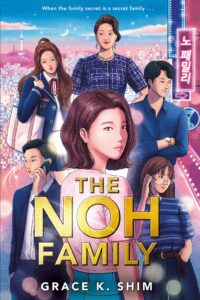
The Noh Family by Grace K. Shim
Review from Randomly Reading:
“The Noh Family is Grace Shim’s debut novel and is based on the Korean dramas (K-dramas) that she used to watch. I know that the long-lost family trope is pretty much overdone, but the fact that Chloe is Korean and the story plays out in Seoul makes all the difference. Although the fashion part of the story didn’t do much for me, I did love the descriptions of Korea, its people, culture, and food. I gave the book to my Kiddo to read because she has been to Seoul and loves it. She is also into K-dramas, so I know that she enjoyed that aspect of the book a lot, especially the description of the Dramatic Pause. ” [young adult, ages 12 and up]
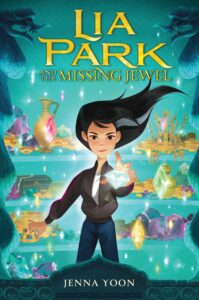
Lia Park and the Missing Jewel by Jenna Yoon
From KidLit 411:
“Lia Park is a Korean-American tween, who just wants to fit in. Her family belongs to a secret magic organization that Lia always wanted to join. Except for one big problem. She has no magic – or so she thinks. Lia decides to be a part of the normal people’s world instead. When she receives an invitation to the birthday bash of the year, her overprotective parents forbid her from going. But Lia sneaks off and goes anyway because she believes that this will change her life. This sets off a chain of events leading to her parents being kidnapped by an evil diviner spirit. Lia travels to Korea with her best friend Joon, and must follow the clues left behind by her parents and recover the jewel before it’s too late.” [middle grade, ages 8 and up]
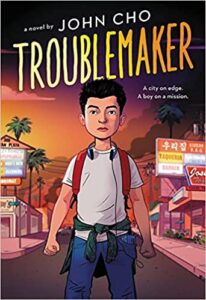
Troublemaker by John Cho
Review by Ms. Yingling Reads:
“There have been a growing number of excellent books by authors of Asian descent about different facets of the Asian American experience likeYang’s Front Desk, but it’s good to see more books specifically about the Korean American experience, such as Kim’s Stand Up, Yumi Chung, Yun’s Pippa Park Raises Her Game, Park’s Prarie Lotus, and Ahn’s Krista Kim-Bap. Readers who enjoy recent historical books or have an interest in racial justice will find Troublemaker an intriguing title.” [middle grade, ages 8 and up]
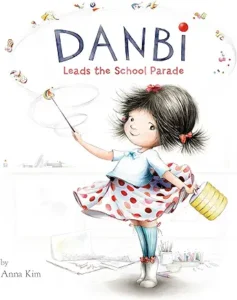
Danbi Leads the School Parade by Anna Kim
This is a heartwarming story of a little girl who has immigrated from Korea and starts her first day of school. She feels out of place until lunchtime when she breaks out her beautiful stacked lunch box. Her favorite Korean dishes are well-received by her classmates. Danbi, in attempting to share her food, inadvertently starts a parade. Her first day of school is a big success! [picture book, ages 4 and up]
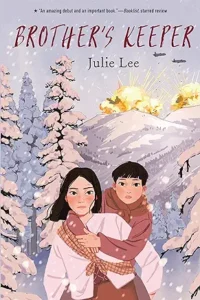
Brother’s Keeper by Julie Lee
Review by Ms. Yingling Reads:
“In 1950, Sora Pak lives in North Korea with her mother (Omahni), father (Abahji), and younger brothers Youngsoo and Jisoo. She has been pulled out of school to help with her brothers as her parents work on the farm, and things have become increasingly dire in her community. Her mother is never happy with Sora’s work, claiming that she can’t cook and will never find a husband. Sora would rather go to college, but this does not seem to be an option. She has already witnessed the shooting of an uncle, and the Communists have limited the information coming into the community and imposed many strictures on the people. When war arrives, things become even more burdensome: to avoid conscription, her father hides in a hole in the ground during the day. Family friends, the Kims, are planning to flee to South Korea, where there is some family in Busan. Omahni would rather carefully follow all of the unjust rules and stay in her home, but Abahji wants to flee. Eventually, circumstances forced the Paks to join the exodus from South Korea. With very few supplies, they take off across the country. After an air attack, Sora and Youngsoo are separated from their parents and brother. Initially, Sora tries to retrace their journey but quickly realizes she must leave the country. The journey is arduous and treacherous; the siblings have no food and survive mainly by finding kimchi hidden in the farmhouses they use for shelter. Eventually, they make it to Busan, but Youngsoo is very ill. Will Sora be able to put her family back together and overcome her mother’s cultural expectations to choose her own path forward?” [middle grade, ages 8 and up]

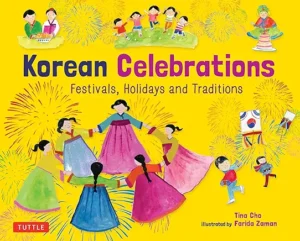
Korean Celebrations: Festivals, Holidays and Traditions by Tino Cho, illustrated by Farida Zaman
Celebrate Korean holidays with this nonfiction picture book detailing a year of holidays and festivals including Seollal (New Year’s), Dana (end of planting season), Chilseok, and Children’s Day. Activities are included to make this a celebratory event! [picture book, ages 4 and up]

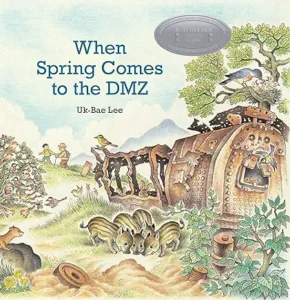
When Spring Comes to the DMZ by Uk-Bae Lee
There’s a razor-wire fence blocking the way to North Korea, but although the people in North and South Korea cannot go freely back and forth, the animals and fish can.
It’s bittersweet for a grandson to accompany his grandfather to the border to look across at the DMZ and longs to be reunited with family there again. [picture book, ages 4 and up]

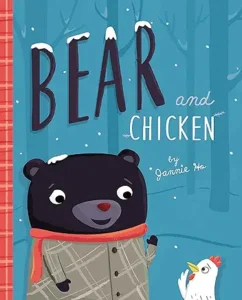
Bear and Chicken by Jannie Ho
Bear finds Chicken frozen in the woods and revives Chicken at home. As he sets about boiling water for their lunch, Chicken panics and makes a run for it. It turns out that Bear is not making chicken soup, Bear is VEGETARIAN!
This is a gentle and humorous story about overcoming bias. [picture book, ages 4 and up]
More books by Jannie Ho:

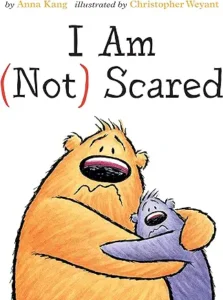
I am (not) Scared! by Anna Kang, illustrated by Christopher Weyant
A silly, fast-paced read-aloud about friends braving the amusement park together. (These two remind me of Mo Willem’s Elephant and Piggie– but for a younger crowd.) This is a great text to encourage younger children to explore and identify their feelings. [picture book, ages 3 and up]
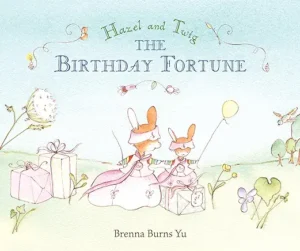
Hazel and Twig: The Birthday Fortune by Brenna Burns Yu
Doljabi is a Korean tradition of celebrating a baby’s first birthday with a ceremony that predicts the future career path. Different symbolic objects are placed on a tray that the baby chooses from. A lute means a career as a musician. A length of yarn indicates a long life.
There is also special food served for good luck. Twig ends up surprising everyone with an unexpected addition to the dojabi. This is another picture book that uses animals around a Korean-themed story. [picture book, ages 4 and up]


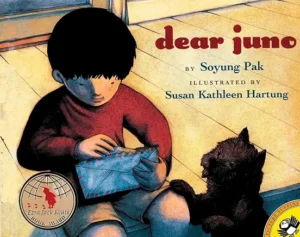
 Dear Juno by Soyung Pak, illustrated by Susan Kathleen Kartung
Juno is a little boy who receives a letter from his grandmother in Korea. He can’t read Korean and his parents are busy with the usual household chores. Despite the language barrier, he is able to understand the letter though his mother eventually translates it for him.
The letter is special as are the enclosures — a dried flower and a photo of his grandmother and her new cat. And Juno decides to write a letter back. One that will also transcend their language barrier. He makes several drawings and encloses a very large leaf.
And so they write to each other back and forth … at least until she comes to visit! [picture book, ages 4 and up]
Another book by Soyung Pak:
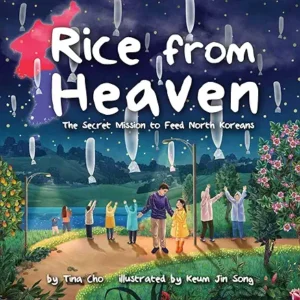
Rice From Heaven: The Secret Mission to Feed North Koreans by Tina Cho, illustrated by Keum Jin Song
A girl and her father travel to the border of South Korea where an impenetrable mountain separates them from North Korea. Over this border, people are starving. Not all the children want to help, but the girl convinces them. They prepare 200 balloons with rice over the border and float them over the border.
This is the true story of a rice balloon project that took place on May 2, 2016. [picture book, ages 4 and up]

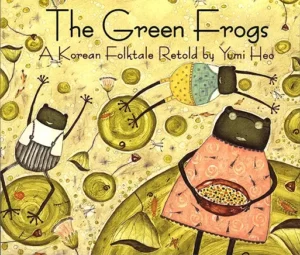
The Korean Frogs: A Korean Folktale, retold by Yumi Heo
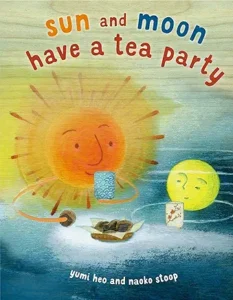
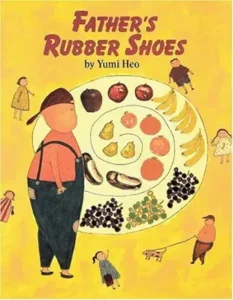
This is a cute picture book that tells the story of naughty frogs who don’t listen to their mother. A fun and funny story to remind the kiddos to listen to Mom! [picture book, ages 3 and up]
More books by Yumi Heo:

The Name Jar by Yangsook Choi
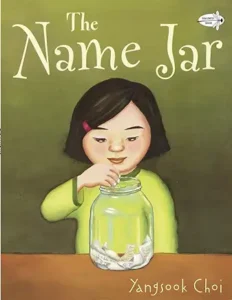
When Unhei moves from Korea to the United States, she is a little embarrassed by her name so she tells her new classmates that she doesn’t have one. They all help to choose a new one for her by putting choices into a jar but in the end, Unhei decides that her Korean name is just perfect.
This is the perfect book for anyone with an “ethnic first or middle name” that they are a little embarrassed about. [picture book, ages 5 and up]


Peach Heaven by Yangsook Choi
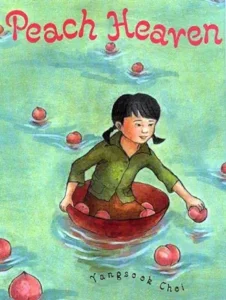
The white peaches grown in Puchon are the best in all of South Korea and a rare treat for a little girl who lives in the town. She dreams of a peach orchard where she can play and eat as much of the delicious fruit as she wishes. Then one day, after weeks of heavy downpours, the sky begins to rain peaches.
Yangsook finds herself in peach heaven – until she remembers the farmers who have lost their harvest, and decides she must help them. [picture book, ages 4 and up]

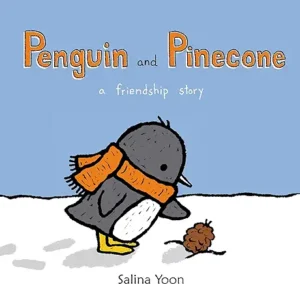
Penguin and Pinecone by Salina Yoon
When a curious little Penguin finds a lost pinecone in the snow, their friendship grows into something extraordinary! But Grandpa reminds Penguin that pinecones can’t live in the snow–they belong in the warm forest far away.
Can Penguin help Pinecone get home? And can they stay friends, even if they’re miles apart? [picture book, ages 3 and up]
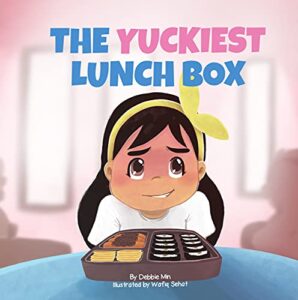
The Yuckiest Lunch Box by Debbie Min, illustrated by Wafiq Sehat
Nari started her first day of first grade and her mom packed her favorite lunch, kimbap, Korean “sushi” rolls. Her classmates make fun of her lunch, and she asks her mom to pack “American” lunches. When her class celebrates Cultural Appreciation Day, Nari is brave enough to wear her hanbok, a traditional Korean dress, and bring kimbap. Her friend Emily tries her food and likes it. When a new boy, Vikram, brings his lunch, he gets the same reaction as Nari did. She decides to sit next to him and try his lunch. This book models how to be an ally during lunchtime. [picture book, ages 4 and up]
Mia Moon Kid Translator by Debbie Min, illustrated by PocketSizeDoodles
When English is the second language for immigrant parents, their children sometimes have to grow up more quickly to serve as interpreters. Debbie Min wrote this story to celebrate the children who take on the adult responsibility of family translator and let them know that not only are they not alone, but they should be proud of what both they and their family have achieved by moving to a new country. [picture book, ages 4 and up]

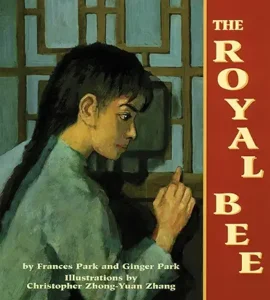
The Royal Bee by Frances and Ginger Park, illustrated by Christopher Zhong-Yuan Zhang
Over a century ago, only wealthy children were able to attend school and compete in the Royal Bee at the Governor’s Palace.
They would go on to become scholars and noblemen like their parents before them. Song-ho wanted to learn to read and write too, but his single mother could barely provide food for their table. He asked the teacher at the local school if he could attend, but was turned down.
Undeterred, he listened and learned with an ear to the window of the school until one day, he was allowed inside. Song-ho would go on to compete at the Royal Bee and if he wins, it would change his life and his mother’s forever. This is the true story of the authors’ grandfather. [picture book, ages 5 and up]
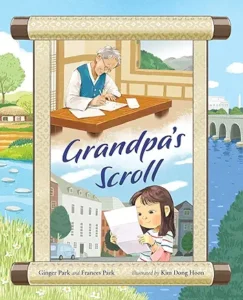
More books by Frances and Ginger Park:

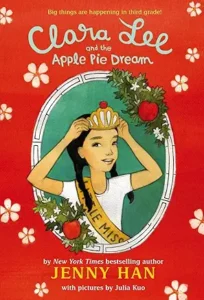
Clara Lee and the Apple Pie Dream by Jenny Han
Clara Lee is the new Clementine and Han’s new book has all the charm of Clementine with a subtle Korean American twist. She lives in a suburban neighborhood where there are not a lot of Asians. A gentle but central theme here is who is as American as apple pie? And are Asians in America “American?”
“Wasn’t my family as American as apple pie too? Grandpa came from Korea, but both my mom and dad were born in America, just like me. I deserved to have a shot at Little Miss Apple Pie as much as Dionne did. Didn’t I?” [chapter book, ages 6 and up]
More YA books by Jenny Han

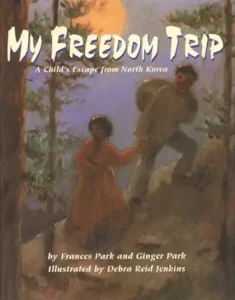
 My Freedom Trip: A Child’s Escape from North Korea by Frances and Ginger Park, illustrated by Debra Reid Jenkins
Soldiers have invaded Korea, and a young Korean girl and her family will try to make their escape. Because it’s so dangerous, only one person can go at a time with a guide. Her father goes first. Now, it’s her turn. At the final crossing point, there’s danger but also the promise of seeing her father.
At the 38th parallel prior to the start of the Korean War, this is the true but bittersweet story of the authors’ mother. [picture book, ages 7 and up]

I found this chapter book at Stacking Books which says, “A beautiful Korean historical fiction! A tale of a daughter’s love, and her determination to reunite with her mother. Art, culture, history, and a beautifully illustrated tale!”
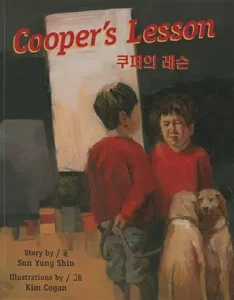
Melissa Hahn says, “I would add to it Cooper’s Lesson by Sun Yung Shin. I was impressed by the way that it explored the mixed feelings that bicultural Korean Americans have toward the Korean language (in this case, not being able to speak it and feeling ashamed).

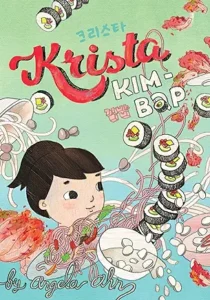
 Krista Kim-Bap by Angela Ahn
I discovered this book through Children’s Books Heal:
Angela Ahn has written a sweetly satisfying coming-of-age novel about an 11-year-old girl, who is a third-generation Korean-Canadian trying to fit in at school. The author creates a nice balance between cultural traditions, differences, family relationships, and friendships.
Krista is a feisty protagonist who seems comfortable with herself. Somewhat a tomboy, she prefers jeans and t-shirts and wears her hair in a ponytail. She spends a lot of time with her best friend Jason until she’s invited to a “Red Carpet” birthday party by a popular girl at school.
This means Krista has to wear a dress and her older sister helps her modernize a traditional hanbok. Her outfit is a hit and the girls invite Krista to hang with them at lunch and after school.
This cuts into time with Jason and she is torn between wanting to fit in, being true to herself, trusting her instincts, and being loyal to Jason.
There are many mouth-watering food scenes in this story and readers will learn about Korean dishes, like kimchi and kimbap, as Krista builds a relationship with her traditional grandmother. She asks her grandmother to teach her how to cook and be part of her classroom family heritage project.
This story is perfect for diverse classroom settings. It is a fun, realistic, and fast-paced novel that tackles interesting issues for a Korean-Canadian tween living in Vancouver. It’s a book worth reading! [middle grade, ages 8 and up]
Book Mentors had two great suggestions, “I actually do have two good recommendations: first, Clara Lee and the Apple Pie Dream is one of my favorite Asian-American books in general.
The story is about a Korean-American 4th grader who wants to be voted Little Miss Apple Pie in her town’s harvest festival…but must overcome doubts that she’s “American” enough.
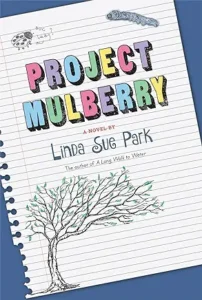
Another book, Project Mulberry by Linda Sue Park, is a middle-grade novel about a girl who raises silkworms for a 4-H-type project. Both books discuss Korean culture and growing up Asian-American in a really organic way–not at all heavy-handed.”

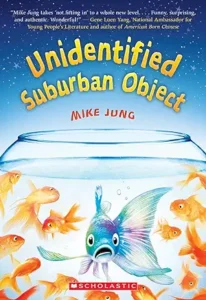
Unidentified Suburban Object by Mike Jung
I like a chapter book with a surprise twist. This starts off as a Korean American story of Chloe Cho, your average Tiger Cub who plays violin well, gets good grades and is an exemplary student. But then things change.
Why? I can’t tell you. But this is a twist on the Model Minority Asian American stereotype, and it’s funny to boot. [middle grade, ages 9 and up]

More books by Mike Jung:
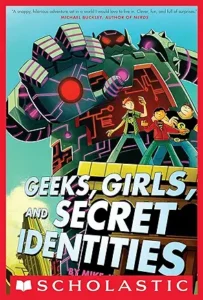
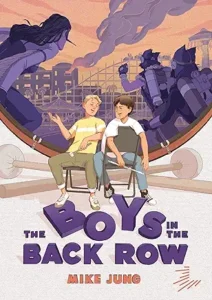

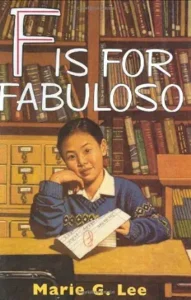
F is for Fabuloso by Marie G. Lee
I happened upon this Korean-American author for grade 4-6th and wanted to share it because it’s a fabuloso book! It’s unclear why her book didn’t make a bigger splash when it came out about 10 years ago.
She’s a really vibrant voice for Asian American children’s literature so I wanted to let you know about her. The author is a second-generation Korean American and grew up in Minnesota much like her lead character, Jin-Ha, in F is for Fabuloso.
It’s a tender and gentle story about straddling two worlds, especially as the go-between for her mother who is too shy to speak English. [middle grade, ages 8 and up]

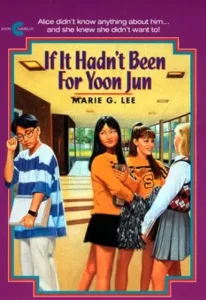
If It Hadn’t Been for Yoon Jun is another book, also by Maria G. Lee, that I was trying to locate at the library which I wasn’t able to find yet, but I suspect it is also very good. I will find it and update you! [middle grade, ages 8 and up]

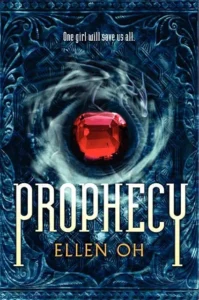
Spirit Hunters by Ellen Oh
There is something not quite right about Harper’s new house with its cold spots and a general feeling of being watched. Her younger brother talks about the ghost in his room, but when he starts acting strangely, she gets help by way of her estranged grandmother, a mudong.
It turns out that Harper has these same supernatural skills as her grandmother in communicating with spirits, and that ghosts might be related to the terrible accident that happened to her last year that wiped her memories away.
Her mother doesn’t believe in Korean superstitions which caused the rift with Harper’s grandmother in the first place. Will Harper be able to exorcise the ghosts in her house in time to save her brother? This is an action-packed thriller that is perfect for kids who like the movie Ghostbusters! [middle grade, ages 8 and up]
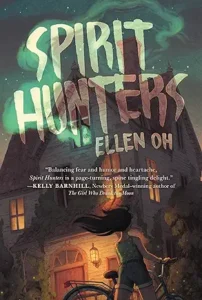
More books by Ellen Oh:

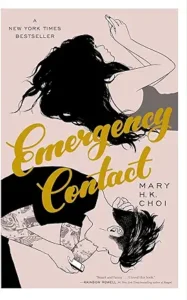
Emergency Contact by Mary H. K. Choi
This YA book is clever but at times I wish it scaled back the cleverness to develop the characters. Still, halfway through the book, it balances out. It’s told from two points of view:
For Penny Lee, high school was a total nonevent. Her friends were okay, her grades were fine, and while she somehow managed to land a boyfriend, he didn’t actually know anything about her.
When Penny heads to college in Austin, Texas, to learn how to become a writer, it’s seventy-nine miles and a zillion light years away from everything she can’t wait to leave behind.
Sam’s stuck. Literally, figuratively, emotionally, and financially. He works at a café and sleeps there too, on a mattress on the floor of an empty storage room upstairs.
He knows that this is the god-awful chapter of his life that will serve as inspiration for when he’s a famous movie director but right this second the seventeen bucks in his checking account and his dying laptop are really testing him.
When Sam and Penny cross paths it’s less meet-cute and more a collision of unbearable awkwardness. Still, they swap numbers and stay in touch—via text—and soon become digitally inseparable, sharing their deepest anxieties and secret dreams without the humiliating weirdness of having to see each other. [young adult, age 14 and up]


More Great Korean American Books (Not #OwnVoices)
Chef Roy Choi and the Street Food Remix by
Yukari Reads on Instagram gave me the heads-up on this one.
Chef Roy Choi calls himself a “street cook.”
He wants outsiders, low-riders,
kids, teens, shufflers, and skateboarders,
to have food cooked with care, with love,
with sohn maash.
“Sohn maash” is the flavor at our fingertips. It is the love and cooking talent that Korean mothers and grandmothers mix into their handmade foods. For Chef Roy Choi, food means love. It also means culture, not only of Korea where he was born but the many cultures that make up the streets of Los Angeles, where he was raised. So remixing food from the streets, just like good music—and serving it up from a truck—is true to L.A. food culture. People smiled and talked as they waited in line. Won’t you join him as he makes good food smiles? [picture book biography, ages 4 and up]


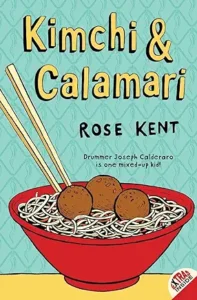
Kimchi and Calamari by Rose Kent
14-year-old Joseph Caldararo has a loving family and is a well-adjusted popular kid at school. But when his social studies teacher assigns a paper on Your Cultural Heritage, his world gets turned upside down.
He knows that he was adopted from Korea when he was just an infant and it’s never really bothered him before, but now it does. It doesn’t help that the new dry cleaners are taken over by a Korean family who is off-put by his adoption.
And it makes his parents upset when he wants to learn more about his own cultural heritage. His best friend assists him in conducting an internet search to try to trace his parents but that’s a long shot at best! But what to write for this paper?
His confusion about who he is leads him down a path of deceit and now everything is a mess. On top of this, he’s trying to get a date for the school dance. Whoever said that middle school is tough is right [middle grade, ages 9 and up]

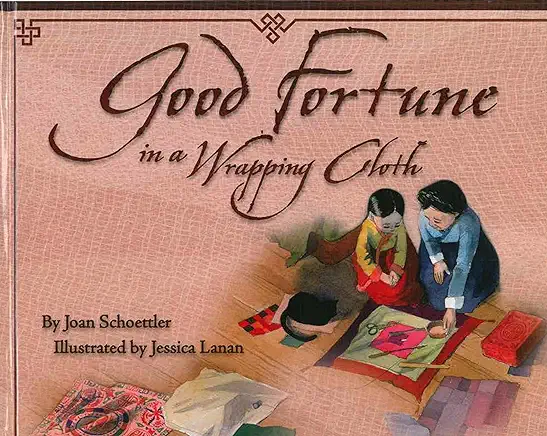
Good Fortune in a Wrapping Cloth by Joan Schoettler
Sonia from Kite Readers says, “It just recently won the 2013 Asian/Pacific American Award for Literature (you can go to Shens Books Blog to find out more). This book is a beautiful story about a young girl who must learn to become a talented seamstress in order to be reunited with her mother in the King’s court! You can learn more about the book at KiteReaders’ website.” [picture book, ages 5 and up]

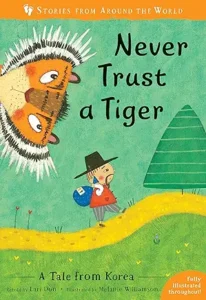
Never Trust a Tiger: A Story from Korea retold by Lari Don, illustrated by Melanie Williamson
Koreans have been subjugated for centuries by invaders so it’s not surprising that they are jaded when it comes to doing good deeds. In this folktale, a merchant rescues a tiger who then wants to repay the favor by eating him. Judges are called in to assist with this disagreement.
The ox thinks that life is just not fair. The pine tree has had only good karma so objects to a bad deed following a good deed. The hare is the final arbitrator and cleverly comes up with a plan that makes it all square.
The message from this book then is a cautionary tale to beware of bad guys. I like that the ending is what you’d expect. [chapter book, ages 6 and up]

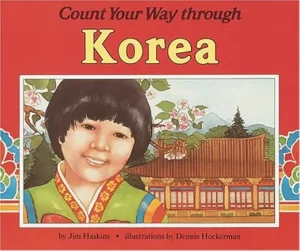
Count Your Way through Korea by Jim Haskins, illustrated by Dennis Hockerman
This seems like a basic counting book on the outside, but it’s actually packed with interesting factoids about Korean culture. The text is really advanced; it’s actually too hard for a toddler or preschooler to learn how to count to 10.
I’d just this to teach older kids, say in elementary school or learning a Korean version of Karate, how to count to 1o in Korean. [picture book, ages 6 and up]

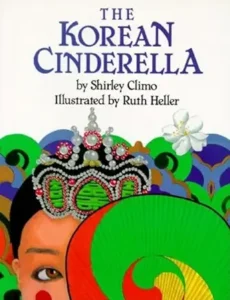
The Korean Cinderella by Shirley Climo, illustrated by Ruth Heller
This is the Korean version of Cinderella set in olden-times Korea. I also have a list of Asian Cinderella books. [folk tale picture book, ages 4 and up]

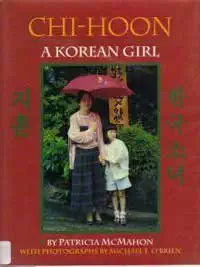
Chi-Hoon, A Korean Girl by Patricia McMahon with photographs by Michael F. O’Brien
This is a day-in-the-life glimpse of an elementary school-aged girl, Chi-Hoon. My oldest found it fascinating to learn about life in modern-day Korea. The reading level is perfect for grades 3-5. [non-fiction middle grade, ages 8 and up]

To examine any book more closely at Amazon, please click on image of book.
As an Amazon Associate, I earn from qualifying purchases.
Follow PragmaticMom’s board Multicultural Books for Kids on Pinterest.
Follow PragmaticMom’s board Children’s Book Activities on Pinterest.
My books:

 Amazon / Signed or Inscribed by Me
Barbed Wire Between Us by Mia Wenjen, illustrated by Violeta Encarnación
- ⭐ Starred review from Kirkus
- ⭐ Starred review from Publishers Weekly
- ⭐ Starred review from School Library Journal
- Kirkus: The Most Anticipated Children’s Books of Spring 2026

Amazon / Signed or Inscribed by Me
- California Eureka Non-Fiction Gold Award
- Junior Library Guild Gold Selection
- Notable Social Studies Trade Books for Young People Winner (from National Council for the Social Studies and Children’s Book Council)
The Traveling Taco:
- California Eureka Non-Fiction Silver Award
- Notable Social Studies Trade Books for Young People Winner (from National Council for the Social Studies and Children’s Book Council)
- Reading Rockets’ Summer Reading Guide 2025
 Amazon / Signed or Inscribed by Me

Amazon / Signed or Inscribed by Me
We Sing from the Heart: How the Slants® Took Their Fight for Free Speech to the Supreme Court
- ALSC Notable Children’s Book
- 2025 Carter G. Woodson Book Award Middle Level Honoree
- Orbis Pictus Recommended Book for Outstanding Nonfiction for Children
- 2024 Julia Ward Howe Prize for Children’s Literature Winner
- California Eureka Non-Fiction Award Honor Book
- Notable Social Studies Trade Books for Young People Winner (from National Council for the Social Studies and Children’s Book Council)
- Bank Street Best Children’s Books of the Year 2025
- Recommended Reading for the Social Justice Literature Award 2025 (International Literacy Association)
- Pennsylvania Mountain Laurel Book Award Nominee 2026-27
- Junior Library Guild Gold Selection
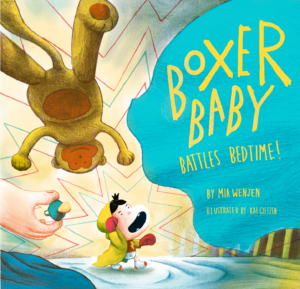 Amazon / Signed or Inscribed by Me
 Amazon / Barefoot Books / Signed or Inscribed by Me
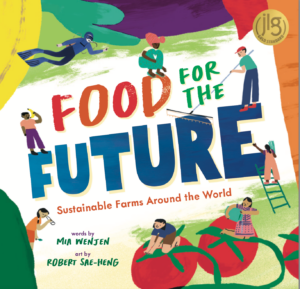
Food for the Future: Sustainable Farms Around the World
- ⭐ Starred review from School Library Journal!
- Junior Library Guild Gold selection
- Massachusetts Book Award Long List
- dPICTUS 100 Outstanding Picture Books of 2023
- Chicago Library’s Best of the Best
- 2023 INDIES Book of the Year Awards Finalist
- Green Earth Book Award Long List
- Nautilus Silver Winner, Nonfiction Children’s Picture Book
- Sunshine State Young Readers Award Orange Blossom List for Nonfiction
- Imagination Soup’s 35 Best Nonfiction Books of 2023 for Kids
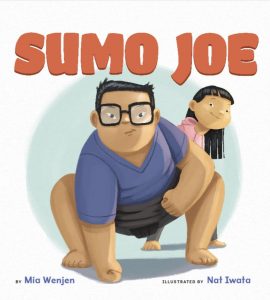
Amazon / Signed or Inscribed by Me
Bank Street College’s The Best Children’s Books of the Year
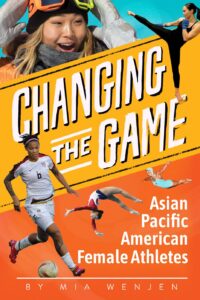 Amazon / Signed or Inscribed by Me
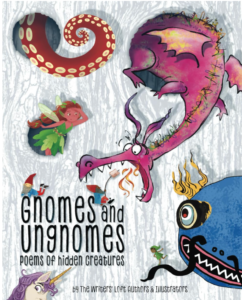
Amazon / Signed or Inscribed by Me

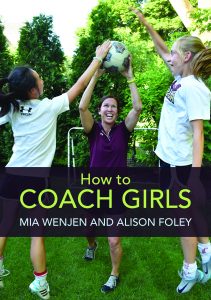

Thank you, thank you, thank you! I have forwarded this awesome top 10 to all of my family and Korean friends. As a 1st generation Korean mom it’s hard to impart what it means to be Korean to my half Korean kids but these books sure do help. My kids love Bee-Bim Bop and I love the recipe for yummy bibambap at the end of the book!
Thank you for spreading the word about this list. It’s turned out to be one of my top 5 posts for the year! Any books I’ve missed?
We’ve read many of these books and like your summaries. Please review some Japanese American children’s books next. Post WW2 and the experience of internment, Japanese Americans had special challenges that can make for interesting stories. There are many poignant ones about fitting in, finding identity, etc.
I just posted the Chinese American book list and will do Japanese American soon. I am also thinking of African American and Latino American but will have to dig for that and enlist the help of some mom friends. I also want to do Top 10 Books to Teach Kids Compassion…I have a stack of recommendations at home from the library that I need to read.
I find the subject of internment especially poignant because my mother was relocated during WWII. I will work on that list and touch on that subject but will cover other aspects as well.
Will do! Thanks for your suggestions. It helps me plan my blog posts!
I’m loving this list and I want to remember to refer back to it as my son gets older (he’s 3). He has loved Bee-Bim-Bap! since he was only 1! I’m a Korean adoptee so we try to learn a little about Korea and these sound like great picks.
To Kim,
Thank you so much! When your son gets older, try Kimchi and Calamari. I love author Rose Kent (who also adopted a Korean boy baby) and this is a story about finding one’s identity when your adopted family is Italian. It’s a wonderful and moving story with a happy ending. My favorite kind!
Hi there,
I found your blog tonight and I’m so very glad! I thought you might like these lists I put together a couple years ago…
http://www.amazon.com/Children-s-Books-about-Korea-Korean-Americans-Korean-Adoptees-Part-1/lm/RNC8U85ZBMLX3/ref=cm_lm_byauthor_title_full
http://www.amazon.com/Children-s-Books-about-Korea-Korean-Americans-Korean-Adoptees-Part-2/lm/R3H1ZEQ9KI21HM/ref=cm_lm_byauthor_title_full
http://www.amazon.com/Children-s-Books-about-Korea-Korean-Americans-Korean-Adoptees-Part-3/lm/R240LW4T7TSDNQ/ref=cm_lm_byauthor_title_full
http://www.amazon.com/Children-s-Books-about-Korea-Part-4/lm/R2195UBGPZ69VZ/ref=cm_lm_byauthor_title_full
Thank you for publishing summaries of books…it’s very helpful!
To Book Lovin’ Mom,
Thank you sooo much for these lists. I will check them out.
This is a fantastic list! Have you also looked at “Good Fortune in a Wrapping Cloth” by Joan Schoettler? It just recently won the 2013 Asian/Pacific American Award for Literature (you can go to Shens Books Blog to find our more). This book is a beautiful story about a young girl who must learn to become a talented seamstress in order to be reunited with her mother in the King’s court! You can learn more about the book at KiteReaders’ website.
Thank you so much Sonia! I’ll add that to the list! It sounds wonderful!
Wonderful list, Mia! Thanks for sharing this one. Parents and teachers need to remember that one of the best ways for kids to gain a wider perspective on the world and other cultures is though the books they read. 🙂
Thanks so much Vivian. This list is especially near and dear to my heart because my kids are half Korean.
Thank you for this list! I have been building my library in anticipation of one day having children, as I see literature as one vehicle for helping them them navigate/validate their many identities (my husband is half Korean).
I would add to it “Cooper’s Lesson” by Sun Yung Shin. I was impressed by the way that it explored the mixed feelings that bicultural Korean Americans have toward the Korean language (in this case, not being able to speak it and feeling ashamed).
Thanks for the great book recommendation Melissa! It’s like a scavenger hunt finding all the great Korean American stories and I feel like I won a prize!! 🙂 I’ll add it to the list!
I love this list and your others as well! I’d love it if you’d join our Booknificent Thursday link-up community at Mommynificent.com and come each week (or as often as you can!) to share this kind of post! Hope to see you there soon!
Tina
Thanks so much Tina! I would love to join your Boonificent Thursday link up community. Is there a way to sign up to get reminders? I would definitely link up every week. (pragmaticmomblog (at) gmail (dot) com)
Omg. Thank you so much – I’ve been looking for a book I’ve read in 5th grade… Thank you so much again! (I’ve been looking for the book, “If It Hadn’t Been for Yoon Jun”)
Hi Seraphina,
I’m so glad you like the list!
Am wondering if you have ever come across children’s books written by an American grandmother living in Korea in the 70’s. Her first name was Sally and I can’t remember her last name .She loved the culture and wrote about it. Sadly the only book I can recall is about the Clack Clack Man, a street vendor who carried enormous “scissors” which were opened and closed making a clackety sound to advertise his presence.
I’m so sorry Carole but I have not. I just tried to Google “Sally” and “Clack Clack Man” but nothing came up. “Clack Clack Man” did not come up either.
I don’t know that book Carole. I’ll let you know if I come across it.
Bee-bim Bop! by Linda Sue Park is on our list of books to make the recipes in August!! Summer of reading and learning in the kitchen!:) Thanks for sharing it with the #diversekidlit link up!
Hi Bethany,
My kids recently found that they like to eat Bee-bim Bop but not when they were the age to read her picture book. It was too exotic for them at that age. I do love all books by Linda Sue Park though!
So glad to have found you and your blog! I was born in the U.S. but both my parents are Korean immigrants, and I want to be able to share Korean books with my two young kids. I didn’t have much of a starting point so this is great! In general, it’s important to me to read books with them that represent diverse backgrounds and ethnicities, so thanks for all this. Will definitely be referring to your blog regularly!
Hi Esther,
My kids are half Korean American so I am also actively seeking out books with Korean characters, authors and/or illustrators. I’ll keep updating this list.
How about Mulberry Project by Linda Sue Park?
Thank you Jieun! Yes!! I need to add that one!
I am looking for an English language book about a Korean boy approx age 8-10. We have in our family a child (age 9) who is Korean but does not like to read. So I am looking for books that would interest him about his nationality. Adventure- maybe-
Thank You
Deb
I love A Single Shard by Linda Sue Park. It won a Newbery. Perhaps a parent could read it aloud? It’s wonderful!
Kite Fighters is also by Linda Sue Park. Set in 15th century Korea, Korea’s Golden Age, two brothers — one skilled in kite making and the other skilled in kite flying — combine their skills to compete in a kite flying contest on behalf of the king. [chapter book, for ages 7 and up]
Spirit Hunters by Ellen Oh is about Korean “Ghostbusters” (like the movie). It’s an exciting read and perfect for Halloween.
Chef Roy Choi and the Street Food Remix by Jacqueline Briggs Martin and June Jo Lee, illustrated by Man One. I love Roy Choi who is a famous Korean American chef. This is a nonfiction biography picture book.
These are interesting picture books:
The Royal Bee by Frances and Ginger Park, illustrated by Christopher Zhong-Yuan Zhang
Over a century ago, only wealthy children were able to attend school and compete in the Royal Bee at the Governor’s palace.
They would go on to become scholars and noblemen like their parents before them. Song-ho wanted to learn to read and write too, but his single mother could barely provide food for their table. He asked the teacher at the local school if he could attend, but was turned down.
Undeterred, he listened and learned with an ear to the window of the school until one day, he was allowed inside. Song-ho would go on to compete at the Royal Bee and if he wins, it would change his life and his mother’s forever. This is the true story of the authors’ grandfather. [picture book, ages 5 and up]
My Freedom Trip: A Child’s Escape from North Korea by Frances and Ginger Park, illustrated by Debra Reid Jenkins
Soldiers have invaded Korea, and a young Korean girl and her family will try to make their escape. Because it’s so dangerous, only one person can go at a time with a guide. Her father goes first. Now, it’s her turn. At the final crossing point, there’s danger but also the promise of seeing her father.
At the 38th parallel prior to the start of the Korean War, this is the true but bittersweet story of the authors’ mother. [picture book, ages 7 and up]
Krista Kim-Bap by Angela Ahn
I discovered this book through Children’s Books Heal:
Angela Ahn has written a sweetly satisfying coming of age novel about an 11-year-old girl, who is a third-generation Korean-Canadian trying to fit in at school. The author creates a nice balance between cultural traditions, differences, family relationships, and friendships.
Krista is a feisty protagonist who seems comfortable with herself. Somewhat a tomboy, she prefers jeans and t-shirts and wears her hair in a ponytail. She spends a lot of time with her best friend Jason until she’s invited to a “Red Carpet” birthday party by a popular girl at school.
This means Krista has to wear a dress and her older sister helps her modernize a traditional hanbok. Her outfit is a hit and the girls invite Krista to hang with them at lunch and after school.
This cuts into time with Jason and she is torn between wanting to fit in, be true to herself, trust her instincts and be loyal to Jason.
There are many mouth-watering food scenes in this story and readers will learn about Korean dishes, like kimchi and kimbap, as Krista builds a relationship with her traditional grandmother. She asks her grandmother to teach her how to cook and be part her classroom family heritage project.
This story is perfect for diverse classroom settings. It is a fun, realistic and fast-paced novel that tackles interesting issues for a Korean-Canadian tween living in Vancouver. It’s a book worth reading! [chapter book, ages 8 and up]
All my Korean American #OwnVoices books are here: https://www.pragmaticmom.com/2011/05/top-10-korean-american-childrens-books-ages-2-16/
I agree with you about these books and so many more. My son, who is 14yrs old read each one of these books. I can see , in so many ways, how that solid foundation is spying of. I pray daily that it continue growing.
Happy holidays to you and your family.
My son love Emergency Contact! I read the first several chapters aloud together, and after lights-out he used a flashlight and read 6 more chapters on his own. He devoured the next several books and is waiting on the last book to arrive from Mixbook now. I’m already trying to plan ahead for when he finishes it within 2-3 days. I wish there were more than 6! We are going to try Selfors’ other series next.
What a wonderful collection of titles! Thanks for sharing and for participating in Read Your World Day!