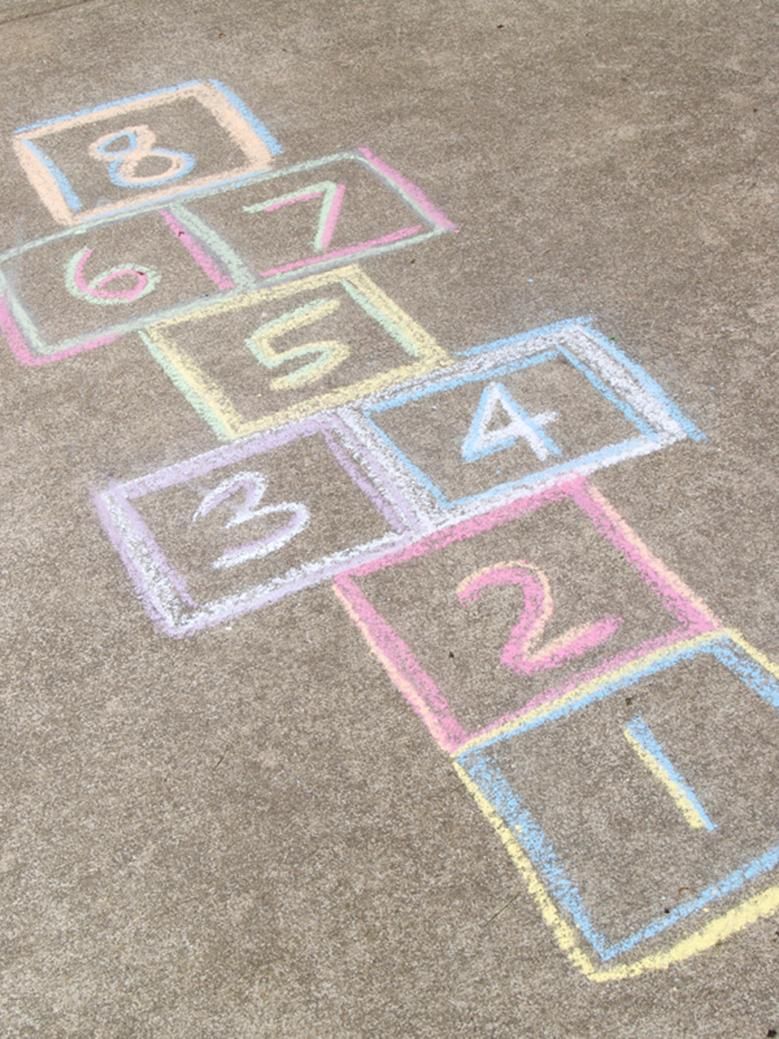
Category: Math

iPhone/iPad/iPod app: Math Ninja (really fun math facts game)

My five-year-old son has been hogging my iPhone and the family iPad all last week while we were on vacation.  He loaded tons of “free” games which ended up costing us $10 — (my husband: “Does he know how to read ‘free’?”  Me:  ”Yes, he reads it as ‘fee.’  Hence the charges!) — and we had to yell at him to turn off the screens.  Except when we noticed he was playing Math Ninja.  True, he’d try to cheat and slyly ask us what 9 + 6 is but we were on to him.  It turns out to be a fun game for all my kids including my 10-year-old and 8-year-0ld, both girls.  And I turned out to be bad at it.

So today I sought the help of my kids to learn how to play Math Ninja.  It begins with a short narrative (great for reluctant readers!) that draws them into a story about what the game is about, i.e. you, the Math Ninja versus Them, the animal bots.  Then, based on points (or dollars really) that you earn, you can buy weapons to defend yourself.  The fun begins as the bots come and you must defend your tree house.  Turns out I am really bad at this portion of the game AND my kids excel at it and do not need a tutorial like I did to figure out what to do.  (“Mom, it’s obvious if you play enough video games!).  Point taken and obviously I did not acquire these skills as child.

Once the onslaught is over and the points are earned, the game then turns into a math fact drill session.  The facts include addition, subtraction, division and multiplication.  While there are three levels, this relates to the difficulty of the video game portion NOT the math portion.  I asked my kids why was I getting easy subtraction (3-1= ?) when I set it to Ninja which is the hardest setting.  They said that the math drill portion is based on the history of the player who happens to be my five-year-old and that you can’t control the math difficulty but that it will get more difficult as you progress.

These are the features I like about the math portion of the game:

  • To answer a math fact problem, you must type in the number from a “calculator number pad” so YOU ACTUALLY HAVE TO KNOW THE ANSWER!  You can’t guess!  There is NO multiple choice!
  • The app tracks what you get correct and incorrect and then, I assume, works that into the next round of questions.
  • There is a time limit per problem.
  • You can set the types of problems you want to be drilled on by turning off or on the choices of addition, subtraction, multiplication or division.
  • My kids actually think it’s a really fun game so they want to play it!

Math Ninja is $1.99 at the iTunes store.  Click on the image above to go to iTunes.

iPhone/iPad/iPod app: iLiveMath Speed (word problems for ages 6-12)

iLiveMath Speed uses race cars, sail boats, jets, the Space Shuttle, and more to teach Distance = Rate x Time, ratios, km/hour, mph, knots and speed of sound terms such as Mach, supersonic, and hypersonic in a word problem format!  I really like this app because it introduces Physics as a multiplication word problem appropriate for older elementary school students.

I don’t know about you, but I really struggled through Pre-Med college physics and had to get friends to help explain basic concepts to me (i.e.  see how we are walking at the same pace?  That’s speed.  Speed = distance X time [miles per hour or mph or km per hour].  Now we are walking faster.  Acceleration is the increase in speed.  The formula is acceleration = force / mass.  Force = mass X gravity.)  Yikes!  It gets complicated quickly so it is nice to introduce these concepts in a fun way such that it becomes intuitive rather than a memorization of formulas.  This app doesn’t actually cover acceleration but by teaching Distance = Rate x Time, it’s an appropriate and intuitive introduction to physics for an elementary school student.

The format of iLiveMath Speed is similar to iLiveMath Trains so click here to read that review that goes over some nice features in both apps such as the roll-y answer bar and the number sentence for correct answers.

Here are the levels for iLiveMath Speed with a sample problem pulled from the app.

Level 1:  Addition and Subtraction

A lead pack of 13 Formula One cars drafted in a line and as they rounded a turn 2 zoomed ahead.  How many are left behind?

Level 2:  Addition, Subtraction, and Multiplication (speed, rate, distance and time)

If sailboats raced at an average speed of 16 knots, how many nautical miles are traveled in 2 hours?  (1 knot = 1 nautical mile/hr).

Level 3:  Advanced Addition, Subtraction and Multiplication (with speed, rate, distance and time)

If a Maglev train journeyed at an average speed to 223 mph, how many miles are traveled in 7 hours?  (Distance – Rate x Time)

Again, like iLiveMath Trains, there are appealing photos of things that go fast as well as fun sound effects.  Here are some screen shots:

This app is appealing to boys but I would try girls out on it as well!  The app is $3.99 and can be purchased at iTunes.

iPhone/iPad/iPad: ILiveMath Trains app (word problems for ages 6-10)

I am a huge fan of word problems.  I love how it combines literacy with math.  I love how it’s a puzzle in words that you must solve with a number sentence.  I love how it trains the brain to decode words into numbers and vice versa.  I love that it’s difficult. — this is not a rote operation, one must think to solve a problem.  That being said, word problems are challenging! (and fun!)

My two older kids complete a word problem workbook  as their math practice during the summers.  I like Daily Word Problems by Evan Moor (Grade 1, Grade 2Grade 3Grade 4Grade 5) .  My oldest who says she hates math says that she loves word problems because they are not math but puzzles.  Go figure?  I don’t care though.  If she can do complex, multi-step math word problems then I know the other stuff at school will be fine.  At the end of the day, there will be calculators for math facts when she’s an adult, but to figure out which buttons to push, she’ll have to know how to convert words to number sentences which will require logical thinking.

So it’s not surprising that I LOVE the  iLiveMath Trains app for iPhone, iPad, or iPod.  The theme for this app is trains.  It’s a very effective theme for boys and maybe less so for girls but still the photos and images are colorful and fun and there are a train noises as you move from screen to screen.

I also like how that the user answers the questions using a roll-y thingy with numbers in numerical order.  You can’t guess the answer; you must find the correct number.  And when you do, the app says that y0u are correct AND shows you the number sentence you have solved (perhaps in your head) but it reinforces the logic by which you solved the question.  You do not get the number sentence until the problem is solved correctly.

ILiveMath Trains has three levels of difficulty:

Level 1:  Addition and Subtraction (using numbers 1-20)

Sample problem:   A steam train with 13 travelers voyaged to the next station and 7 were dropped off. How many travelers are on the train?

Level 2:  Addition, Subtraction, and Multiplication (weight, currency and speed)

Sample problem:  The freight train has 25 railcars of fuel.  If each loaded railcar is an average of 131 tons, what is the total weight hauled?

Level 3:  Advanced Addition, Subtraction and Multiplication (weight, currency and speed)

Sample problem:  The freight train unloads 18 railcars of automobiles.  Afterwards each empty railcar is still 30 tons, what is the total weight pulled?

This is a nicely done app that combines math word problems within a fun theme.  At $3.99, it’s less expensive than the math workbooks that I buy.  A kid who loves trains and math will love this.  For kids who are less interested in math but love trains, this is a natural fit.  My five-year-old loves to do word problems around the theme of Pokemon at bedtime.  Any chance that iLiveMath can come up with that?  I’d love that because I am the one who has to make up the problems and I always get scolded for my lack of Pokemon knowledge — “MOM, Brock doesn’t own that Pokemon!  MOM, Snorlax is not a normal type!”

You can buy this at iTunes by clicking on the image up top.

iPhone/iPad/iPod app: Math Karaoke for Multiplication Facts

Do I believe in singing your way into multiplication fact proficiency?  You betcha!  Different kids learn through different means and singing is a very effective way for some children.  My oldest was tortured by the multiplication tables; she didn’t want to learn them and struggled with them.  What was worse was that she was tested every week on a particular fact family and it did take a family effort every week to get her proficient enough to pass.

Our trick?  We didn’t have an iPhone or an iPad then, so we used skip counting songs that 3rd Grade Mom Teacher friend taught me.  She used these very effectively when she taught 3rd grade.  I have posted these skip counting songs here.  To be honest, I sang these skip counting songs over and over until it got pounded into her brain because she just wasn’t into it but I do notice that she uses these songs and her fingers to check division and multiplication on an as needed basis.

You can eliminate the singing torture for both you and your child by using the Math Karaoke app from Rega Interactive.  Why?  Because my kids actually LOVE singing the math fact tables into the app and then playing them back.  Of course, they may change up the content (i.e. as in singing other stuff), but that is when you can switch modes from Karaoke mode to Quiz Mode.

Quick overview:

  • Math Karaoke has three modes:  Learn, Karaoke, Quiz
  • Learn Mode:  has the kids repeat the math tables by fact families
  • Karaoke Mode:  has the kids sing the fact families and record their singing
  • Quiz Mode:  has the kids test their knowledge with multiple choice problems
  • Math facts are 1x through 10x tables; it doesn’t go higher than 10x (my 3rd grader was tested through 12x tables)
  • There are 3 different levels:  beginning, intermediate and expert

How would I change this up if your kids don’t love repeating math tables?  Try the recording mode using the skip counting songs.  So, instead of 1 times 3 is 3, etc.  Have your child sing 3, 6, 9, 12, 15, 18 and 21 to the tune of Clementine — you know that song:  oh my darling, oh my darling, oh my darling clementine.  You are lost and gone forever, oh my darling clementine.  Yes, doesn’t that work perfectly?  Love those skip counting songs!

Summer Math Slide? Time to Take Action! (Grades 3-10) UPDATE

Update

These are the areas that milestones for kids to master.

a)  Math Facts for 4th Graders – Difficulty in understanding division leads to challenges with understanding factors and fractions, key to middle school math.  Weakness if these areas result in the student not getting most algebra concepts.

b)  Fractions and Ratios in Middle School – A weak foundation in this area leads to basic foundation weakness, and difficulty with Algebra concepts.

c)  Algebra Foundation – Basic Equations and Inequalities – needed as a core foundation for all college level math.

—————

My Dad Friend from The Sherpa Report introduced me to a Dad Friend of his in our town who has a math online tutoring company called TenMarks.  I met with both founders a few weeks later and they were kind enough to give me a detailed demo plus provide me with codes to try it out.

What I really like about the TenMarks Program is that it is a manageable program for moms and dads who don’t feel confident tutoring their children in math.  In my case, I feel like ” Good Mommy” when I am working my kids through their workbooks (my going-into-5th grader is doing Daily Math Problems for Grade 5, my going-into-3rd grader is doing Daily Math Problems for Grade 3, and my going-into-Kindergartener is doing Singapore Math 1B) so this is probably not a system I will use this summer.  But I like doing math with my kids.

But this is not always the case for everyone.  My dear friend, Yoga Mom, that I met at first preschool does not feel comfortable doing 5th grade math.  Period.  Math is not her thing.  Her oldest gets tutoring at school during the school year but she does not have a private tutor during the summer so this is a program that would work really well for her — more on her story later as I am asking her to test it out.

And yet, math summer slide is real.  Kids forget math facts and math concepts during the summer that have to be reviewed at the start of the school year.  If they did not get  solid understanding before the summer, the fall review will whiz by over their heads and they will not feel confident in their math ability.  That’s not good, particularly for girls.  Math is just like learning a sport; you have to practice, practice, practice to gain competency.  If you take 3 months off, you will be rusty.  It’s better to do a little every week to reinforce what they know and forge a few steps ahead so that when your child hits new concepts in late fall, they will be familiar and your child’s hand will shoot up in class to participate.

So, this is what I have discovered about TenMarks:

  • Their program is set to state standards so it will differ by state to match what your state is testing on.
  • Their program is customizable to your child to give extra practice in areas when needed.
  • Tutoring is built into 10 problem worksheets to be done daily.  If your child is confused by the problem, s/he can hit the “Hints” button to get some clues on how to approach the problem.  If this is not enough, your child can hit the “Video” button to get a demonstration on how to solve the problem.
  • Additional worksheets and games are available if your child wishes.
  • There is an incentive system built in.  You decide the prize and a thermometer will show your child where they are in relationship to their goal.

It’s actually a very thorough, complete program.

TenMarks is currently running an August Special for $19.99 for a 1-month program that is structured to review core math concepts from the previous year.  Click here for more.  (It’s actually on their home page).

If you want more details on what the Core Concepts are by Grade, please read below.

Let me know by leaving a comment on what you are doing to prevent Summer Slide.  Is it working?  Are there any tricks or tips to get your child to do summer math homework?  Please share!

TenMarks Core Concept Review

Math Facts and Number Operations

The math facts and number operations program for elementary school covers core concepts of math.

  • Addition and Subtraction
  • Multiplication Concepts
  • Division Concepts
  • Basics of Fractions and Decimals

Core Concepts: Fractions, Decimals, and Ratios

This core concepts program for elementary school expands basic math facts to include fundamental concepts such as fractions, decimals, operations and applications.

  • Fractions and Operations
  • Decimals and Operations
  • Number Applications
  • Ratios and Percents

Advanced Concepts: Relating Math to the Real World

This advanced concepts program pushes young minds to learn more. The program covers new, interesting concepts, which allow students to enhance their grasp of math, and enables them to confidently move ahead.

  • Order of Operations
  • Simple Expressions and Equations
  • Figures and Geometry including Measurement
  • Probability and Data

Foundations for Middle School Math

This program enables students to get a strong foundation for middle school math.

  • Number Operations
  • Fractions and Decimals
  • Integers and Algebra
  • Basics of Geometry

Number Sense, Fractions, Ratios and Percents

This number sense, fraction, ration and percents program for middle school covers the core concepts required for higher level math, and builds a strong foundation in basic math.

  • Numbers and Operations
  • Fraction and Decimal Operations
  • Ratios and Percents
  • Number Sense Applications

Fundamentals of Geometry for Middle School

The fundamentals of geometry program for middle school enables students to gain an in depth understanding of geometry concepts.

  • Geometric Figures and Relationships
  • Congruence, Symmetry and Transformations
  • Area and Volume
  • Tools of Measurement

Algebra Concepts for Middle School

The algebra concepts program for middle school introduces fundamental algebra topics to students.

  • Variables and Expressions
  • Equations and Inequalities
  • Functions and Sequences
  • Fundamentals of Polynomials

Step Up to Algebra 1

This TenMarks step up program covers the essential concepts for students that are about to take Algebra 1 and for students that could use a refresher.

  • Expressions, Equations and Inequalities
  • Functions, Graphs and Sequences
  • Linear and Quadratic Functions
  • Applying Algebraic Systems

Get Started with High School Algebra

This program helps students develop a strong foundation in Algebra. Students get familiarized with and learn to use the tools of algebra in a variety of applications.

  • Exponents, Expressions, and Equations
  • Proportions and Formulas
  • Function Types and Properties
  • Graphs and Models of Functions

Advanced Algebra Concepts

This advanced algebra program for high school empowers students with advanced topics in algebra.

  • Exponents, Expressions, and Equations
  • Function Types and Properties
  • Graphs and Models of Functions
  • Linear, Quadratic, Exponential, Logarithmic, Radical and Rational Models

Step Up to Algebra 2

This TenMarks step up program covers the essential concepts for students that are about to take Algebra 2 and for students that could use a refresher.

  • Function Types, Concepts and Graphing
  • Polynomials and Equations
  • Linear, Quadratic, Exponential and Logarithmic Functions
  • Modeling and Analysis of Functions and Graphs

Get Started with High School Geometry

This program helps students get a strong foundation in geometry. Students get familiarized with and learn to use the tools of geometry in a variety of applications.

  • Geometric Figures and Relationships
  • Measurement Tools and Methods
  • Area, Perimeter, Volume – Spatial Reasoning
  • Congruence, Similarity, Transformations and Symmetry

iPhone/iPad app: KidsMathFun are Math Worksheets


I tested 1st, 2nd and 4th grade KidsMathFun on my  4th grader, 2nd grader and preschooler .  They were not a big hit.  These apps are very straightforward online math worksheets with problems and 4 choices for answers.  There are variations of this with Minute Math (timed), Double Dare (you have the sum and one of the numbers.  Find the missing number), and  Try Again (you can do your incorrect problems over again).

The apps work best for problems that do not need pencil and paper so it will depend on your child if she or he can do carry addition, or carry subtraction in his or her head without getting frustrated.  Mine can not.

As far as the fun element, there is no gaming feature to these apps which decreases the “fun” aspect.  It’s simply doing problem after problem with four answer choices and a counter that tracks correct and incorrect answers.  My preschooler discovered how to delete apps on my iPhone and these were the first to go.  But that is not to say that your child won’t be willing to practice math on your iPhone.

These are the specifics for the 3 apps.

1st Grade KidsMathFun:

  • Addition (2 digit plus 1 digit, i.e, 46 + 3 = 47, 49, 39, 51)
  • Subtraction (2 digit minus 1 digit, i.e.  66 – 2 + 82, 51, 64, 52)

2nd Grade KidsMathFun:

  • Addition (two digit addition, some with carries, i.e.  29 + 16 = 35, 45, 52, 47)
  • Subtraction (two digit minus one digit subtraction, some with carries, i.e. 68 – 7 = 61, 62, 45, 51)
  • Multiplication (single digit multiplication, through facts of 9, i.e. 9-5 = 35, 42, 45, 36)

4th Grade KidsMathFun:

  • Addition (decimal addition, i.e.  9.6+ 8.8 =  18.4, 23.0, 18.8, 16.9)
  • Subtraction (decimal subtraction, i.e. 5.9 – 1.9 = 4.0, 3.4, 4.4, 3.8)
  • Multiplication (2 digit x 1 digit, i.e. 10 x 2 = 10, 20, 21, 25)
  • Division (2 to 3 digits divided by 1 digit, i.e.  108 divided by 12 = 7, 10, 13, 9)

At  $1.99 each, if you can get your kids to play this app, it’s not a bad price just for summer math facts reinforcement.  But that is a big if!

468x60 Kids bedding

How Effective is Singapore Math as a Teaching Curriculum?

I am a BIG fan of the Singapore Math Workbook curriculum series that is used in Singapore (they speak English!).  My kids use it to supplement University of Chicago’s Every Day Math which I don’t love as much (too New Math for me!).  I find that Singapore Math is both visual and intuitive plus it has plenty of math fact practice that Every Day Math lacks.

I came across this article and wanted to share it:

How Effective is Singapore Math as a Teaching Curriculum?

Kids in Singapore currently have some of the top math skill sets found anywhere in the world, plus the approach employed to guide them is making substantially better test results in math for many other kids all over the globe.  A lot of these spectacular outcomes are creating lots of mystique surrounding the  “Singapore math method, ” however in fact it is not all that exceedingly different in terms of the special techniques used to teach math. The particular extraordinary differences instead result from the way a lot of these approaches are applied and integrated.

How is Singapore Math being taught?

Singapore math is explained in a true spiral, meaning that every fundamental subject is explained, and the revisited repeatedly, each time at a increased phase and combining more advanced and complex topics. Other methods tell you they teach on a spiral, but in fact it can be more of a circle, with every pass through a subject starting at the beginning. Singapore math presumes and involves the children to retain what they learn and develop upon it.  Repetition is vital in any type of mathematical education, but in Singapore the repetition is frequently involved into getting to know the subsequent concept, so that this feels to the kids like progress and uncovering and not just repetition for the sake of it. This brings about greater retention with less perceived effort on the part of the individuals.

Math is also coached on a progressive continuum from the concrete through the abstract. Concepts are first presented in physical, tangible form, then as those common concepts are repeated up the spiral, they’re described visually together with images, before eventually shifting to actual abstract representations.  Probably the most renowned aspect of the Singapore math method is the considerable use of line segments graphically represented as multi-colored bar models. While the employment of this kind of line segments to aid in visually representing mathematical concepts isn’t unique, the use of these types of bar models in Singapore texts has attracted significant global interest. They have attracted so much attention, in fact, that the focus of many worldwide education authorities has been almost solely on these models.

Textbooks and curriculums based on the Singapore math technique are now in use in many countries, such as the united states and Israel. Students utilizing these materials are already displaying meaningful gains in mathematical test scores. Then again, there are many reasons restricting the spread of this approach, including a lack of teachers qualified in the proper application and utilization of this curriculum, and some problems in adapting the Singapore method publications to fit with state and local schooling requirements.

Overall, the Singapore math method is child-focused, and seeks to make sure that the student gains a full and complete knowledge of the underlying mathematical concepts, rather than just memorizes a rote collection of facts. This method not only enhances mathematical understanding, it also offers a firm foundation from which broader mathematical principles can be extrapolated. For instance, Singapore students scored better on assessments of statistics, even with no formal statistical training, than equivalent United States students who had received a unit on statistics each year as part of their traditional math curriculum.

Favorite Picture Books That Teach Math Concepts

My oldest child is a visual learner so combining picture books with math concepts was a great way for her to get an intuitive feel for math. Here’s some books we’ve enjoyed.

To buy any of the books listed, please click on image of book

OR (New!) buy from PragmaticMom Store on the right column of my blog. Thank You!!

Alexander, Who Used to be Rich Last Sunday by Judith Viorst and Ray Cruz. A funny story about a boy whose allowance burns a hole in his pocket. Currency and subtraction are imbedded into the story. [ages 4-9]

Chicka, Chicka 123 by Bill Martin Jr., Michael Sampson and Lois Ehlert. Sequel to Chicka Chicka ABC, this book is perfect for a child learning to count to 100. W use the front and back inside covers to count to 100, count by 10′s, and count by 5′s. It’s also fun to point out patterns because the numbers are wonderfully color coded as in, hey look how all the numbers in this column end in the number 2! [ages 2-7]

Telling the Time by Heather Amery. My five-year-old loves to move the hands of the clock. It has taught him analog time by the hour and it also has one page to the half hour. [ages 3-6]

Clocks and More Clocks by Pat Hutchins. This is a good book to see if your child understands how to apply telling time to a real life situation. There are different analog times displayed throughout the book in different ways from on the hour, to the half hour, etc. You can just read the book and enjoy the story, but you can also use this book to practice telling the time. [ages 4-8]

Ninety-Three in My Family by Erica S. Perl. A really run rhyming book that is also a great story book . You can sneak math in by counting the 93 members of the family using the handy chart in the back. Her website has other games and activities incorporating math with her book. [ages 3-7]

Chimp Math: Learning About Time from a Baby Chimpanzee by Ann Whitehead Nagda.

Minnie’s Diner: A Multiplying Menu by Dayle Ann Dodds and John Manders. The story is so fun that your child doesn’t even realize that s/he is being exposed to the concept of multiplication. [ages 4-8]

The Grapes of Math by Greg Tang. Mind stretching math riddles for kids that can visualize math in their heads. Perfect for kids learning multiplication and skip counting. [ages 5-9]

The Monster Money Book by Loreen Leedy. Perfect for budding entrepreneurs as well as kids learning how to handle their allowance. [ages 4-9]

Mission Addition by Loreen Leedy. A visual presentation of addition, perfect for little ones. [ages 3-7]

Fraction Action by Loreen Leedy. Fractions are presented in a visual and easy-to-understand way. [ages 5-8]

Panda Math: Learning About Subtraction from Hua Mei and Mei Sheng by Ann Whitehead Nagda.

Polar Bear Math: Learning About Fractions from Klondike and Snow by Ann Whitehead Nagda.

Cheetah Math: Learning About Division from Baby Cheetahs by Ann Whitehead Nagda.

Tiger Math: Learning to Graph from a Baby Tiger by Ann Whitehead Nagda.

How Much is a Million? by David M. Schwartz and Steven Kellogg. It can be hard to describe large numbers to little ones and this book does a great job teaching the concept of a million. [ages 4-7]

A Grain of Rice by Helena Clare Pittman. A novel about how a humble farmer is rewarded with a single grain of rice which is doubled every day for 100 days. A great way to learn about exponential growth…and then talk about this can apply things like saving money! [ages 7-10]


BabyAge.com

Best Math Workbooks for Home or Summer Supplementation

I find that no matter how good your elementary school is, there is always a need to supplement your child’s math curriculum at home.  For some of my kids, they needed additional challenge that their school was not providing.  For another child, I found that she needed more individualized attention to really “get it.”  All of my kids benefited from additional math fact drills, and home supplementation helped me to understand how my child learns and exactly what each child needed additional practice on.

These math workbooks are greatl.  I like to start my kindergartener in a word problem book by Evan-Moore which emulates the Chicago Math program, Everyday Math.  I find that introducing word problems at an early age helps my kids get an intuitive feel for translating words into number sentences.  At this stage, most of the problems are adding or subtracting so word problem translation to number sentences is simpler.  Then, when my kids face word problems in 3rd grade, they are not scared of them.

I like to start my  kindergartener on the First Grade book usually the summer before 1st grade.  This is a really fun book that my kids all actually loved doing.  They generally would do about half the book during the summer and finish up by year-end.  We could do 1-3 weeks in a sitting with my child begging to do more.  Really!  True story!

To buy any of the books listed, please click on image of book

OR (New!) buy from PragmaticMom Store on the right column of my blog.  Thank You!!

Daily Word Problems:  Student Practice Books. Grade 1 for incoming Grade 1 summer practice.  Publisher:  Evan-Moor.  Also at Lakeshore Learning. I recommend using the incoming grade book for summer practice  (i.e. going into 4th grade summer, use 4th grade book). Click on image of book to buy through Amazon.com.

I  have my kids doing these books as both summer supplementation and supplementation through the year.  I also recommend the Singapore Math curriculum for additional supplementation.  Singapore Math is the curriculum used in Singapore which ranks usually 1st or 2nd in the world in math test scores.   Once you see their system, it’s easy to understand why.  The concepts are presented in a VISUAL and easy-to-understand way.  There is also adequate drill for mastering concepts which Everyday Math does not have.

Singapore Versus U. S. Math:  We Lose.  Singaporean students rank 1st in the world in mathematics on the TIMS and U.S. students rank 16th. …  http://edbizstrategy.blogspot.com/2010/01/singapore-vs-us-math-we-lose.html

Here’s a link to a study that rates Singapore best in Math, Science for 7th & 8th graders:  http://www.bc.edu/bc_org/rvp/pubaf/chronicle/v5/N27/timss.html

Compare your city’s math scores to the rest of the worlds.  FYI, Singapore scored the highest.  http://www.usatoday.com/news/education/2008-10-22-math-cities-international_N.htm

This is an interesting article from the New York Times by Benedict Carey published on December 20, 2009, about how children are capable of learning math at a young age.  They note that some of these methods have been successful in overcoming dyslexia.   Here’s the link: http://www.nytimes.com/2009/12/21/health/research/21brain.html

Pragmatic Mom understands that it’s a lot to get your child to do two different workbooks at home.  I suggest using just the Singapore Math Text Book which is in color and has some drill as well.  Because the Singapore Math curriculum is also in a different sequence than Everyday Math, you will need to pick and choose chapters that reflect what your child is learning.  Use the Singapore Math Text Book to explain a concept your child is confused about and then do the problems in that section.  Alternately, follow the curriculum to challenge your child who is bored with their math curriculum at school and go one grade ahead.

Pragmatic Mom recommends using the book number as correlated to your child’s grade even though the books state one grade lower than the number listed.  If you click on the book, it will take you to Amazon to purchase.

For preschool, 1 year before kindergarten.  Earlybird Kindergarten 1A and 1B.

For incoming Kindergarten.  Earlybird Kindergarten 2A and 2B.

For incoming 1st grade, Primary Mathematics 1A and 1B.

For incoming 2nd grade, Primary Mathematics Textbook 2A and 2B.

For incoming grade 3.

For incoming grade 4.  (It says on the book that this is for grade 5, but it correlates to grade 4 at my school).

For incoming grade 5.

30% off plus free shipping on orders of $50 or more

2 Do-It-Yourself Math Games Invented by Kids (2nd-5th grade)

I was talking to the Solostream founder; they are the makers of my blog template (I use WP-Sublime) and he was telling me about this game his 8-year-old son made up that is simple to assemble and great for stretching the mind.  It’s actually a number theory game and gets the kids rolling numbers around in their brains by using dice to create little math puzzles.  They give this game to their teachers as an end-of-the-year gift.  It’s wonderful in that it combines adding, subtracting, multiplying, dividing and exponents into a fun and easily portable game.  It would be perfect to carry around and break out while you wait for your meal to arrive at a restaurant!  His son carries the 5 dice in his pocket at all times!

You need 5 dice:  2 twelve-sided dice and 3 six-sided dice.  I bought mine at Lakeshore Learning; a teachers’ supply store and it’s also online.

Roll the two twelve-sided dice and multiply the two number together.  Remember this number; you will try to hit this number by manipulating the other 3 dice.

Roll the 3 six-sided dice.

Now, use the 3 numbers on the six-dice in any combination of adding, subtracting, multiplying, dividing or exponentially to get the first number.

Example:

I  roll 3 and 5 with the twelve-sided dice.  3 x 5 = 15.  I need to get 15 out the other 3 dice.

I roll the 3 six-sided dice and get:  2, 5 and 5.

I can get 15 by:  2 x 5 + 5 = 15.  Yay!  Your turn next!

My oldest invented the second game and strangely, she was also 8-years-old at the time.  It’s a variation of Go Fish to practice adding or subtracting math facts.  You take two or more decks of cards and remove all the face cards and we also remove the 10 cards.  This is the adding game:

Shuffle and pass out 7 cards to each player.

The person will the most cards of the same number goes first.

This person calls out a number that their cards make.  (say 15 because they have a 9 and a 6 card).

I check my cards to see if I can make 15 out of  ANY COMBINATION OF CARDS IN MY HAND.  I have two 4 cards and a 7 card so I must give these cards up and my opponent gets to remove her 9 and 6 card and take my 4, 4, and 7 card into her “winnings” pile.

If I can’t make 15 out of any combination of my cards, my opponent gets to take a card from the pile.

If anyone uses up all their cards, they take 7 more cards from the pile.

We do this until all the cards in the draw stack are gone.  We usually play with 4 decks.

The winner with the most cards in their “winnings” pile wins, BUT you have to count your cards by skip counting:  3′s, 4′s, 6′s, 7′s etc.

You do the same game with subtraction.  It’s surprising more challenging though!

Sports Superstore for Kids and Adults

Page 1 of 212